Cambodia Global Textile Summit 2025 Highlights Push for Sustainability and Competitiveness
Cet article n’est pas encore disponible en français. Vous lisez la version originale en anglais.
The Cambodia Global Textile Summit 2025, held on March 31 and April 1 at the Sofitel Phnom Penh Phokeethra, marks a significant milestone in Cambodia’s journey toward becoming a global leader in sustainable and competitive textile manufacturing. Under the theme “Shaping the Future: Competitiveness and Sustainability,” the two-day summit brought together key stakeholders from government agencies, international brands, industry leaders, development partners, and workers’ organizations.
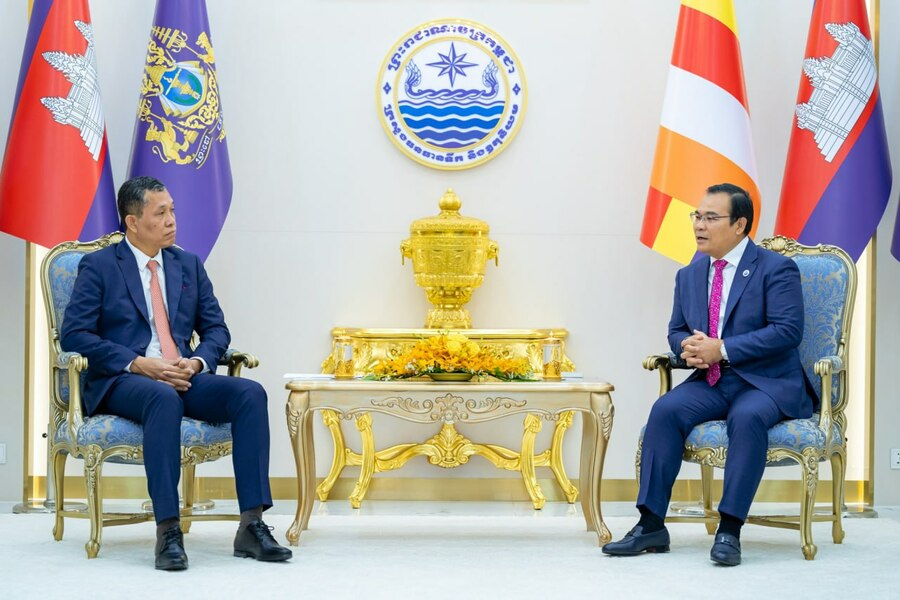
Officially opened by Sun Chanthol, First Vice-Chairman of the Council for the Development of Cambodia (CDC), the summit served as a platform for high-level dialogue and knowledge sharing. Chanthol emphasized the Kingdom’s growing attractiveness as an investment destination, citing ongoing reforms focused on labor standards, vocational training, environmental protection, and digital transformation. He called for deeper collaboration between the government, civil society, and the private sector to ensure that Cambodia’s textile and garment industry remains both competitive and future-ready.
A Collaborative Effort
The summit was organized by the Textile, Apparel, Footwear & Travel Goods Association in Cambodia (TAFTAC), Better Factories Cambodia (BFC), and GIZ (Deutsche Gesellschaft für Internationale Zusammenarbeit), with co-organization by EuroCham Cambodia and the Skill Development Fund. It received full backing from the Ministry of Labour and Vocational Training (MLVT), highlighting the government’s commitment to supporting industrial modernization.
Participants included senior officials, brand representatives, technical experts, and international development organizations. The summit facilitated in-depth discussions on Cambodia’s evolving role in global supply chains, particularly in the context of its upcoming graduation from Least Developed Country (LDC) status. This transition presents both challenges and opportunities that demand forward-looking strategies.
Focus on Sustainability and Innovation
Sustainability emerged as a central theme, with strong emphasis placed on environmental and social responsibility. The summit explored how Cambodia can build a value-driven textile sector through cleaner production, better working conditions, and climate-conscious policies. These priorities align with the increasing expectations of global buyers and consumers who are seeking ethically sourced and environmentally responsible products.
One of the key highlights was the 7th Environmental Garment Brands Meeting, held on April 1 as a closed-door session. Organized by EuroCham Cambodia’s Garment & Manufacturing Committee and supported by the Responsible Business Hub, the session brought together brand sustainability specialists and consultants from organizations such as Bureau Veritas. Discussions focused on the implementation of climate action frameworks like the Fashion Industry Charter for Climate Action, reinforcing the industry’s commitment to reducing its environmental impact.
Economic Growth and Future Vision
According to the General Department of Customs and Excise (GDCE), Cambodia’s exports of garment products—including apparel, footwear, and accessories—reached $11.68 billion in 2024, up 24.4% from 2023. These exports accounted for 44.59% of the country’s total export earnings, reflecting the sector’s vital role in the national economy.
However, speakers at the summit emphasized that the industry must now shift from volume to value. This means investing in human capital, upgrading infrastructure, adopting cleaner technologies, and enhancing supply chain transparency. The government’s economic agenda aligns with these goals, aiming to transform Cambodia into a resilient and innovative manufacturing base that can thrive in a rapidly evolving global market.
A Shared Commitment to Progress
The Cambodia Global Textile Summit 2025 made it clear that the path forward lies in cooperation. Multi-stakeholder collaboration—between the public sector, private enterprises, international partners, and civil society—will be essential in driving lasting progress.
As Cambodia continues to embrace change and push for higher standards, the summit served as a timely reminder that the country is not just keeping pace with global trends—it is actively shaping its own future in the global textile industry.