Cambodia’s Rise as a Manufacturing and Investment Hub: A Global Perspective
Cet article n’est pas encore disponible en français. Vous lisez la version originale en anglais.
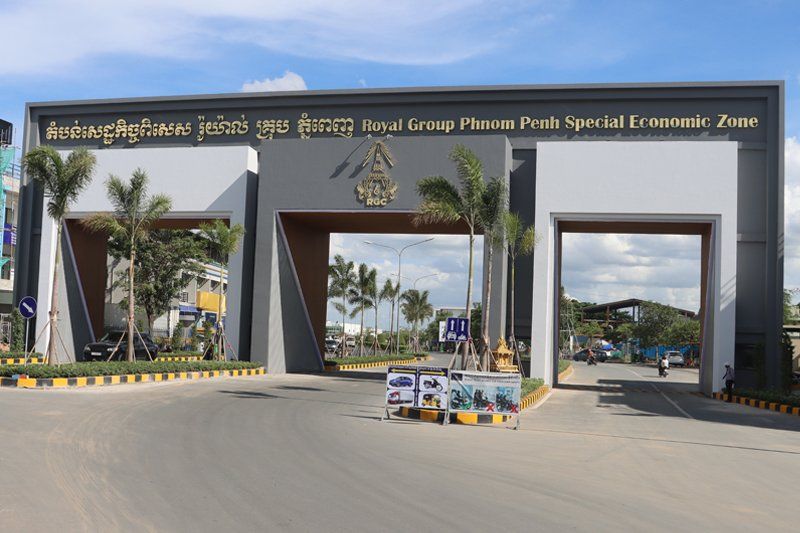
In recent years, Cambodia has emerged as a preferred destination for manufacturing and investment, attracting businesses from China, Bangladesh, and other countries. This shift is driven by multiple factors, including economic incentives, trade dynamics, labor costs, and regional connectivity. As global supply chains evolve, Cambodia is positioning itself as a key player in Southeast Asia’s industrial growth.
The Shift in Global Manufacturing Trends
The global trade landscape is experiencing significant shifts, with companies seeking alternative locations for production to mitigate risks associated with tariffs, rising costs, and geopolitical tensions. China, which has long been the world’s manufacturing powerhouse, is experiencing increasing labor costs, trade restrictions, and supply chain disruptions. These factors have prompted Chinese manufacturers to look elsewhere for more competitive environments, and Cambodia has emerged as a top choice.
Similarly, Bangladesh, known for its strong textile and garment industry, faces challenges related to rising wages, regulatory constraints, and infrastructure bottlenecks. Many Bangladeshi manufacturers are now considering or actively moving parts of their operations to Cambodia to take advantage of the country’s business-friendly policies and cost-effective labor market. Companies from Vietnam, Thailand, and South Korea are also expanding their footprint in Cambodia, diversifying the country’s industrial base beyond just Chinese enterprises.
Economic Incentives and Trade Benefits
One of Cambodia’s main attractions is its favorable trade agreements. The country enjoys duty-free access to major markets, including the United States and the European Union, under the Generalized System of Preferences (GSP) and Everything But Arms (EBA) agreements. This makes Cambodia an attractive alternative for businesses seeking to export products globally without facing high tariffs.
The Cambodia-China Free Trade Agreement (CCFTA) and the Regional Comprehensive Economic Partnership (RCEP) further enhance Cambodia’s trade appeal. These agreements provide a strategic advantage for companies setting up manufacturing bases in Cambodia, allowing them to tap into a vast network of trade partners with minimal restrictions.
Special Economic Zones (SEZs) and Business-Friendly Environment
The Cambodian government has actively promoted foreign investment by developing Special Economic Zones (SEZs) across the country. These SEZs offer tax incentives, reduced import/export duties, and streamlined administrative processes, making it easier for businesses to set up operations.
For companies from China, Bangladesh, and beyond, the SEZs provide a well-structured industrial ecosystem with modern infrastructure and logistics support. These zones have become hubs for garment production, electronics assembly, and furniture manufacturing, among other industries.
Cost-Effective Labor Market
One of Cambodia’s biggest advantages is its competitive labor market. The country offers lower wages compared to China and even some regions of Bangladesh. This cost efficiency is particularly attractive for labor-intensive industries such as textiles, footwear, and consumer goods manufacturing.
However, beyond cost savings, Cambodia’s workforce is young, trainable, and increasingly skilled. As the government and private sector invest in vocational training programs, the quality of the labor force is improving, making Cambodia even more appealing for foreign investors.
Strategic Location and Growing Infrastructure
Cambodia’s geographic location positions it as a regional hub within Southeast Asia. With access to deep-sea ports, improved road networks, and increasing connectivity to neighboring countries like Vietnam and Thailand, businesses setting up in Cambodia can efficiently transport goods to global markets.
Infrastructure development, supported by foreign investment, is further strengthening Cambodia’s logistics capabilities. New highways, ports, and power plants are being built to accommodate the growing industrial demand, ensuring that manufacturers can operate with greater efficiency and reliability.
Expert Insight
Vijay Allaham, Managing Director of True North Lean, a Cambodia-based lean consulting firm with operations across the region, highlights the broader opportunities for businesses relocating to Cambodia. He states, “This transition is not just about cost savings; it’s about strategic positioning in the evolving global supply chain. Companies that integrate lean methodologies and focus on efficiency will not only benefit from Cambodia’s cost advantages but also build strong, resilient operations that can withstand market fluctuations.”
A Promising Future for Cambodia’s Manufacturing Sector
The increasing relocation of businesses from China, Bangladesh, and other countries to Cambodia signifies a major shift in global manufacturing. With a business-friendly government, strategic trade agreements, cost-effective labor, and improving infrastructure, Cambodia is poised to become a key player in regional and global supply chains.
As companies continue to explore new markets, Cambodia offers a compelling value proposition. For businesses willing to invest in the country’s future, the rewards are significant—both in terms of profitability and long-term stability. With the right strategies in place, Cambodia’s manufacturing and investment landscape will continue to thrive, contributing to the nation’s economic growth and integration into the global economy.