Phnom Penh, Cambodia’s Capital: Beyond the Past, Towards the Future
Cet article n’est pas encore disponible en français. Vous lisez la version originale en anglais.
By 2050, nearly four out of every ten Cambodians would live in an urban area. Over the next 35 years, the country is predicted to urbanise at a rate of 2.5 % annually, with the capital Phnom Penh moving ahead.
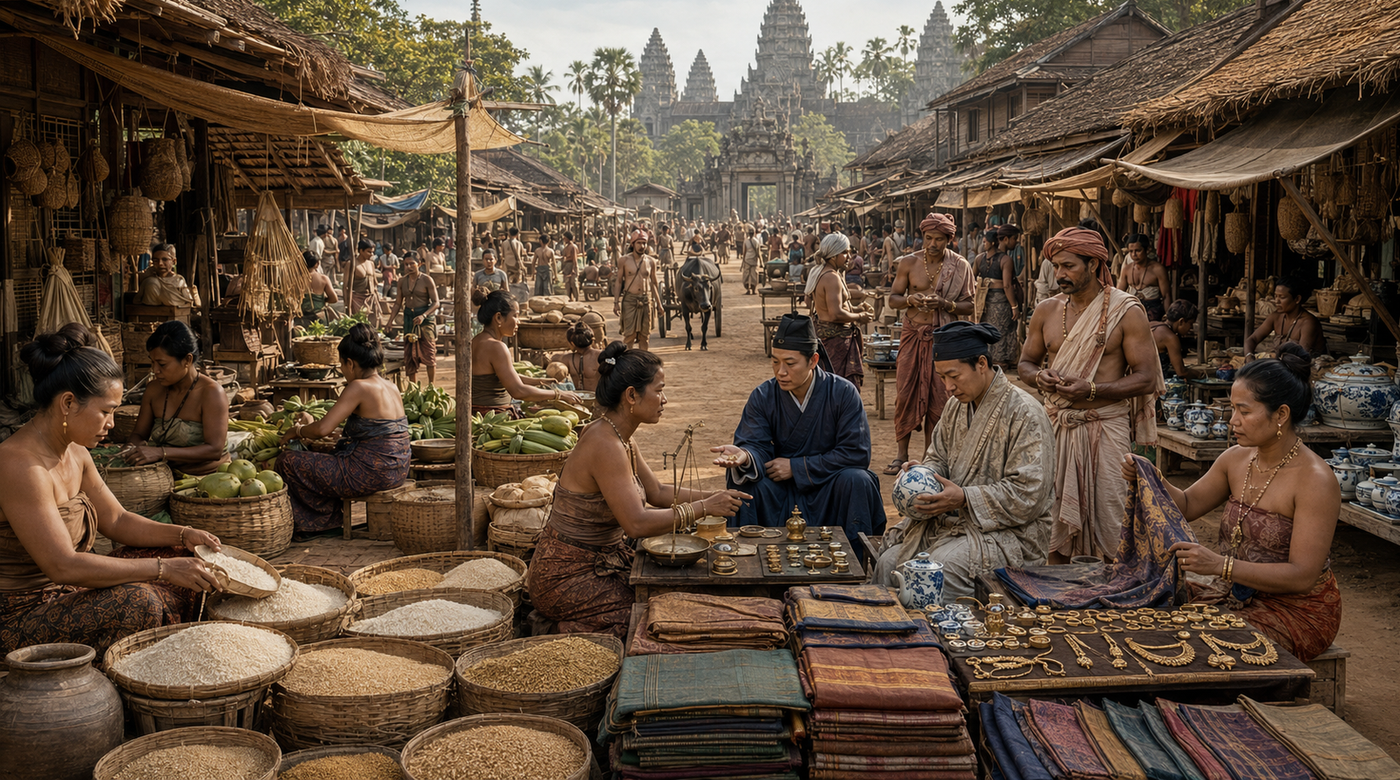
The capital of Cambodia, Phnom Penh, was founded in the 14th century. After the abandonment of Angkor in 1434, it became the Khmer capital. It was then known as Chaktomuk, or the ‘Four Faces,’ because of its location at the four-branched Mekong River confluence.
This city is not only Cambodia’s most populous, with about 2.8 million residents, but it also attracts three-quarters of the country’s industrial investment and houses a similar share of the country’s transportation network.
The city of Phnom Penh began to develop in 1865. Phnom Penh was transformed into a Parisian-styled city with wide walkways and green areas after the introduction of land tenure rules, streets, and public spaces. The first masterplan for Phnom Penh was introduced in 1950, with the goal of re-zoning areas for industrialization and increasing housing density.
Between 1956 and 1970, Phnom Penh doubled in size and saw a surge in nationalism as local architects infused Khmer flair into significant structures like the National Olympic Stadium.
Urban development became Cambodia’s top priority in 1998, but it was an uphill battle. Phnom Penh did not adopt a new Land Use Masterplan until the end of 2015, and with the support of the Japan International Cooperation Agency (JICA), began working on an Urban Transport Masterplan.
Phnom Penh has also centralised its governance in the Phnom Penh City Authority to ensure appropriate city management (PPCA). A Governor, assisted by Vice-Governors and a Chief Administrator, is in charge of this.
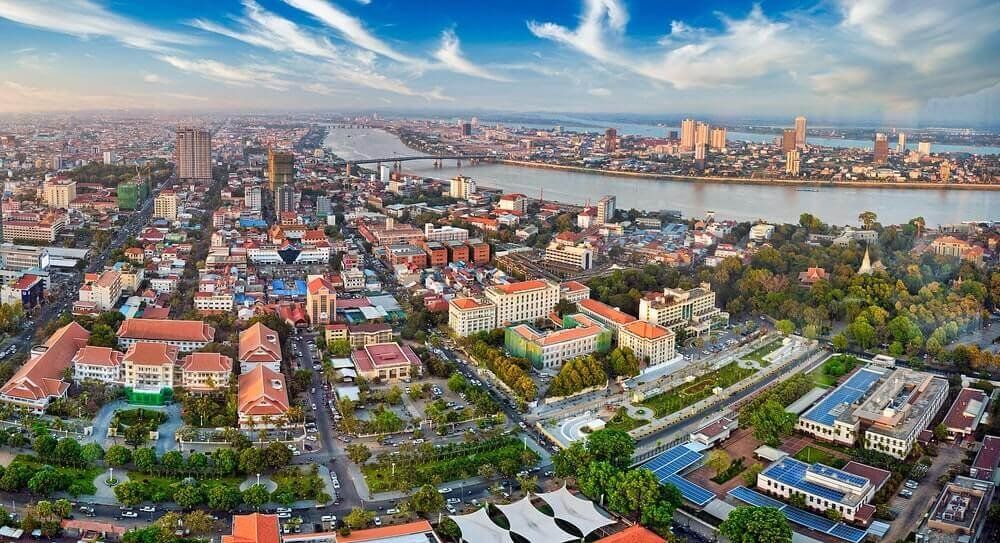
There has been major infrastructure upgrading and the construction of high-rise structures, resulting in a significant change in the city’s skyline and architectural identity.
Phnom Penh is currently undergoing rapid transformation.