Rubber Export Revenue Hits USD 116M in Q1 2025, Up 15% Year-on-Year
Cet article n’est pas encore disponible en français. Vous lisez la version originale en anglais.
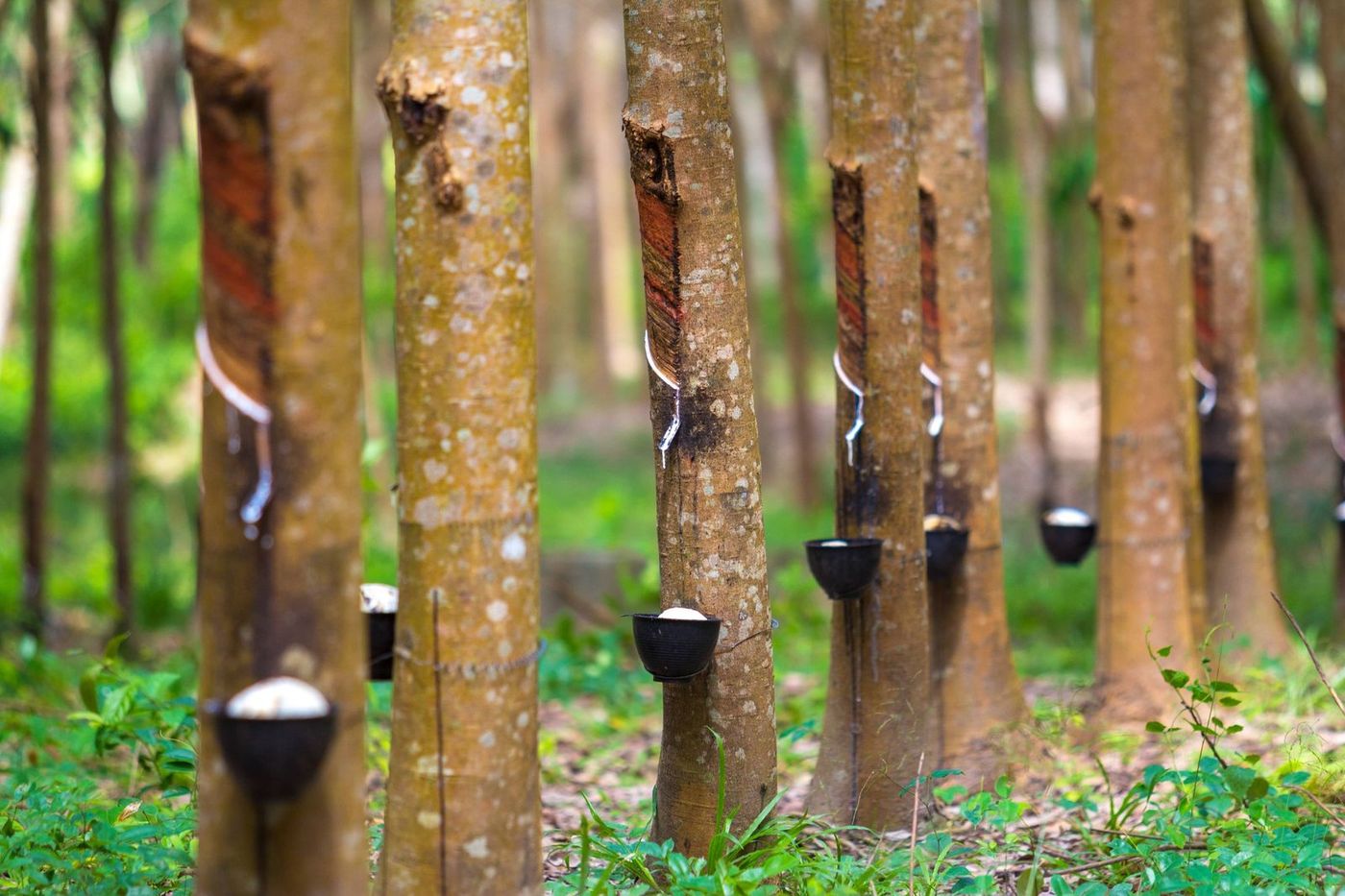
Cambodia recorded over USD 116 million in revenue from rubber and rubberwood exports during the first quarter of 2025, representing a 15.2% increase compared to the same period in 2024. This growth highlights the sustained international demand for Cambodian rubber products and the sector’s strengthening contribution to the national economy.
According to a report from the General Directorate of Rubber, USD 114,935,762 was earned from rubber exports alone, while USD 1,328,320 came from rubberwood sales. This performance reflects a significant uptick driven by both increased volume and improved global pricing trends.
Surge in Rubber Prices
One of the notable factors behind the rise in revenue is the substantial increase in rubber prices. As of March 2025, the price of rubber reached USD 1,923 per ton, up USD 474 per ton, or 32.7%, compared to the same period last year. This upward price trend has positively impacted export earnings despite volatility in other global commodity markets. Additionally, the average export value of rubberwood stood at USD 230 per cubic metre in March 2025.
Expanding Cultivation and Production Capacity
Cambodia’s total rubber cultivation area currently spans 425,443 hectares. Of this, 330,259 hectares (78%) are actively producing rubber, while 95,184 hectares (22%) remain in the maintenance phase. The country’s ability to maintain a high percentage of productive land is a testament to its growing expertise and efficiency in rubber farming.
Domestic Value Chain and Industrial Use
Beyond exports, Cambodian rubber supports three operational tire manufacturing plants located in the provinces of Svay Rieng, Preah Sihanouk, and Kratie. This industrial utilisation adds domestic value and creates jobs, aligning with Cambodia’s broader strategy to strengthen its manufacturing base and reduce reliance on raw material exports alone.
2024 Performance as a Benchmark
To contextualise the current growth, Cambodia earned USD 666.26 million from rubber exports and USD 5.42 million from rubberwood exports in the full year of 2024. The positive trajectory seen in early 2025 suggests the sector is on track for another strong annual performance.
Strategic Importance
Rubber remains one of Cambodia’s key agricultural exports, alongside rice, cassava, and cashew. The country’s geographic location, favourable climate, and rising global demand for rubber products, particularly for industrial and automotive uses, position it as a competitive supplier in the regional and global markets.
The Ministry of Agriculture, Forestry and Fisheries, along with the General Directorate of Rubber, continues to encourage best practices in plantation management, sustainable harvesting, and industry compliance to further boost competitiveness and ensure long-term sectoral growth.
As global demand for natural rubber remains robust, Cambodia is expected to play an increasingly important role in the regional rubber supply chain, while also advancing domestic processing capabilities to move up the value chain.