The Real Benefits of Kaizen And the Challenges Worth Preparing For
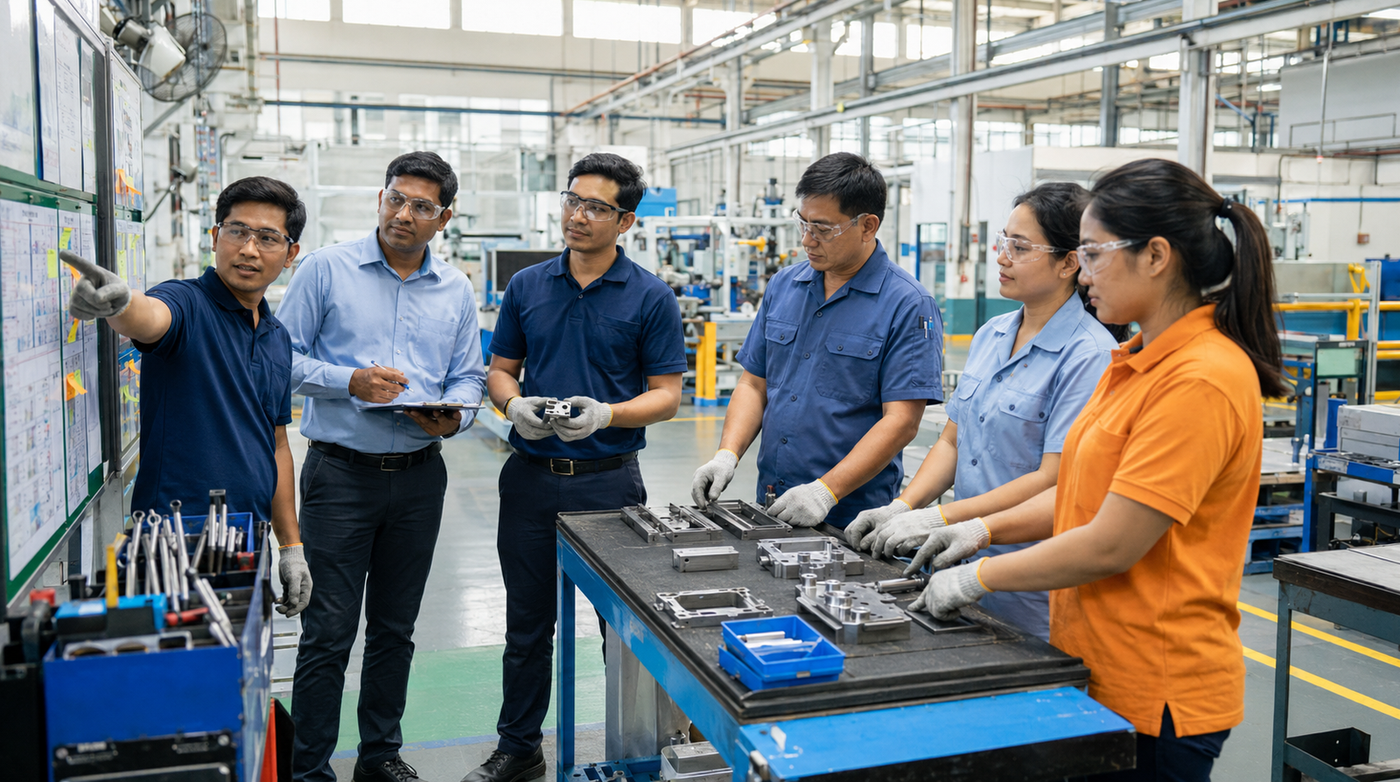
Ask anyone who has spent time on a factory floor what actually changes a workplace, and they rarely say “a new software system” or “a bigger budget.” More often, they talk about the day someone finally listened to them. That, in a sentence, is what Kaizen is about.
Kaizen, the Japanese practice of continuous improvement, is built on a simple idea: small, steady changes made by the people doing the work will outperform occasional big changes handed down from above. It isn’t a project with an end date. It’s a habit. And once it takes hold, the results show up in places you didn’t expect.
What Kaizen Does Well
It strengthens teamwork and internal cooperation. Kaizen puts operators, supervisors, and engineers in the same room, looking at the same problem. Departments that used to blame each other start solving things together, because the improvement belongs to everyone. Silos don’t get dismantled by org charts; they get dismantled by shared wins.
It improves leadership and managerial skills. Kaizen quietly reshapes what a manager does. Instead of issuing instructions and chasing numbers, managers learn to go to the gemba, ask better questions, and coach people through their own thinking. Many leaders describe this as the most useful management training they’ve ever had, precisely because it happens in real conditions rather than in a classroom.
It builds better systems, not just quick fixes. A good Kaizen doesn’t just clear today’s bottleneck. It changes the standard so the bottleneck doesn’t return. Over months, you end up with cleaner layouts, shorter changeovers, fewer defects, and less firefighting. Efficiency stops being a slogan and starts being how the place runs.
It lifts employee satisfaction. People stay where their ideas matter. When a machine operator suggests a fixture change and sees it installed the following week, something shifts. Communication improves, safety issues get raised earlier instead of being hidden, and turnover often falls without anyone launching an “engagement initiative.”
Where True North Lean Fits In
This is exactly the territory True North Lean works in. Operating across South and Southeast Asia, True North Lean helps manufacturers and service organizations put Lean and Kaizen into practice in a way that actually sticks, starting on the shop floor rather than in a boardroom presentation. Their consultants work alongside teams to map real processes, run structured Kaizen events, train internal facilitators, and build the daily management routines that keep improvement going after the consultant leaves. The emphasis is on transferring capability, not creating dependence: by the end of an engagement, the client’s own supervisors are the ones leading improvement. For organizations that want the benefits of Kaizen without the false starts, having an experienced partner in the room from day one is usually the difference between a program that fades and a culture that lasts.
The Challenges And How They Get Handled
Kaizen isn’t effortless, and it’s worth being honest about that.
Changing an entire system is hard. Asking a business to adopt new methods of working touches habits, incentives, and old assumptions. Handled well, this is sequenced, you start with one pilot line or one value stream, prove the gains, and let the results do the persuading. Experienced consultants know how to pick that first area so early momentum is almost guaranteed.
Improvement can disrupt production in the short term. Rearranging a line or changing a long-standing routine will cause friction. The answer isn’t to avoid it but to plan for it: run trials during low-demand windows, build in buffer stock, and involve production planners before anything moves. Disruption becomes a managed cost rather than a nasty surprise.
Training takes time away from output. Yes, teams need to learn new tools, and yes, that slows things briefly. But this cost is front-loaded and finite. Well-designed programs train small groups in short sessions on live problems, so people learn while producing rather than instead of producing. The productivity dip is usually recovered within the first few improvement cycles.
None of these challenges are reasons to avoid Kaizen. They’re simply the reasons most organizations benefit from professional guidance the first time around. With the right support, the difficulties become a short transition, and what’s left behind is a workplace that improves itself every single day.