Cambodia Reaffirms Commitment to Lasting Peace on First Anniversary of the Kuala Lumpur Peace Accords
Marking one year since the Kuala Lumpur Joint Declaration was signed, Cambodia has renewed its pledge to uphold the ceasefire, settle border questions by peaceful means and work with Thailand towards lasting peace.
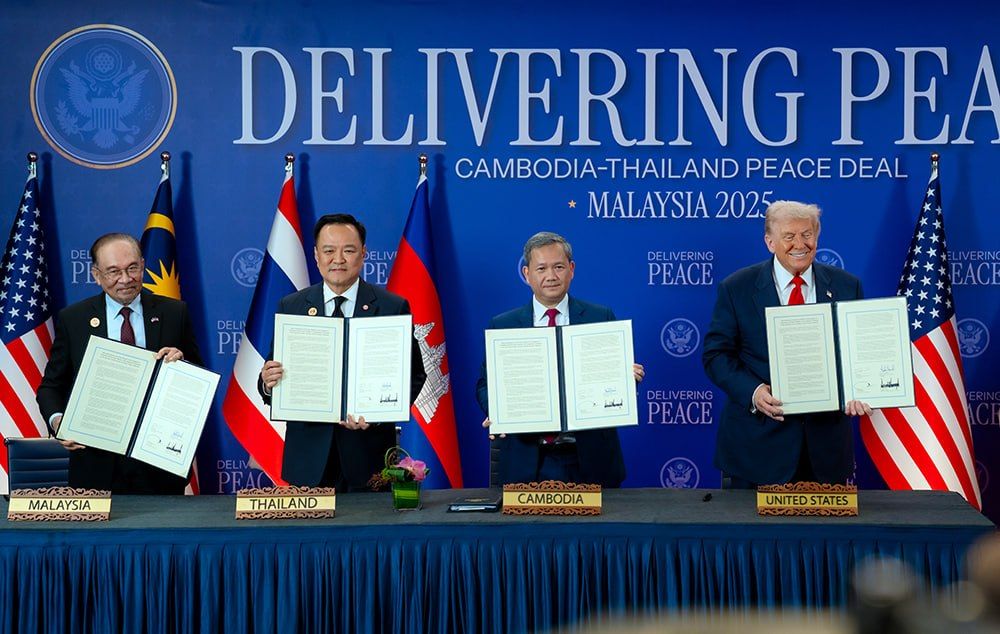
Cambodia marked the first anniversary of the Kuala Lumpur Joint Declaration on 26 October 2026 by reaffirming its firm commitment to the agreement and to lasting peace with Thailand. In a statement issued for the occasion, the Ministry of Foreign Affairs and International Cooperation said the Kingdom would continue to honour the accords in good faith, while Samdech Moha Borvor Thipadei Hun Manet, Prime Minister of Cambodia, delivered a message carrying the same pledge.
Key points
- The Kuala Lumpur Joint Declaration was signed on 26 October 2025 by the prime ministers of Cambodia and Thailand.
- On its first anniversary, Cambodia's Ministry of Foreign Affairs and International Cooperation reaffirmed the Kingdom's full commitment to the accords.
- Cambodia pledged to uphold the ceasefire and to resolve boundary matters through peaceful means and international law.
- The Regional Border Committee, General Border Committee and Joint Boundary Commission were named as the proper channels for border issues.
- Cambodia thanked the United States, Malaysia, ASEAN and other partners for supporting dialogue and peace.
The declaration, also known as the Kuala Lumpur Peace Accords, was signed in the Malaysian capital on 26 October 2025 by the prime ministers of Cambodia and Thailand. The ceremony was witnessed by President Donald J. Trump of the United States and Prime Minister Dato' Seri Anwar Ibrahim of Malaysia, whose countries played an active part in bringing the two neighbours to the table.
A pledge to keep the ceasefire and talk
At the heart of the anniversary statement is a promise to uphold the ceasefire and to refrain from the threat or use of force and from any provocative act. Cambodia said it would settle boundary questions and complete demarcation of the border only through peaceful means and in line with international law.
The ministry pointed to three long-standing bilateral bodies as the right places to handle border matters, each within its own mandate: the Regional Border Committee, the General Border Committee and the Joint Boundary Commission. Working through these mechanisms, it said, would allow both sides to build mutual trust step by step.
The statement also put people first. Cambodia committed to protecting civilians, to helping displaced families return home safely, and to promoting stability and prosperity for communities living along the shared frontier. The ministry described the goal as turning the promise of lasting peace into a reality for the peoples of both countries.
Gratitude to the partners behind the accords
Cambodia expressed its thanks to the United States, Malaysia, ASEAN and other partners for supporting dialogue and peace over the past year, and asked for their continued engagement. In his message, Samdech Thipadei Hun Manet thanked President Trump and Prime Minister Anwar for their active role and encouragement in reaching the accords, and for their ongoing support for a peaceful settlement of border issues.
By restating its commitment to the Kuala Lumpur accords, Cambodia has signalled that it intends to keep working constructively with Thailand and with the wider region so that the agreement signed a year ago delivers lasting benefits on both sides of the border.
Frequently asked questions
What is the Kuala Lumpur Joint Declaration?
It is a peace agreement signed on 26 October 2025 in Kuala Lumpur by the prime ministers of Cambodia and Thailand, witnessed by the President of the United States and the Prime Minister of Malaysia. It is also called the Kuala Lumpur Peace Accords.
What did Cambodia pledge on the first anniversary?
Cambodia pledged to uphold the ceasefire, avoid any threat or use of force, settle border issues peacefully under international law, protect civilians and help displaced people return home safely.
Which bodies handle Cambodia–Thailand border issues?
Cambodia named three bilateral mechanisms: the Regional Border Committee, the General Border Committee and the Joint Boundary Commission.