Cambodia’s banking sector shows resilience in 2025 as deposits surge and lending supports growth
Dieser Artikel ist in dieser Sprache noch nicht verfügbar. Sie lesen das englische Original.
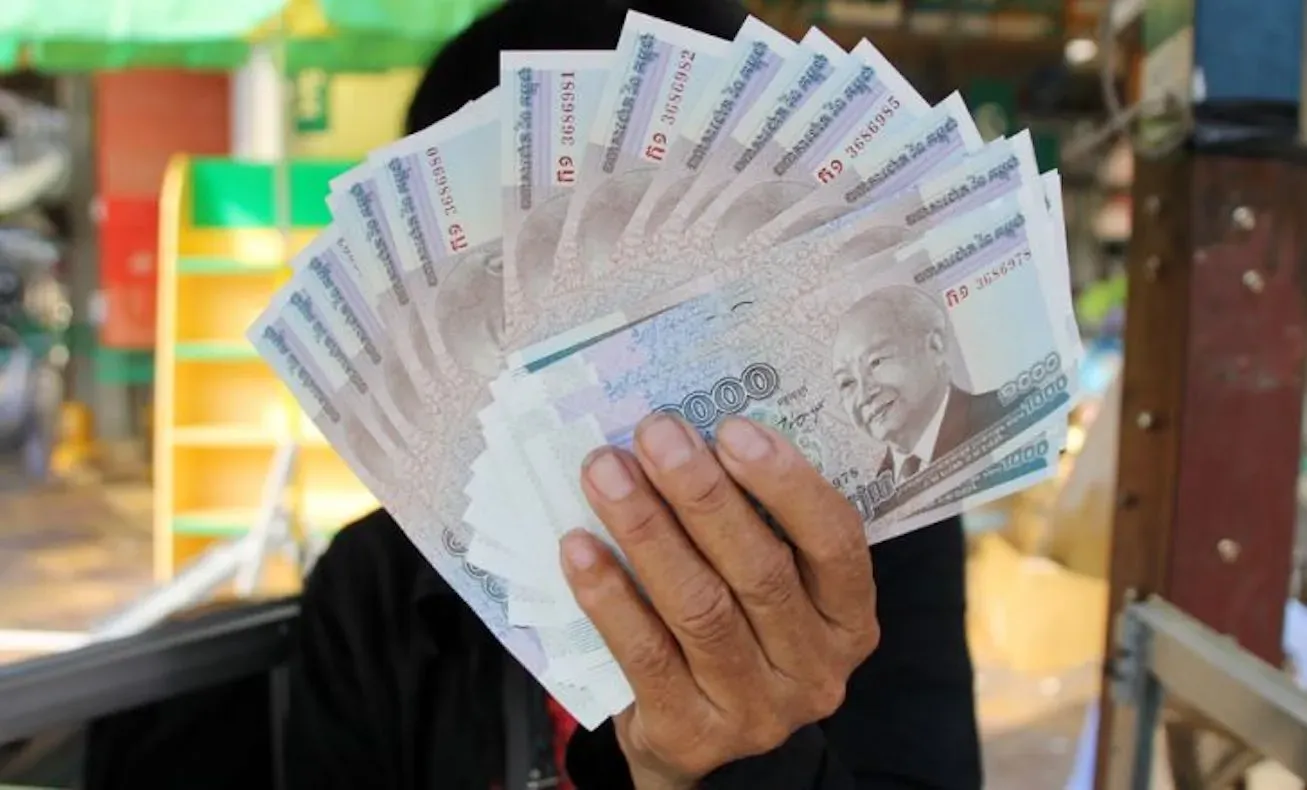
PHNOM PENH – If 2025 was a year of global hesitation, Cambodia’s banking sector responded with restraint rather than retreat. Lending continued to grow, savings rose sharply, and the system moved forward without drama — something that matters more than it often sounds.
According to the National Bank of Cambodia’s annual report, outstanding loans increased 4.1% to $63 billion by the end of the year. It was not explosive growth, but it was growth all the same. Deposits, meanwhile, told a stronger story. They jumped 14.7% to $65.7 billion, lifting total assets across the financial system to $98.7 billion, up nearly 10% from the year before.
In simple terms, more money stayed in the system, and more people trusted banks with their savings.
NBC Governor Chea Serey described the banking sector as a stabilising force during a difficult year, noting that credit growth in 2025 was higher than in 2024. Much of that lending, she said, went to micro, small and medium-sized enterprises — the kind of businesses that quietly keep the economy moving.
It is easy to overlook this kind of growth because it does not come with grand announcements. But it is often the kind that lasts.
Where the money went — and stayed
One of the clearest signals from the data is confidence. When deposits grow faster than loans, it usually means people are choosing to save rather than speculate. In Cambodia’s case, bankers say it reflects wider access to financial services and a growing habit of keeping money inside formal institutions.
That matters. Deposits now exceed loans, giving banks comfortable liquidity and breathing room. It also means the system is not stretched thin, even as it continues to support business activity.
Cambodia’s financial sector today is large by regional standards. There are 59 commercial banks, 89 microfinance institutions, 89 rural credit institutions, and seven specialised banks, serving 30.6 million deposit accounts and 4.5 million credit accounts.
Ten or fifteen years ago, those numbers would have seemed unrealistic. Today, they reflect how deeply banking has entered everyday life, helped by mobile apps, QR payments and digital wallets. In many provincial towns, phones have replaced queues.
A more careful phase of lending
Credit growth slowed from the boom years, but that was not accidental. Banks have become more selective, and regulators have encouraged them to be so.
The non-performing loan ratio rose to 8.9%, up from 7.4% the year before. Officials say the increase reflects more transparent classification and closer supervision, not a sudden deterioration.
In practice, banks spent much of 2025 working with borrowers rather than pulling away from them. Loans were restructured, provisions were increased, and risks were addressed early.
One senior banker put it simply: “This is what a system does when it grows up.”
Small businesses still borrowing
Despite the cautious mood, borrowing did not stop. Much of it came from smaller firms — shop owners, traders, logistics operators, agro-processors — looking for working capital or modest expansion.
These businesses rarely make headlines, but they employ millions and support supply chains that stretch far beyond Phnom Penh. Continued access to finance helps them stay afloat and, in many cases, grow.
Microfinance institutions and rural lenders remained active outside major cities, keeping credit flowing where it is most needed. The emphasis, regulators say, is on sustainability rather than speed.
A stable economic backdrop
Cambodia’s banks did not operate in isolation. The wider economy slowed in 2025, but it did not stall. Manufacturing exports, services and domestic consumption continued to support growth.
Inflation stayed under control. Foreign exchange reserves remained at comfortable levels. Public debt stayed manageable. These are not dramatic achievements, but they matter deeply to financial stability.
Economists note that Cambodia entered this period with relatively solid fundamentals, allowing it to absorb external shocks without sudden policy shifts.
Why investors are still watching
For investors, the banking data reinforces a familiar conclusion. Cambodia is not chasing growth at any cost. Instead, it is moving into a more measured phase.
The country still offers structural advantages: a young workforce, competitive costs, improving logistics and access to regional markets through trade frameworks such as RCEP. None of that disappears because a single year is cautious.
A stable banking system underpins all of it. Capital moves where confidence exists, and confidence depends on predictability more than speed.
Looking forward
Regulators expect lending to continue at a steady pace, aligned with economic reality. Strong deposit growth gives banks flexibility. Digital finance continues to expand reach. Supervision remains tight.
There are challenges, of course. There always are. But 2025 was not a year of stress for Cambodia’s banking system. It was a year of adjustment.
And in a global environment defined by uncertainty, adjustment is often a sign of strength, not weakness.