Teachers as Catalysts in Cambodia’s Socioeconomic Progress
Dieser Artikel ist in dieser Sprache noch nicht verfügbar. Sie lesen das englische Original.
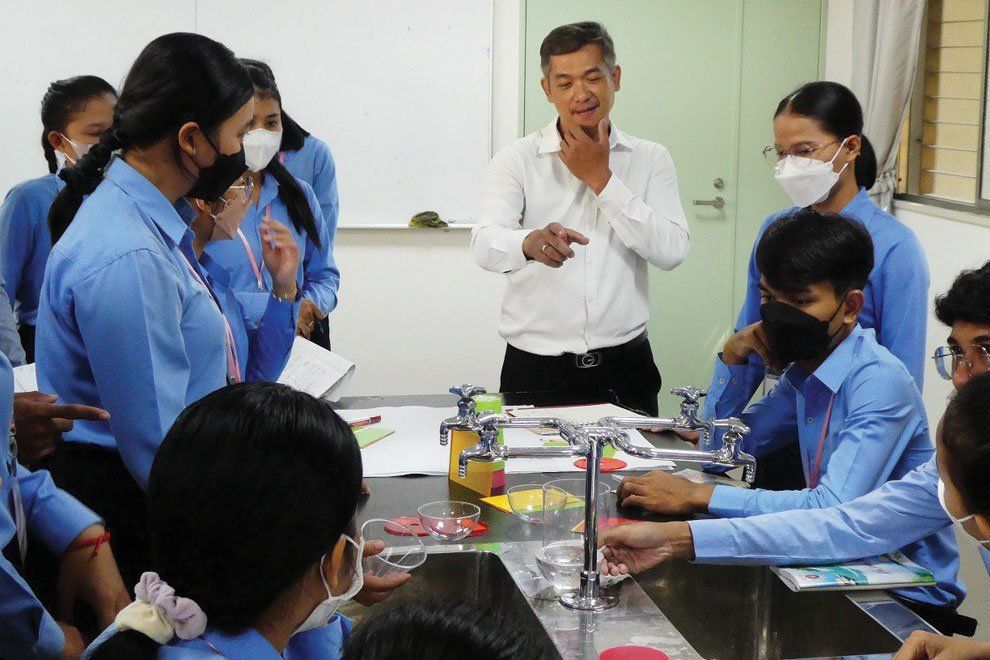
The Japan International Cooperation Agency (JICA) acknowledges the critical role of educators in shaping the futures of students and, by extension, contributing significantly to Cambodia’s socioeconomic advancement. Recognizing teachers as vital agents of change, JICA supports initiatives aimed at enhancing the educational landscape in Cambodia.
Significant strides have been made in teacher training within the nation, notably with the establishment of four-year Teacher Education Colleges (TECs), which have been instrumental in nurturing skilled educators for primary and lower-secondary levels.
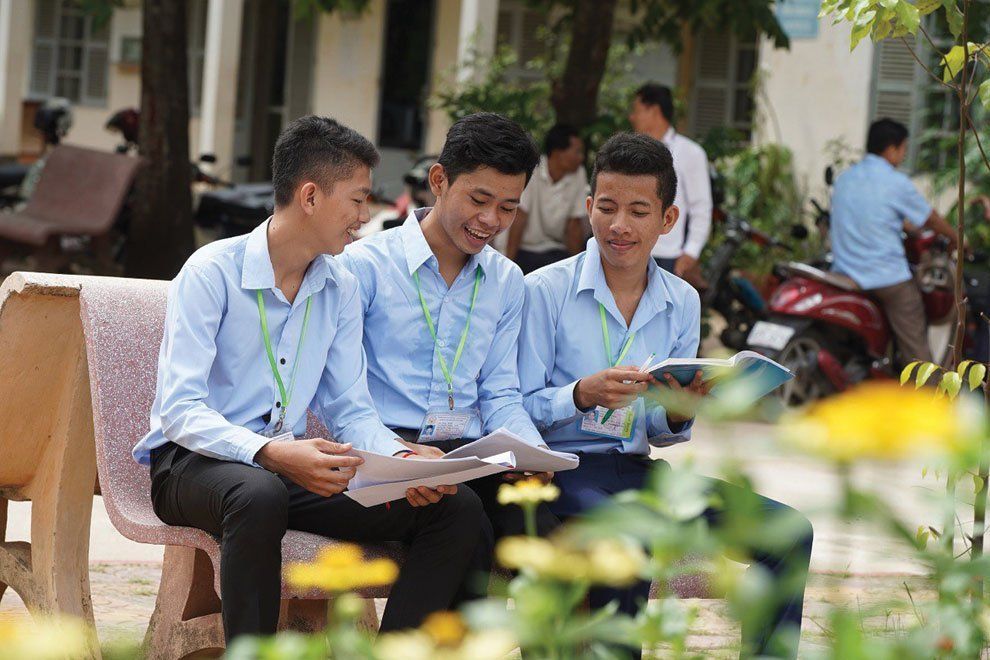
The genesis of Cambodia’s modern teacher training regime can be traced back to the post-1980s era, marked by a dire scarcity of educators due to the country’s tumultuous past. Initial efforts to mitigate this shortage included sporadic, short-term training programs.
By 1997, the foundation for a more structured teacher training framework was laid with the creation of two-year training centers for primary and secondary education, despite facing challenges like inadequate infrastructure and limited resources. These early endeavors were pivotal in revitalizing Cambodia’s educational system, laying the groundwork for the nation’s remarkable economic progress over the years.
With Cambodia’s ongoing development, the emphasis on teacher quality has intensified, leading to the MoEYS’s decision to enhance teaching credentials through the introduction of four-year TECs. JICA’s collaboration with MoEYS facilitated the establishment of the inaugural TECs in Phnom Penh and Battambang, encompassing infrastructure development, trainer education, and the creation of comprehensive curricula and educational materials.
This collaboration has yielded significant improvements in the quality of teacher training and the professional standards of educators in Cambodia. The TECs have already produced around 1,000 graduates, with newly qualified teachers, holding bachelor’s degrees, beginning their careers in educational institutions.
The expansion of TECs underscores the growing recognition of the value brought by educators trained through these four-year programs. In alignment with this, MoEYS has proposed a gradual transition from two-year to four-year training programs as a strategic policy direction.
The enhancement of human capital is a cornerstone of the Royal Government of Cambodia’s Pentagonal Strategy Phase 1, with educators playing a key role in developing the capacities of the nation’s youth, who are poised to shape Cambodia’s future.
JICA remains committed to collaborating with the Cambodian government, its citizens, and international partners to further the cause of teacher education, thereby securing a promising future for Cambodia through the empowerment of its educators.
Source: Phnompenh Post