The Majestic Banteng: Cambodia’s Conservation Success Story
Dieser Artikel ist in dieser Sprache noch nicht verfügbar. Sie lesen das englische Original.
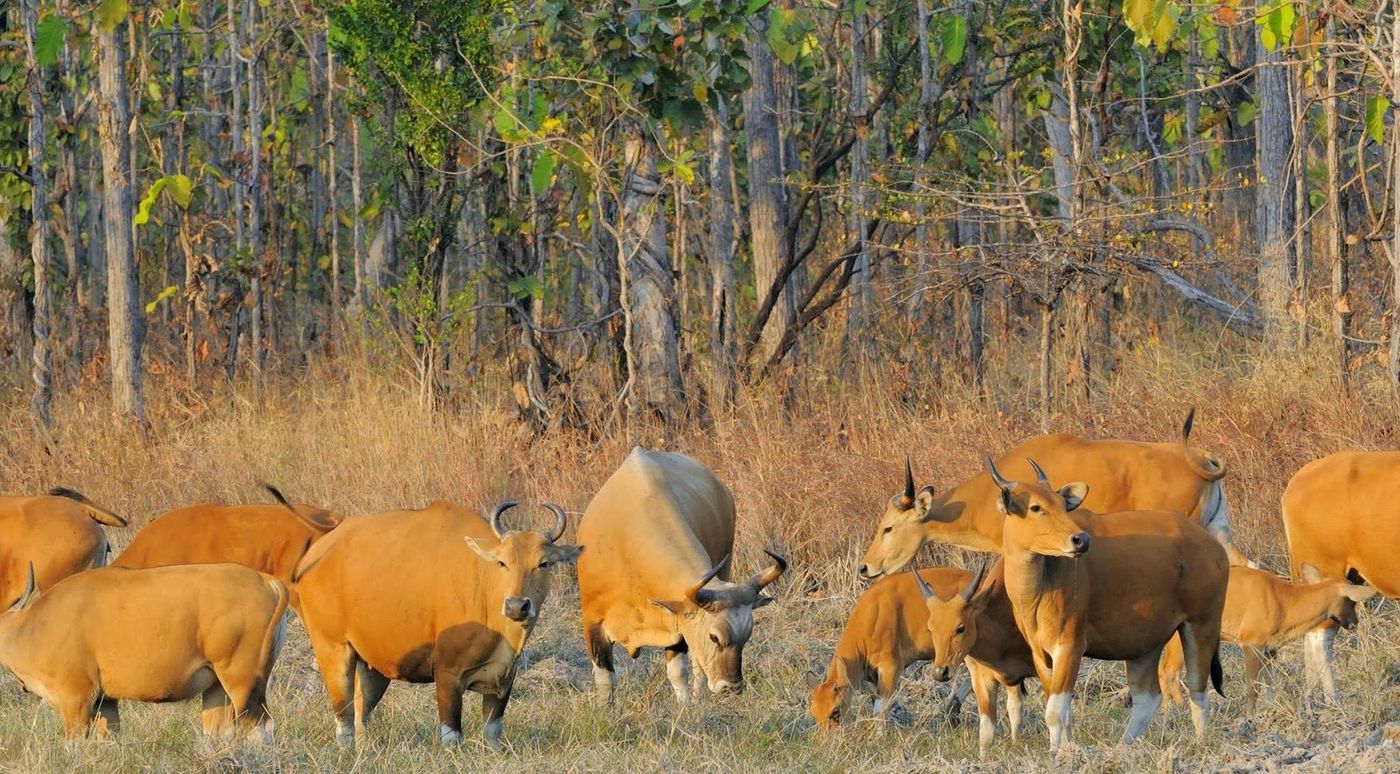
Cambodia’s Eastern Plains Landscape, a lush expanse of open and dry deciduous forests in Mondulkiri, is home to the world’s largest population of bantengs, a species of wild cattle renowned for its grace and beauty. The banteng is a symbol of Cambodia’s diverse wildlife and the country’s dedication to protecting it. Its beautiful look and important ecological role make it stand out.
Despite facing a dramatic decline of about 95% in their population since the late 1960s, Cambodia now stands as the stronghold for the banteng, harboring the largest number of these majestic animals in the world. With more than 1,500 individuals, the nation’s efforts to protect and preserve the banteng are yielding remarkable results, showcasing a beacon of hope for endangered species globally.
Adult bulls of the Banteng breed display heavy coats of dark brown to black coloration and stocky physiques, while adult cows of the breed have leaner bodies and coats of pale brown to chestnut red coloration. Their magnificent stature in nature is heightened by the fact that both sexes sport horns that measure 60 to 95 cm in length.
These creatures are not only captivating in appearance but also fascinating in their behavior. Banteng herds, comprising up to forty individuals, roam the forests both by day and night, adapting their activity patterns to minimize human encounters. As herbivores, their diet consists of a variety of vegetation, playing a crucial role in maintaining the ecological balance of their habitats.
The resilience of the banteng is evident in their ability to endure long periods without water during droughts, although they prefer regular access to standing water sources. Their reproductive cycle, mirroring that of domestic cattle with a gestation period of nearly 285 days, ensures the continued survival of this species, with each birth bringing new hope to conservation efforts.
The banteng’s protection by Cambodia is evidence of the country’s concern for its environmental history. The concerted efforts of conservationists, local communities, and the government to combat poaching and mitigate the threat of diseases from domestic and feral livestock are crucial in securing a future for the banteng.
As the banteng thrives in Cambodia’s Eastern Plains, it serves as an emblem of conservation success, inspiring similar efforts across the globe. The story of the banteng in Cambodia is not just about the survival of a species but a celebration of the harmony between humans and nature, a reminder of the beauty and resilience of our planet’s wildlife.