India and Cambodia Sign Fifth MoU on Sanskrit and Buddhist Studies
អត្ថបទនេះមិនទាន់មានជាភាសាខ្មែរនៅឡើយទេ។ អ្នកកំពុងអានអត្ថបទដើមជាភាសាអង់គ្លេស។
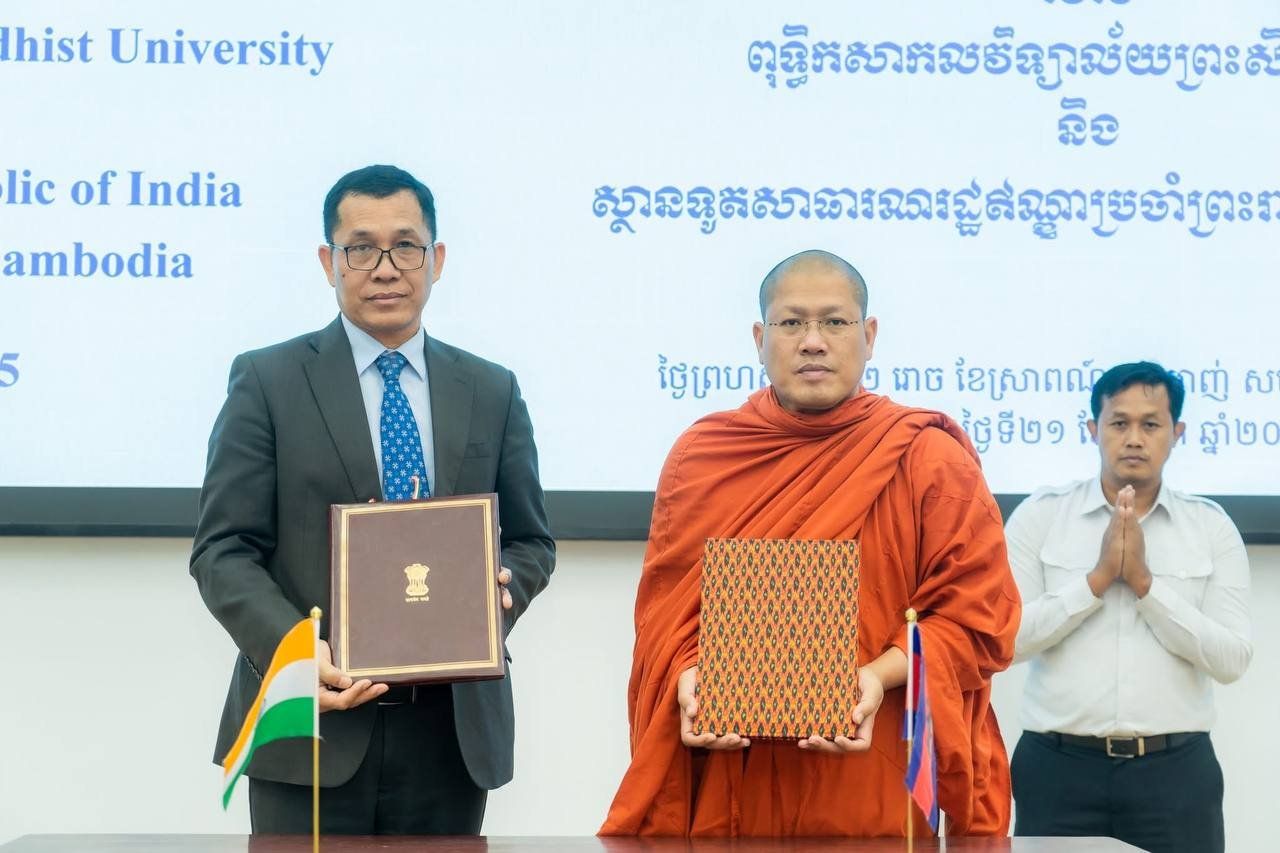
PHNOM PENH — India and Cambodia have further strengthened their cultural and academic ties by signing the fifth Memorandum of Understanding (MoU) to continue the Indian Council for Cultural Relations (ICCR) Chair in Sanskrit and Buddhist Studies at Preah Sihanouk Raja Buddhist University (PSRBU) in Phnom Penh.
Strengthening India-Cambodia Cultural Cooperation
The MoU was signed on August 21 by Vanlalvawna Bawitlung, the Indian Ambassador to Cambodia, and Yon Seng Yeath, Rector of PSRBU. The agreement secures another three-year term for the ICCR Chair, ensuring continuity in promoting Sanskrit studies and Buddhist scholarship in Cambodia.
Ambassador Bawitlung highlighted that the initiative reflects the deep civilizational bonds between India and Cambodia, rooted in shared heritage and cultural traditions. He noted that the ICCR Chair has become a bridge of knowledge, reinforcing the centuries-old spiritual and academic connections between the two nations.
Khmer Language and Sanskrit Heritage
Rector Yon Seng Yeath stressed that Sanskrit continues to play a vital role in enriching the Khmer language and fostering cultural exchange. He said the partnership not only benefits Cambodian students but also contributes to preserving traditions that link the two countries.
Vijay Shankar Prasat, Second Secretary at the Indian Embassy, emphasized the linguistic connections, noting that more than 3,000 Khmer words have Sanskrit origins, a reflection of the profound influence of Indian civilization on Cambodia’s cultural and linguistic identity.
The Journey of the ICCR Chair in Cambodia
The ICCR Chair in Sanskrit and Buddhist Studies has evolved over the years through a series of MoUs:
- 2010 – Initially established under a six-month agreement.
- 2011 – Extended for four years.
- 2016 – Renewed for three years.
- 2019 – Extended again, with an additional extension during the pandemic.
- 2025 – The fifth MoU signed, ensuring continuity until at least 2028.
This long-standing cooperation reflects the commitment of both nations to academic excellence and cultural diplomacy.
Expanding Buddhist and Sanskrit Studies in Cambodia
The ICCR Chair is part of a broader India-Cambodia cultural partnership that includes:
- Translation of Jataka tales into Khmer.
- Digitization of rare Buddhist manuscripts.
- e-ITEC courses on Buddhist philosophy.
- Exchange programs for students and researchers.
- Post-doctoral fellowships in India.
- International conferences and Buddhist festivals co-hosted with global institutions.
These initiatives have positioned Cambodia as an important center for Sanskrit and Buddhist studies in Southeast Asia.
Looking Ahead: Indo-Cambodian Academic Exchange
The renewed MoU is expected to deepen academic collaboration between Indian and Cambodian scholars, while also providing students with opportunities to explore Sanskrit texts, Buddhist philosophy, and shared cultural traditions.
Both governments see this as a step forward in promoting India-Cambodia academic exchange, cultural diplomacy, and people-to-people connections.
As the ICCR Chair continues its work until 2028, it will remain a cornerstone of Indo-Cambodian cultural relations, nurturing the intellectual heritage that binds the two nations together.
Also read, 20 Cambodian Officials to Receive Advanced Anti-Drug Training in India