Cambodia’s Government Prioritizes Agricultural Sector Modernization, Prime Minister Declares
本文暂无中文版本,您正在阅读英文原文。
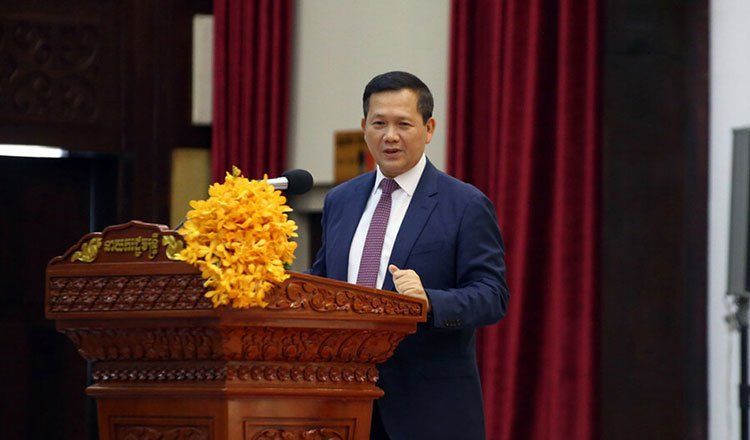
In an emphatic declaration of intent, the Royal Government of Cambodia (RGC) has reasserted its commitment to advancing and modernizing its agricultural sector, aiming to boost its competitive edge not only within the nation but also across regional and international arenas. This commitment was voiced by Prime Minister Hun Manet during the conclusion of the 2023 Annual Meeting of the Ministry of Agriculture, Forestry and Fisheries.
During this pivotal gathering, Prime Minister Hun Manet highlighted the burgeoning interest from foreign investors, notably from Singapore, the United States, and Japan, in Cambodia’s agricultural prospects. To facilitate this growing interest and to propel the sector forward, the RGC has ramped up investments in essential infrastructure. This includes enhancements to irrigation and rural transport systems, logistics, electricity, and processing facilities. Such strategic investments are designed to spur economic growth, foster diamond cooperation, and initiate the creation of specialized corridors for fish and rice, all while emphasizing the critical role of technological innovation and digital transformation.
Prime Minister Hun Manet further elaborated on the government’s strategies to nurture human capital and offer fiscal incentives aimed at improving quality, efficiency, productivity, and security. These measures are integral to elevating the status of Cambodia’s agricultural products in various markets.
A cornerstone of the government’s strategy is the implementation of the Pentagonal Strategy – Phase One, which encompasses six policy projects initiated last year to future-proof the agricultural sector. The National Agriculture Development Policy 2022-2030 and the National Cashew Policy 2022-2027 are pivotal elements of this strategy, setting ambitious goals for a modern, competitive, and sustainable agricultural industry, with a particular focus on becoming a leading cashew producer.
Echoing the Prime Minister’s vision, Uon Silot, President of the Cashew nut Association of Cambodia (CAC), outlined the association’s comprehensive plans to realize the ambition of becoming a cashew powerhouse. These plans include specialized training for farmers, the development of climate-resistant cashew varieties, the establishment of community warehouses, and the enhancement of processing capabilities, particularly in Kampong Thom province, envisioned as a hub for cashew production and processing.
To facilitate these ambitious projects, CAC has strategically appointed representatives to stimulate market growth and attract international investment from countries like China, Japan, Singapore, and India.
Reinforcing these initiatives, the Prime Minister announced on social media the continuation of three major fiscal principles by the RGC. These include tax exemptions on agricultural land and imports of farming equipment, VAT exemptions on essential food items until the end of 2028, and extended tax incentives for domestic manufacturing enterprises dealing with a variety of agricultural products through the end of 2025.
Hor Sereyvath, Chairman of the Innovation & Development Investors Association (IDI), pointed out the flagship status of rice, pepper, rubber, cassava, and cashew in Cambodia’s agricultural exports. He emphasized the need for advanced processing facilities to meet international standards, particularly for markets in Japan, Europe, and the United States, underlining the importance of quality and compliance in achieving global market penetration.
Source: Khmer Times