Cambodian PM Proposes Five Key Education Reforms to Strengthen National Development
Prime Minister Hun Manet outlined five key education recommendations, including curriculum reform, teacher development, expanded scholarships, research capacity, and industry partnerships to strengthen Cambodia’s education system and support long-term national development.
本文暂无中文版本,您正在阅读英文原文。
Phnom Penh, Cambodia — Prime Minister Samdech Thipadei Hun Manet has outlined five key recommendations to enhance Cambodia’s education system and support long-term national development, officials stated on 10 February 2026. The policy proposals emphasize strategic improvements in learning outcomes, student support, teacher quality, and innovation within educational institutions.
During a meeting with educators, academics, government officials, and youth representatives, Prime Minister Hun Manet stressed the importance of holistic educational reform that prepares students for the modern economy. He identified priority areas including curriculum enhancement, teacher development, expanded scholarship opportunities, research capacity, and strengthened partnerships between education providers and the private sector.
The first recommendation focuses on revising national curricula to better align with global standards and evolving workforce needs, particularly in key sectors such as science, technology, engineering, mathematics (STEM) and foreign language proficiency. A government official noted that equipping learners with relevant skills is critical for Cambodia’s competitiveness in an increasingly technology-driven world.
Second, Hun Manet emphasized the need to strengthen teacher quality and professional development, encouraging ongoing training programs and support systems to help teachers adapt to modern pedagogical methods. This measure aims to improve classroom outcomes and overall student achievement.
Third, the prime minister reaffirmed support for expanded scholarship opportunities for outstanding and disadvantaged students, enabling more young Cambodians to access higher education both domestically and internationally. He called for collaborative efforts among ministries, universities, and private stakeholders to mobilize funding and expand access.
The fourth recommendation highlighted the importance of research and innovation, encouraging universities and research institutions to foster knowledge production that addresses local and regional challenges. Hun Manet said that research capacity is a cornerstone of sustainable growth and technological progress.
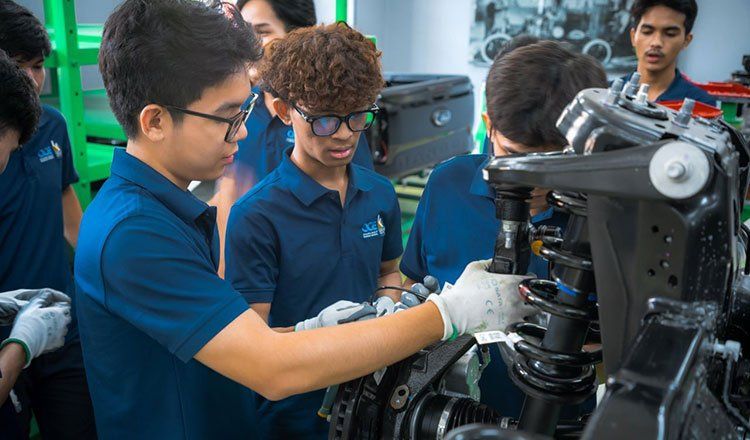
Lastly, the prime minister called for stronger collaboration between education and industry, urging businesses to engage in curriculum development, internships, and job placement programs that link graduates to employment opportunities.
These education recommendations are part of the government’s broader strategy to ensure Cambodia’s human capital development keeps pace with economic transformation and regional integration initiatives.
Also Read: Cambodia Positioned to Attract Increased Japanese Investment, ERIA President Says