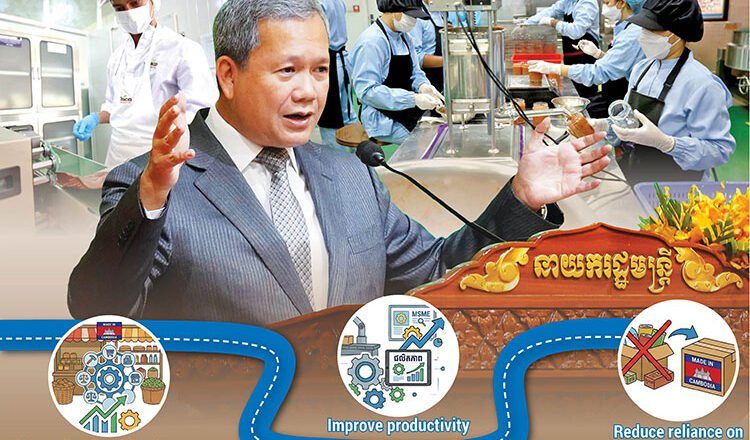
Private Sector Professionals to Lead State-Owned Enterprises: PM Hun Manet
本文暂无中文版本,您正在阅读英文原文。

In a major reform aimed at boosting efficiency and professional management of state-owned enterprises, Cambodian Prime Minister Samdech Thipadei Hun Manet has announced the end of the long-standing practice of appointing civil servants to lead public institutions. Going forward, private sector professionals will be eligible to assume leadership roles in these enterprises, with government oversight restricted to a board of directors.
Speaking at the inauguration ceremony of the Kampot International Tourism Port on Monday (April 21), the Prime Minister highlighted the importance of operating state-run entities with the same efficiency and performance standards as private companies.
“If we want the Kampot International Tourism Port to operate like a private enterprise, then we must bring in people who understand the business,” said Samdech Thipadei. “There is no need for the state to establish a management company when professionals in the private sector already possess the knowledge and experience to run such operations effectively.”
Under the proposed legal amendments, CEOs of state-owned enterprises will now be recruited from the private sector. These leaders will be empowered to manage operations with a business-oriented approach, while the state’s role will be confined to policy guidance and governance through a non-interfering board of directors.
“The board should not be involved in daily operations,” Hun Manet emphasised. “Even if the enterprise is owned by the state, it must be run independently. If we want private-sector performance, we must adopt a private-sector mindset—this means hiring the right talent and holding them accountable for results.”
The Prime Minister underscored the gap between academic qualifications and real-world business experience, noting that while many individuals hold advanced degrees, they often lack the hands-on experience required to lead in a competitive business environment.
“We have many individuals with PhDs, but some have never led a company. They may understand policy or be able to write plans, but without the practical knowledge of running a business, they cannot succeed in this role,” he said.
Using a metaphor to underline the importance of practical results over formal credentials, he added, “Let us not cling to rigid distinctions—both black and white cats can catch mice. Whether someone graduated from a private or public institution, if they can generate profits and deliver national benefits, they are the right person for the job.”
This forward-looking reform reflects Cambodia’s broader effort to modernise its governance, improve public service delivery, and create a more dynamic and results-driven state apparatus. It also signals a growing openness to private-sector collaboration in the nation’s development, aligning public administration with global best practices.