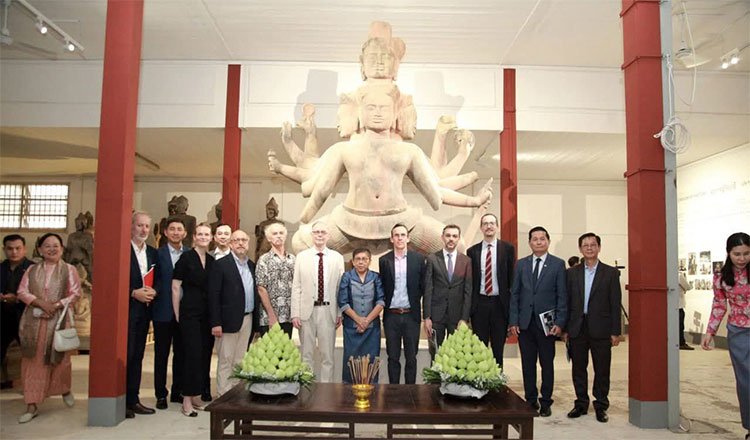
Cambodia has completed the restoration of an ancient Shiva Nataraja (Dancing Shiva) statue, bringing the historic sculpture back to its full form after more than five years of conservation efforts. The statue, originating from the Koh Ker archaeological site, is considered a significant example of Khmer heritage and religious art.
The restoration project involved detailed archaeological research and technical reconstruction, as the statue had been fragmented into numerous pieces over time. Experts worked to carefully reassemble the structure, ensuring the preservation of its original artistic and historical features.
Restoration Project: Key Details
The conservation effort is regarded as one of the more complex restoration initiatives undertaken in Cambodia’s heritage sector.
Project highlights
- Statue dates back to the 10th century Khmer period
- Originated from Koh Ker, a former capital of the Khmer Empire
- Restoration work spanned over five years
- Thousands of fragments were reassembled and preserved
- Collaboration between Cambodian authorities and international experts
The statue represents Shiva in a dynamic dancing form, an important symbol in Hindu iconography widely reflected in Khmer temple art.
Cultural and Historical Significance
The Shiva Nataraja statue holds strong cultural and religious importance within Cambodia’s historical narrative.
Key significance
- Represents Hindu influence in early Khmer civilization
- Linked to royal religious traditions of the Khmer Empire
- Reflects advanced stone carving and artistic techniques
- Considered a major artifact from Koh Ker heritage sites
Koh Ker served as a royal capital during the 10th century and remains an important archaeological zone in Cambodia.
Project Metrics Overview
| Aspect | Details |
|---|---|
| Period | 10th century |
| Location | Koh Ker archaeological site |
| Restoration Duration | 5+ years |
| Structure | Multi-fragment sandstone sculpture |
| Cultural Theme | Shiva Nataraja (Dancing Shiva) |
The project also contributed to training and capacity building in conservation techniques for local specialists.
Tourism and Heritage Development Impact
The restoration is expected to support Cambodia’s cultural tourism sector by enhancing the appeal of heritage sites.
Potential tourism outcomes
- Increased visitor interest in Koh Ker archaeological zone
- Strengthening of cultural tourism circuits beyond Angkor
- Greater visibility for Khmer heritage conservation projects
- Opportunities for museum exhibitions and heritage education
Restored artifacts often play a key role in attracting both domestic and international tourists to historical destinations.
Infrastructure Implications
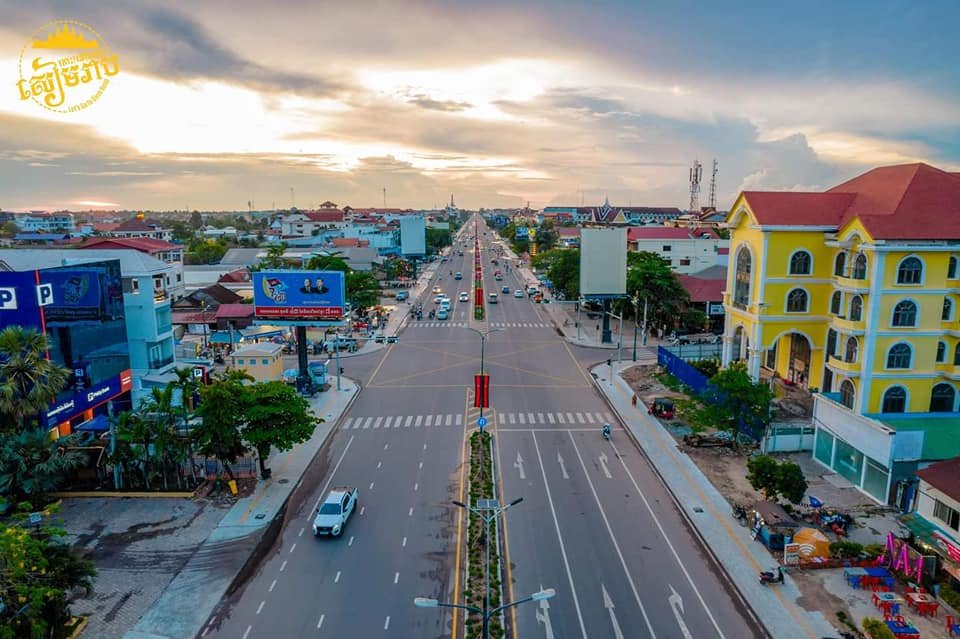
Heritage restoration projects can indirectly influence local development, especially in tourism-focused regions.
Possible impacts
- Growth in hospitality infrastructure near heritage sites
- Development of eco-tourism and cultural tourism facilities
- Increased demand for transport connectivity and visitor services
- Expansion of local commercial and retail spaces
As tourism expands, surrounding regions may experience gradual infrastructure upgrades.
Conclusion
The restoration of the Shiva Nataraja statue highlights Cambodia’s ongoing efforts to preserve its historical and cultural heritage. Such conservation initiatives not only safeguard important archaeological artifacts but also support the growth of cultural tourism and related infrastructure in heritage regions.
Also Read: Kampot’s Giant Palm Sculpture Reaches 60% Completion as Tourism Project Progresses