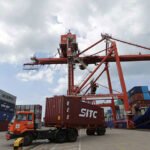

Along the dusty border crossings of Moa Bai, Lao Bảo, and Trapaing Phlong, a quiet financial revolution is unfolding. Small and mid-sized traders moving garments, electronics, agricultural produce, and consumer goods between Cambodia, Laos, and Vietnam — the core of the so-called CLMV corridor — are increasingly turning to dollar-pegged stablecoins such as Tether (USDT) and USD Coin (USDC) to settle transactions that, through conventional banking channels, would take three or more business days to clear.
- Understanding the CLMV Corridor and Its Cross-Border Trade Dynamics
- Why Traditional Cross-Border Payments Fail Small Traders
- Stablecoins as a Settlement Layer: How Traders Are Using USDT and USDC
- Country-Level Profiles: Adoption, Infrastructure, and Regulation
- The Regulatory Landscape: A Patchwork of Tolerance and Restriction
- Risks, Challenges, and the Road Ahead
- Comparison: Stablecoins vs. Traditional Channels in the CLMV Corridor
- Conclusion: A Financial Infrastructure Gap Being Filled From Below
This shift is not driven by ideology or speculation. It is driven by necessity. In a corridor where working capital is tight, currency volatility is real, and banking access remains uneven, the ability to settle a cross-border invoice in minutes rather than days is not a luxury — it is a competitive advantage. This article examines why stablecoin adoption is accelerating in the Cambodia-Laos-Vietnam triangle, how the settlement mechanism works in practice, what the regulatory landscape looks like, and what risks and opportunities lie ahead.
Understanding the CLMV Corridor and Its Cross-Border Trade Dynamics
What Is the CLMV Corridor?
The term CLMV refers to Cambodia, Laos, Myanmar, and Vietnam — the four youngest members of ASEAN — though in the context of this article, the focus is on the triangular sub-corridor linking Cambodia, Laos, and Vietnam (CLV). This Development Triangle Area (CLV-DTA) was formally established to boost cross-border economic integration among provinces in the three countries, and it encompasses a diverse economic geography ranging from highland agricultural zones to special economic zones (SEZs) and border markets.
Vietnam has the largest trade volume among the three, with an openness ratio exceeding 100% of GDP. Cambodia and Laos are deeply integrated into regional supply chains, with Cambodia’s SEZs particularly active in garment manufacturing and Laos serving as an important transit economy. Intra-CLV trade passes through a series of designated border crossings and economic corridors, many of which are linked by road to major trade hubs like Ho Chi Minh City, Phnom Penh, and Vientiane.
The Scale and Nature of Cross-Border Commerce
Cross-border trade in the CLV corridor encompasses both formal and informal channels. Formal trade relies on traditional banking infrastructure — letters of credit, wire transfers via correspondent banks, and SWIFT-based interbank settlements. Informal trade, which accounts for a significant and often undercounted share of actual commerce, has historically relied on cash or hawala-style networks operating outside regulated financial systems.
Traders dealing in lower-value goods — fresh produce, used clothing, small electronics — are particularly exposed to the friction of traditional payment systems. For these participants, a three-day settlement window is not merely an inconvenience; it represents a working capital gap that forces them to carry inventory risk, borrow at high local interest rates, or forego deals entirely.
Also read, Homegrown Apps Built by Khmer Developers Solving Real Local Problems
Why Traditional Cross-Border Payments Fail Small Traders
The 3-Day Settlement Problem
International bank transfers in the CLMV corridor typically travel through correspondent banking networks. A payment from a Cambodian importer to a Vietnamese exporter, for instance, may pass through a Cambodian commercial bank, a regional correspondent bank (often in Singapore or Thailand), a Vietnamese clearing bank, and finally the recipient’s local account. Each hop introduces processing time, fees, and potential compliance holds.
According to World Bank data, the global average cost of sending $200 in remittances stood at 6.49% in Q1 2025, with non-digital channels averaging 7.16%. In emerging market corridors, the all-in cost of a bank wire — including FX spread, intermediary fees, and compliance overhead — can be significantly higher. For a $10,000 trade invoice, this translates into hundreds of dollars in friction costs and a two-to-five business day wait before the seller can confirm receipt and ship goods.
For cross-border traders operating on thin margins and tight schedules — particularly those moving perishables like fruit, vegetables, or fresh seafood — this latency is structurally incompatible with their business model.
Currency Volatility and the Dollar Problem
The Vietnamese dong (VND), Cambodian riel (KHR), and Lao kip (LAK) are all relatively illiquid currencies with limited cross-exchange markets. Bilateral FX pairs between these currencies are thin or non-existent, meaning any cross-border payment denominated in local currency must be converted through a third currency — almost always the US dollar — adding another layer of spread and delay.
Cambodia’s economy is uniquely dollarized: over 80% of its economy still relies on the US dollar for everyday transactions, according to the National Bank of Cambodia. This structural dollarization, while creating friction for the central bank’s monetary policy ambitions, has paradoxically made Cambodia an early and enthusiastic adopter of USD-denominated digital assets — including stablecoins.
Stablecoins as a Settlement Layer: How Traders Are Using USDT and USDC
The Mechanics of Stablecoin Settlement in the Corridor
The practical workflow for a CLMV corridor trader using stablecoins typically follows a straightforward pattern. A buyer in Phnom Penh negotiates a trade with a seller in Ho Chi Minh City. Rather than initiating a SWIFT wire, the buyer acquires USDT through a local OTC broker, a peer-to-peer exchange, or a centralized exchange platform such as Binance P2P. The USDT — most commonly on the TRON network (TRC-20), due to its low transaction fees — is transferred to the seller’s wallet within minutes. The seller converts the USDT to Vietnamese dong through a local exchange or P2P counterpart, and the transaction is settled.
This model reduces settlement time from three-plus business days to under an hour in most cases, and the on-chain transaction fee for a TRON-based USDT transfer is typically a fraction of a dollar. Vietnamese exporters adopting this model can reduce transaction fees from the 4–7% typical in bank wires to well under 1% by leveraging blockchain payment rails, according to payment infrastructure firm TransFi.
USDT Dominance in Emerging Market Corridors
Tether’s USDT is the dominant stablecoin in the CLMV corridor, consistent with its broader dominance in regions characterized by emerging economies and high demand for dollar-denominated liquidity. Analysis by the IMF and independent blockchain researchers confirms that USDT is more popular in regions with more emerging economies — including Africa, the Middle East, Asia, and the Pacific — while USDC sees stronger uptake in advanced economies with more regulated financial environments.
Between June 2024 and June 2025, USDT processed roughly $703 billion in volume per month globally, reaching over $1 trillion in June 2025. Its massive liquidity and near-universal availability across exchanges and OTC networks make it the default stable asset for small-to-medium cross-border transactions in the Mekong region. The IMF estimated stablecoin cross-border payment flows at approximately $1.5 trillion in 2024, underscoring the scale of this phenomenon.
Globally, stablecoin payments settled approximately $6.3 trillion in the twelve months to February 2025 — equivalent to 15% of global retail cross-border payments in 2024. The share attributable to Southeast Asian corridors, while difficult to isolate precisely, is clearly material.
Why TRON (TRC-20) Is the Network of Choice
Among the various blockchain networks on which USDT is issued, TRC-20 (TRON) has emerged as the preferred rail for informal and small-business cross-border payments in Southeast Asia. The reason is purely practical: TRON’s transaction fees are typically below $1, compared to Ethereum’s variable gas fees which can spike significantly. For a trader sending $5,000 in USDT, the cost difference between TRC-20 and ERC-20 can be the difference between a viable and an unviable payment channel.
Speed is also a factor. TRON finalizes transactions in approximately 3 seconds, compared to Ethereum’s 12-second average block time, and without the variability introduced by network congestion. These properties make TRC-20 USDT effectively instantaneous for the settlement use case.
Also read, 12 Profitable Side Hustles You Can Start in Cambodia Today (2026)
Country-Level Profiles: Adoption, Infrastructure, and Regulation
Vietnam: Asia’s Grassroots Crypto Powerhouse
Vietnam is one of the most significant crypto markets in the world, consistently ranking in the top five of the Chainalysis Global Crypto Adoption Index. In the 2025 edition of the index, Vietnam held fourth place globally, with an estimated 17 million Vietnamese — roughly 17% of the population — owning digital assets, and the total market value of the sector exceeding $100 billion.
Chainalysis researchers describe Vietnam’s crypto market as showing crypto as ‘everyday infrastructure for remittances, gaming, and savings.’ Vietnam is prioritizing P2P exchanges as a primary use case, with platforms like Binance P2P serving as the primary on-ramp and off-ramp for informal stablecoin transactions. Cross-border stablecoin use for trade settlement — particularly in the direction of Chinese, Cambodian, and Lao trading partners — is an extension of this same grassroots infrastructure.
Vietnam’s regulatory posture is evolving rapidly. The National Assembly passed the Law on Digital Technology Industry in June 2025, which officially recognizes digital assets for the first time and took effect January 1, 2026. However, stablecoins remain restricted for domestic payments, and a full regulatory sandbox for crypto exchanges is expected to launch in mid-2026 under the Ministry of Finance’s collaboration with Bybit. Vietnam was placed on the Financial Action Task Force (FATF) grey list due to inadequate AML regulations for crypto, creating pressure to formalize what has been a largely informal market.
Cambodia: CBDC Pioneer Meeting Stablecoin Reality
Cambodia is an outlier in the CLMV landscape, having pioneered one of the world’s most advanced central bank digital currency (CBDC) systems: the Bakong payment platform, launched in October 2020 and developed in collaboration with Japanese blockchain firm Soramitsu. While technically a tokenized deposit platform rather than a traditional CBDC, Bakong operates on the Hyperledger Iroha blockchain and has achieved remarkable adoption: by 2024, the platform had over 30 million wallets — 1.7 times Cambodia’s population — and processed $105 billion in payment volume, more than three times the country’s GDP.
Critically for the CLMV corridor, Bakong has established cross-border payment arrangements with Thailand, Laos, and Vietnam, using QR code-based settlement that bypasses traditional correspondent banking. These cross-border transactions exclusively use the Cambodian riel, aligning with the National Bank of Cambodia’s policy goal of reducing dollarization. Riel payments via Bakong have risen over 50% since the platform’s launch.
Despite the official CBDC system’s success, Cambodia also has a significant and growing stablecoin ecosystem. In January 2025, Cambodia allowed banks to handle stablecoins and crypto assets backed by recognized reserves, creating a legal framework for institutional participation. Critics note that private USD-denominated stablecoins — particularly USDT — continue to fuel dollarization, which runs counter to the NBC’s monetary policy objectives. Cambodia advanced 13 places in the 2024 Chainalysis Global Crypto Adoption Index, reaching 17th globally.
Laos: A Nascent Digital Currency Landscape
Laos occupies a unique position in the CLMV corridor. As a landlocked country with limited financial infrastructure, Laos has a high proportion of unbanked citizens and heavy dependence on cash-based commerce. The government has been working with Soramitsu — the same Japanese firm behind Cambodia’s Bakong — to develop a Digital Lao Kip (DLK) system, extending the CBDC model to the Lao context.
From a stablecoin perspective, Laos is more of a transit economy than an origination point for digital asset flows. However, its position as a key link between Thailand, China, Cambodia, and Vietnam — including through the East-West Economic Corridor — means that stablecoin settlement increasingly touches Lao traders as part of multi-leg transactions. The Bakong cross-border framework’s planned expansion to Laos will further integrate the country into digital payment networks in the region.
The Regulatory Landscape: A Patchwork of Tolerance and Restriction
Operating in Regulatory Gray Zones
The stablecoin settlement activity described in this article exists, for the most part, in regulatory gray zones. None of the three CLMV countries under analysis has fully legalized the use of stablecoins for commercial trade settlement, yet none has mounted a systematic enforcement campaign against the informal use of USDT for cross-border payments.
Vietnam’s position is most clearly articulated: the State Bank of Vietnam has historically classified using crypto as a payment method as illegal, subject to fines of up to VND 200 million ($8,000). However, the new digital asset framework, in effect from January 1, 2026, recognizes digital assets as asset classes while maintaining restrictions on their use as payment instruments. Using stablecoins for international settlement remains under ‘regulatory observation,’ according to TransFi — a grey area that many businesses are actively exploiting while formal rules are finalized.
Cambodia’s regulatory stance is considerably more open: the National Bank of Cambodia’s January 2025 decision to allow banks to handle stablecoins creates a pathway for institutional legitimization of what has already been happening at the retail level. Laos has yet to produce comprehensive crypto regulation, leaving market participants to operate primarily outside the regulatory perimeter.
FATF Grey Listing and AML Pressure
The Financial Action Task Force placed Vietnam on its grey list for inadequate anti-money laundering regulations related to cryptocurrency assets. This listing creates significant pressure on the Vietnamese government to accelerate regulatory development and to rein in the informal peer-to-peer stablecoin market that underpins much of the cross-border settlement activity in the CLV corridor. While the immediate commercial effect of grey listing is limited, it creates reputational and compliance friction for international banks and correspondent institutions dealing with Vietnamese counterparts — potentially accelerating, paradoxically, the shift toward blockchain rails that sidestep traditional banks entirely.
Also read, Claude AI for Small Business and Developers: The Complete Guide (2026)
Risks, Challenges, and the Road Ahead
Key Risks for Traders Using Stablecoins
While stablecoins offer compelling advantages for settlement speed and cost, traders in the CLMV corridor face a distinct set of risks that must be understood and managed.
- Counterparty and custodial risk: Self-custodial wallets eliminate bank counterparty risk but introduce private-key theft and loss risk. OTC brokers in informal markets operate without licensing or deposit protection.
- De-pegging risk: Although major stablecoins like USDT have maintained their dollar peg through multiple market cycles, extreme market events — such as the Terra/LUNA collapse in May 2022 — demonstrated that algorithmic stablecoins can fail catastrophically. Fiat-backed stablecoins carry reserve transparency concerns.
- Regulatory risk: Stablecoin transactions that are currently tolerated may face enforcement action as Vietnam, Cambodia, and Laos formalize their digital asset frameworks. Traders using stablecoins for import/export settlement could face retroactive compliance costs or penalties.
- Illicit finance exposure: The informal OTC markets used for on-ramp and off-ramp transactions overlap with networks that have been associated with fraud and money laundering. One report noted that criminal syndicates have allegedly used USDT to facilitate pig-butchering scams, with wallets operated by bad actors receiving over $2 billion through USDT and other stablecoins.
- FX conversion friction: The cost of on-ramping from VND, KHR, or LAK to USDT, and then off-ramping at the other end, can eliminate much of the fee advantage if performed through inefficient brokers or at unfavorable rates.
Systemic Opportunities and the Path to Formalization
The structural drivers of stablecoin adoption in the CLMV corridor are not temporary. Banking infrastructure in the region will not fully catch up to the needs of cross-border SME traders within the near term, and the dollar-denominated nature of most regional trade creates permanent demand for efficient USD-based settlement instruments.
The most significant near-term opportunity lies in formalization. As Vietnam’s digital asset sandbox launches, as Cambodia’s banking framework for stablecoins matures, and as Bakong’s cross-border capabilities expand to Laos, the informal stablecoin settlement market in the CLV corridor is likely to transition toward regulated, auditable channels. This transition will reduce risks for traders, create compliance frameworks for exchanges and OTC operators, and generate tax revenue for governments — while preserving the fundamental speed and cost advantages that have driven adoption.
Regional interoperability projects, including Bakong’s planned linkages with Vietnam’s payment infrastructure and Soramitsu’s Digital Lao Kip initiative, point toward a future in which blockchain-based settlement is embedded in formal trade finance infrastructure rather than operating around it. The ASEAN Economic Community’s broader goal of a seamless digital payment ecosystem provides a political mandate for this trajectory.
Comparison: Stablecoins vs. Traditional Channels in the CLMV Corridor
- Settlement Speed: Stablecoins settle in seconds to minutes (TRON TRC-20: ~3 seconds). Traditional SWIFT wires in the corridor: 2–5 business days.
- Transaction Cost: Stablecoin on-chain fees: under $1 per transaction. Bank wire all-in cost (fees + FX spread): typically 4–7% for the corridor. World Bank global average for remittance: 6.49% in Q1 2025.
- Availability: Stablecoins operate 24/7/365. Banks operate weekdays with cut-off times, and national holidays in any of the three countries create compounding delays.
- Transparency: Blockchain-based transactions produce immutable, publicly auditable records. Bank wires produce bank statements, but settlement status is opaque during transit.
- Regulatory Protection: Bank deposits carry deposit insurance and regulatory protection in each jurisdiction. Stablecoin wallets — particularly self-custodial ones — carry no regulatory protection.
Also read, What Happens to Your Cloud Storage When You Die?
Conclusion: A Financial Infrastructure Gap Being Filled From Below
The adoption of stablecoins for cross-border trade settlement in the Cambodia-Laos-Vietnam corridor is not a story about technology adoption for its own sake. It is a story about financial infrastructure failing to serve the needs of real-world traders, and those traders finding practical solutions in the tools available to them.
USDT, operating on the TRC-20 network and accessible through a smartphone, has become the de facto settlement layer for a growing share of informal and semi-formal cross-border commerce in the Mekong region. The 3-day settlement delays, 4–7% fees, and limited hours of traditional banking are not acceptable constraints for traders operating on thin margins and in fast-moving markets. Stablecoins remove those constraints — at the cost of regulatory uncertainty, custodial risk, and exposure to informal market counterparties.
As Vietnam formalizes its digital asset framework, as Cambodia’s Bakong expands its cross-border capabilities, and as Laos integrates into regional digital payment networks, the informal stablecoin economy of the CLMV corridor is likely to evolve into a recognized, regulated, and increasingly sophisticated layer of Mekong trade finance. The traders operating in this space today are not on the margins of the financial system. They are building its next iteration.
Also read, Best Free Apps to Manage Your Personal Budget and Savings in 2026