When news emerged in mid-December that Cambodia had applied to join the Comprehensive and Progressive Agreement for Trans-Pacific Partnership (CPTPP), it did not come with fanfare or bold political statements. But among economists, trade experts, and investors, the message was clear. This move matters.
The CPTPP is not just another free trade agreement. It is one of the most demanding trade frameworks in the world, covering 12 countries and nearly 15 percent of global GDP. Members include advanced economies such as Japan, Canada, Australia, the United Kingdom, and Singapore, alongside fast-growing Asian and Latin American markets. According to bilaterals.org, Cambodia’s application has already been acknowledged by CPTPP members, with formal talks expected once all existing members agree and a working group is formed.
For Cambodia, this step reflects confidence. The country has spent the past decade quietly strengthening its export base, modernising customs systems, improving investment laws, and building stronger links with global supply chains. Applying for CPTPP membership suggests that policymakers now believe Cambodia is ready to play at a higher level.
The agreement itself was signed in March 2018 in Santiago, Chile, and has steadily expanded since then. The UK joined as the 12th member in 2024, further increasing the bloc’s global reach. If Cambodia joins, it would gain preferential access to markets that many developing economies struggle to enter on competitive terms.
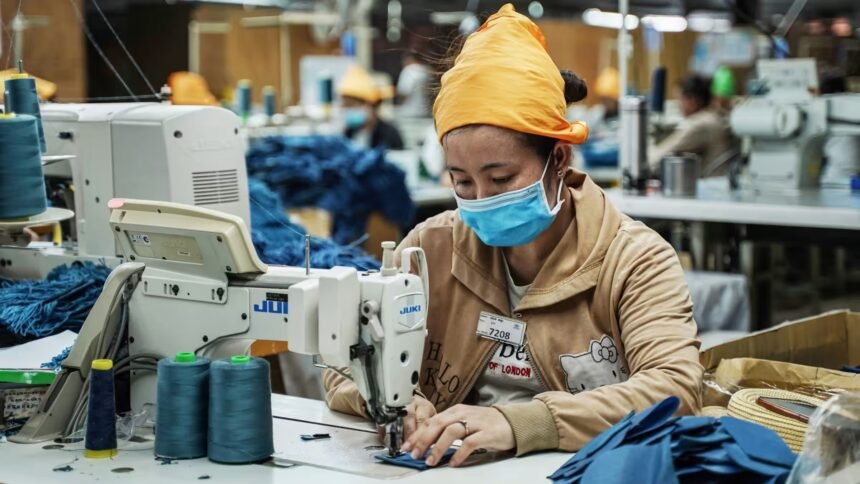
The economic upside for Cambodia is significant. Lower tariffs and clearer trade rules would make Cambodian products more competitive in markets such as Japan, Canada, and the UK. Export-oriented sectors including garments, footwear, bicycles, electronics assembly, and processed agricultural products could benefit from stronger and more stable demand. For a country that relies heavily on exports for jobs and income, this matters at the ground level, not just on policy paper.
There is also a less visible but equally important benefit. CPTPP membership requires strong standards on transparency, customs efficiency, intellectual property, labour conditions, and environmental practices. Meeting these requirements would push Cambodia’s reforms further, helping create a more predictable and trusted business environment. Over time, this tends to attract better-quality investment rather than short-term or speculative capital.
For investors, Cambodia’s CPTPP ambitions change the equation in several ways.
First, Cambodia could become a strategic export base. Investors manufacturing in Cambodia would be able to reach multiple CPTPP markets under preferential terms, which is especially attractive for companies looking to diversify production away from a single country.
Second, CPTPP rules offer clearer protections for foreign investors. This reduces risk and improves long-term planning, particularly for capital-intensive sectors such as agro-processing, food manufacturing, logistics, and industrial infrastructure.
Third, Cambodia’s cost advantages remain real. Competitive labour costs, improving infrastructure, and growing industrial zones become far more powerful when combined with access to high-income consumer markets.
Fourth, regional supply chain integration would deepen. Investors could plug Cambodian operations into existing networks linking Vietnam, Malaysia, Singapore, Japan, and Australia, creating opportunities well beyond basic manufacturing.
Cambodia’s CPTPP application does not guarantee quick entry. Negotiations will take time, and reforms will need to continue. But the signal is already strong. Cambodia is positioning itself not as a low-cost outlier, but as a reliable, rules-based trade partner. For investors watching Southeast Asia closely, that shift is worth paying attention to.