Along Cambodia’s southwest coast, where rivers slow and forests lean gently into the water, Trapeang Rung offers a different way of understanding nature. Perched on the edge of the Tatai River in Koh Kong Province, this small community opens a quiet window into one of the country’s most vital ecosystems: the mangroves. Here, the experience is not about spectacle or scale, but about movement, rhythm, and coexistence.
From a Cambodian perspective, Trapeang Rung feels deeply familiar. It reflects a way of life shaped by tides, patience, and respect for the natural world—values that have sustained coastal communities for generations.
Where River and Forest Become One
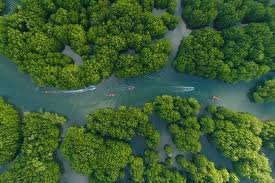
Mangroves are often described as forests that live between land and sea. In Trapeang Rung, this description comes alive. Narrow waterways wind through dense roots that rise like living sculptures from the mud, filtering sunlight and sound. The water reflects the forest above, creating a sense of calm that feels almost suspended in time.
The village lies near the lower reaches of the Cardamom landscape, one of Southeast Asia’s most important ecological regions. From the riverbanks, visitors glimpse how mangroves protect coastlines, nurture marine life, and support livelihoods—all at once.
Community-Led Encounters on the Water
Exploring Trapeang Rung usually begins by boat. Community-run tours drift slowly through mangrove channels, guided by local residents who know the tides as well as they know their own stories. These journeys are deliberately unhurried, allowing the forest to reveal itself naturally.
Kingfishers flash blue across the water. Macaques move quietly among the branches. With luck, otters appear briefly before disappearing into the roots. These sightings are not staged. They are moments of shared space between people and wildlife.
For Cambodians, this approach reflects an important principle: nature is not a performance, but a presence.
Simple Stays, Lasting Impact
Accommodation in Trapeang Rung is modest. Small guesthouses offer basic comfort, clean spaces, and a sense of belonging. There is no rush to modernise beyond necessity, and that restraint is intentional.
By keeping tourism small-scale, the community ensures that economic benefits stay local while environmental pressure remains low. Income from visitors supports families, education, and conservation efforts, reinforcing a cycle where protection and livelihood grow together.
This balance is increasingly rare—and deeply valuable.
Why Mangroves Matter to Cambodia
Mangroves are among Cambodia’s strongest natural defences. They protect coastlines from erosion, support fisheries, and store significant amounts of carbon. In places like Trapeang Rung, these forests are also social infrastructure, sustaining food systems and cultural practices.
As climate risks increase, mangrove ecosystems play an even greater role in national resilience. For Cambodia, protecting these areas is not only an environmental priority, but a strategic one.
From a Cambodian lens, mangroves are not “unused land.” They are living systems that quietly hold the country together along its coast.
Early Mornings and Living Landscapes
Local guides often recommend early morning boat trips, when the forest is most active. The light is softer, wildlife more visible, and the river calm. These hours reveal how closely daily life here follows natural cycles rather than schedules.
This rhythm—tide, light, movement—offers visitors a deeper understanding of how coastal communities adapt rather than dominate their environment.
Tradition, Conservation, and the Future
Trapeang Rung’s strength lies in what it has chosen not to become. There are no large resorts, no crowded boardwalks, and no artificial attractions. Instead, the village demonstrates how conservation-led tourism can remain authentic while still supporting development.
For Cambodia, this model matters. It shows that growth does not need to replace identity, and that protecting ecosystems can also protect dignity and opportunity.
A Quiet Lesson in Balance
From within Cambodia, Trapeang Rung offers something more than a travel experience. It offers a lesson. That development can be gentle. That communities can lead. And that nature, when respected, gives more than it takes.
In a world moving quickly, this village moves carefully—and that may be its greatest strength.
Trapeang Rung, in Koh Kong Province, reveals the quiet magic of Cambodia’s mangroves. Through slow boat journeys, community stewardship, and living forests, it shows how people and nature can remain deeply connected.
As Cambodia looks toward a future shaped by technology and AI, places like Trapeang Rung remind us why that future must stay grounded. Progress is most meaningful when it protects what already works—ecosystems, communities, and the wisdom they carry forward.
Also Read: Yeak Laom Lake & Surroundings, Ratanakiri: Cambodia’s Volcanic Wonder