A three-hour journey south from Phnom Penh brings travellers to Kampot, a riverside town shaped by water, wind, and memory. Framed by misty hills and long-known pepper plantations, Kampot has become one of Cambodia’s most inviting short escapes—close enough for a weekend, yet far enough to feel like a change of rhythm.
- The Journey South: Simple, Accessible, Familiar
- Kampot: A Town Shaped by River and Trade
- Budget and Luxury: Two Ways to Experience the Same Place
- The River as the Centre of the Experience
- Why Short Escapes Matter in Today’s Travel
- Kampot and the Future of Experience-Led Travel
- Infrastructure, Access, and Regional Movement
- A Riverside Pause, Not an Escape from Reality
Seen from Cambodia, the route from the capital to Kampot is more than a transfer between two points. It is a passage from urban movement to riverside calm, from traffic and timetables to slow afternoons and open horizons. In recent years, this journey has also become a small example of how domestic and regional travel in Cambodia is evolving—toward experiences that value space, nature, and local character.
The Journey South: Simple, Accessible, Familiar
Travel between Phnom Penh and Kampot is straightforward. Buses, shared vans, and private cars make the trip daily, carrying families, students, and visitors along the same road that links the capital to Cambodia’s southern provinces.
The distance is short by regional standards, but the shift in atmosphere is noticeable. The city’s dense streets gradually give way to open fields, salt flats, and low hills. By the time travellers reach Kampot, the pace has already changed.
For many Cambodians, this route is familiar. It is taken for family visits, work, or short breaks. For visitors, it offers an accessible introduction to how Cambodia’s landscapes and daily life change beyond the capital.
Kampot: A Town Shaped by River and Trade
Kampot sits along the Prek Kampot River, a waterway that has long supported trade, farming, and movement. The town’s layout reflects this history. Colonial-era buildings line quiet streets, small markets open toward the water, and boats move slowly along the river in the late afternoon light.
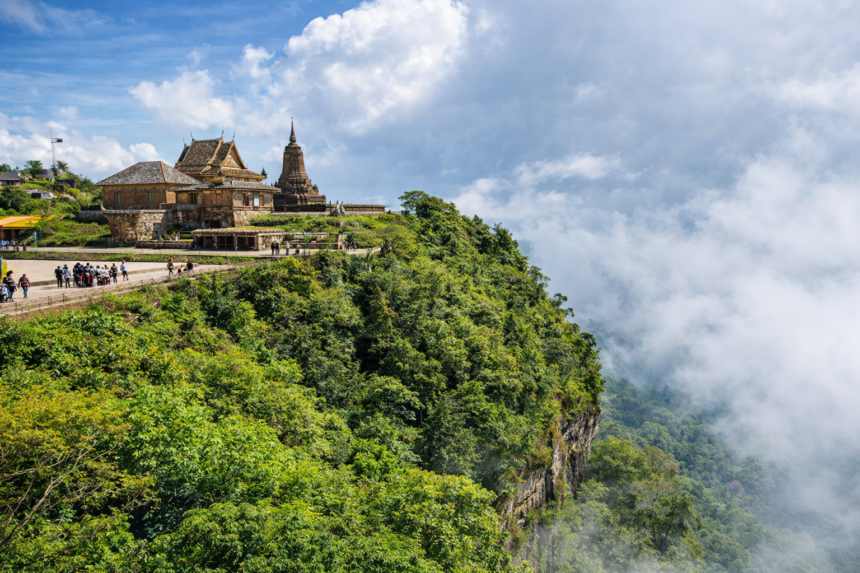
Beyond the town, Kampot province is known for its pepper plantations, salt fields, and nearby hills, including the Bokor area. These landscapes are not separate attractions; they are part of the same working environment that has supported communities for generations.
From a Cambodian perspective, Kampot is not only a leisure destination. It is also a place of production, memory, and everyday life—where tourism exists alongside farming, fishing, and small trade.
Budget and Luxury: Two Ways to Experience the Same Place
One of Kampot’s strengths is its flexibility. The town welcomes both budget travellers and those looking for quieter, more comfortable stays, without dividing these experiences into separate worlds.
For budget-minded visitors, hostels and guesthouses offer river views, shared spaces, and simple comfort. Renting a scooter to explore Bokor Hill Station or the surrounding salt fields remains a popular way to see the area at a relaxed pace. Evenings are often spent by the river, where the light changes and the town settles into its slower rhythm.
For those choosing a more refined stay, Kampot also offers boutique hotels and villas, some with infinity pools and spa services. Guided visits to pepper plantations, cooking classes focused on Khmer cuisine, and sunset river cruises provide a more structured but still place-based experience.
Both approaches share the same setting: the river, the hills, and the town’s unhurried character.
The River as the Centre of the Experience
The Prek Kampot River is not simply a backdrop. It is the town’s main presence. Morning mist lifts from its surface, boats move along its bends, and evenings often bring people to its banks to walk, talk, or sit quietly.
River cruises, kayaking, and casual boat trips have become part of Kampot’s appeal, not because they are dramatic, but because they are gentle. The water reflects the town’s slower pace and offers a way to experience the landscape without leaving it behind.
In Cambodia, rivers have always been central to settlement, trade, and culture. Kampot continues this tradition in a quieter, more personal way.
Why Short Escapes Matter in Today’s Travel
In recent years, travel patterns across Southeast Asia have shown a growing interest in short, flexible trips. Economic uncertainty, changing work habits, and climate considerations have all influenced how people choose to move.
Routes like Phnom Penh to Kampot fit well into this shift. They allow travellers to step away from cities without long planning or high costs. They also support local economies through regular, smaller-scale visits rather than seasonal surges.
For Cambodia, this kind of travel strengthens domestic tourism and encourages visitors to explore beyond major hubs, spreading both opportunity and attention more evenly across regions.
Kampot and the Future of Experience-Led Travel
Kampot’s appeal lies in its balance. It is not isolated, yet it feels separate from urban pressure. It offers activities without demanding schedules. It remains connected to production—pepper, salt, agriculture—while welcoming travellers who want to understand place rather than simply pass through it.
This balance aligns with broader regional trends toward experience-led travel, where visitors look for authenticity, local connection, and slower movement.
From a Cambodian perspective, this is not a new idea. It reflects how towns like Kampot have always lived—by adapting to visitors without losing their working identity.
Infrastructure, Access, and Regional Movement
The ease of reaching Kampot from Phnom Penh also points to a larger story about connectivity within Cambodia. Improved roads and transport services have made short-distance travel more practical for both residents and visitors.
This accessibility supports weekend tourism, small business growth, and regional integration. It also helps ensure that destinations like Kampot remain part of everyday travel networks, not only special-occasion trips.
A Riverside Pause, Not an Escape from Reality
Kampot is often described as an escape, but for many Cambodians it is better understood as a pause—a place where life continues at a different speed. Markets still open. Boats still move. Fields still produce.
Visitors join this rhythm for a few days, then return to the city with a clearer sense of how varied Cambodia’s daily landscapes can be.
The journey from Phnom Penh to Kampot is simple in distance but rich in contrast. It connects Cambodia’s capital to a riverside town shaped by water, trade, and time. Whether experienced through budget stays or more refined comforts, Kampot offers the same essential quality: space to slow down and notice where you are.
Seen from Cambodia, this route is not only a travel option. It is a reminder that some of the country’s most meaningful experiences are found not in distance, but in difference of pace—and in the quiet presence of a river that continues to shape life along its banks.
Also Read: How to Travel Responsibly: A Cambodian Guide to Eco-Travel That Gives Back