Along Cambodia’s southern coastline, two very different moods of the sea sit within easy reach of each other. Kep, with its calm shores and slow rhythms, offers a gentle introduction to coastal life. Koh Rong, further offshore, presents a more energetic island scene shaped by white sands, clear water, and a growing tourism economy. The journey between them reflects more than a change in scenery—it traces how Cambodia’s coastal travel is evolving.
- Kep: A Coastline Built for Slowing Down
- The Route to the Islands: Connecting Coast to Coast
- Koh Rong: An Island Shaped by Tourism and Nature
- Budget and Luxury: Two Paths, One Coastline
- Why This Journey Reflects Cambodia’s Travel Future
- Environmental and Community Considerations
- A Journey of Contrast, Not Opposition
For many travellers, this route begins in Kep, a town long associated with seafood, quiet walks by the water, and views that invite unhurried afternoons. From there, the journey continues via Sihanoukville to Koh Rong, where beaches stretch wide and the pace shifts toward activity, exploration, and nightlife. Together, these destinations show two sides of Cambodia’s coast, connected by shared history, changing travel patterns, and the steady pull of the sea.
Kep: A Coastline Built for Slowing Down
Kep has always been known for its gentle atmosphere. Once a retreat during earlier decades, it remains a place where mornings start quietly and evenings end with the sound of waves and passing boats. The town’s small crab market, shaded seaside paths, and nearby pepper farms reflect a way of life that remains closely tied to local production and daily routines.
From a Cambodian perspective, Kep is not designed for crowds or fast itineraries. It is a place where visitors often come to pause, enjoy simple meals, and walk along the shore without planning too much. This character has helped Kep maintain its identity even as tourism across the country has expanded.
Accommodation in Kep ranges from modest guesthouses to boutique stays, but the experience is shaped less by luxury and more by location. The sea remains close, the town remains compact, and the days remain open.
The Route to the Islands: Connecting Coast to Coast
Travel from Kep to Koh Rong typically passes through Sihanoukville, Cambodia’s main coastal transport hub. Buses and private transfers link Kep with the port city, and ferries or speedboats continue onward to the islands. The full journey usually takes several hours, but it is a well-established route for both domestic and international travellers.
This connection highlights an important part of Cambodia’s tourism development: accessibility. Improved roads and regular ferry services have made island travel easier and more reliable, allowing destinations like Koh Rong to become part of shorter, flexible travel plans rather than once-in-a-lifetime trips.
For Cambodia, these links do more than move visitors. They support local businesses, create jobs along the route, and encourage travel beyond major urban centres.
Koh Rong: An Island Shaped by Tourism and Nature
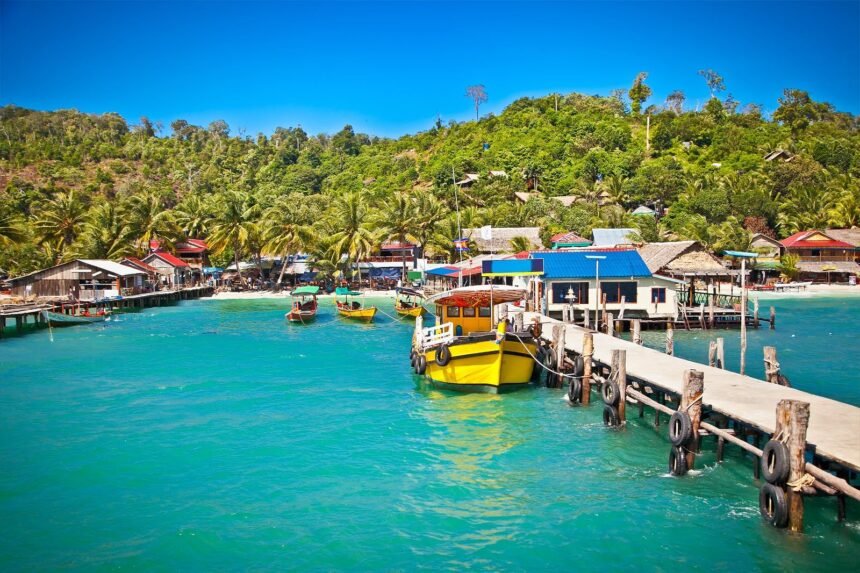
Koh Rong has become one of Cambodia’s most recognisable island destinations. Its long beaches, turquoise waters, and forested interior have drawn attention from travellers looking for both relaxation and activity. Over time, the island has developed a mix of accommodation—from simple beach bungalows to high-end resorts—reflecting different styles of travel and investment.
Activities on Koh Rong often centre on the sea. Snorkelling, boat trips, and swimming remain among the most popular ways to experience the island. Evenings, depending on the area, can be either quiet and reflective or lively with music and beach gatherings.
From a Cambodian point of view, Koh Rong represents both opportunity and responsibility. Tourism has brought infrastructure, employment, and visibility, but it has also increased the need for careful management of natural resources, waste, and development patterns.
Budget and Luxury: Two Paths, One Coastline
The contrast between Kep and Koh Rong is also reflected in how travellers experience them. In Kep, budget travel often means simple rooms, local meals, and days shaped by walking, resting, and observing daily life. On Koh Rong, budget stays might involve shared bungalows, boat trips with local operators, and evenings spent along busy beachfronts.
At the other end, luxury travel connects both destinations through a different lens. In Kep, this may mean private villas, curated dining experiences, and quiet retreats. On Koh Rong, it can involve resort stays, private boat charters, and spa-focused escapes.
What connects these experiences is not price, but setting. The same coastline supports both styles, and both depend on the health of the environment and the stability of local communities.
Why This Journey Reflects Cambodia’s Travel Future
The Kep–Koh Rong route illustrates a broader trend in Cambodia and Southeast Asia: travellers increasingly look for combinations of calm and activity, nature and comfort, local character and reliable access.
Short coastal routes make this possible. They allow visitors to experience different sides of the country within a single trip and encourage longer stays that benefit more communities. For Cambodia, this kind of travel supports a more distributed tourism economy rather than concentrating activity in only a few locations.
It also aligns with changing travel behaviour, where flexibility, regional movement, and experience-led itineraries matter more than rigid schedules.
Environmental and Community Considerations
As coastal tourism grows, so does the importance of responsible management. Kep’s quieter pace and Koh Rong’s expanding infrastructure both depend on clean water, healthy marine life, and balanced development.
Local authorities, businesses, and communities continue to face the challenge of maintaining these conditions while welcoming more visitors. This includes waste management, coastal protection, and ensuring that tourism benefits remain connected to local livelihoods.
For travellers, the journey from Kep to Koh Rong offers a clear reminder that Cambodia’s coast is not just a destination—it is a working environment where fishing, farming, transport, and tourism coexist.
A Journey of Contrast, Not Opposition
It is easy to describe Kep and Koh Rong as opposites: one quiet, one lively. But seen together, they form a more complete picture of Cambodia’s coastal identity. Both places depend on the same sea, the same transport routes, and many of the same people who work across the region.
The shift from quiet shores to island energy is not a break—it is a transition, showing how Cambodia’s coast continues to adapt while keeping its connection to place.
Travelling from Kep to Koh Rong is more than moving between two destinations. It is a journey through Cambodia’s changing coastal story—from calm, community-shaped spaces to islands that reflect the country’s growing presence on regional travel maps.
For visitors, it offers variety without distance. For Cambodia, it represents how accessibility, nature, and local life can come together to shape a tourism future that is both dynamic and rooted in place.
Also Read: Mixed Signals From Thailand Deepen Uncertainty Over Cambodia–Thailand Ceasefire