Phnom Penh — A national farming initiative is empowering residents of displacement camps across Cambodia by promoting self-sufficient agricultural practices, according to officials and program organizers. The movement, combining farming plots, community support and training, aims to improve food security and livelihoods for vulnerable families affected by displacement.
Launched with the participation of local authorities and civil society groups, the program encourages displaced residents to cultivate vegetables and food crops within designated spaces of camps located in provinces including Kampong Thom, Svay Rieng and Prey Veng. Organizers say the initiative helps households supplement traditional food supplies and reduce reliance on external food assistance.
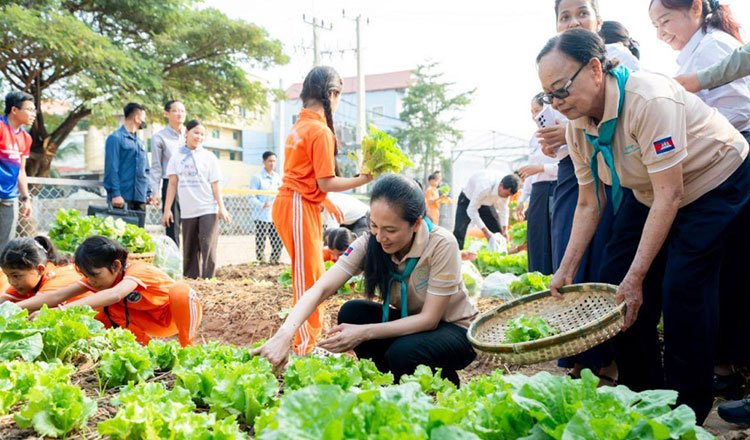
At several sites, families are being provided with seeds, basic tools and agricultural guidance to plant nutrient-rich vegetables such as squash, spinach, beans and leafy greens. Volunteers and agricultural extension workers offer regular training sessions on cultivation techniques, pest management and soil care tailored to seasonal conditions.
Officials involved in the program noted the movement not only promotes food production but also helps build community cooperation and strengthen local networks. By involving residents in planning and managing plots, the initiative is positioned as a tool to enhance resilience and foster a sense of ownership.
The farming movement has gained traction as part of broader efforts to support displaced families and improve rural livelihoods, especially where access to arable land and stable income opportunities remains a challenge. Earlier reports indicate that displaced households often face food shortages, making practical agricultural interventions a priority for local authorities.
Participating residents shared that harvesting produce from camp gardens has helped reduce daily expenses and contribute to household nutrition. Stakeholders also highlighted the importance of ongoing support and coordination to expand the initiative and adapt it to other regions experiencing displacement.
Government representatives and partners say they will continue monitoring outcomes to refine implementation, promote sustainable practices and contribute to long-term community wellbeing through agriculture-centred approaches.
Also Read: Angkor Wat Equinox Event to Draw Thousands as Sun Aligns With Ancient Spires