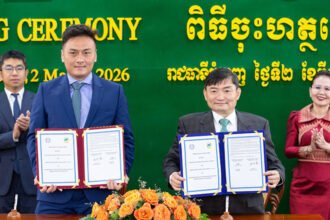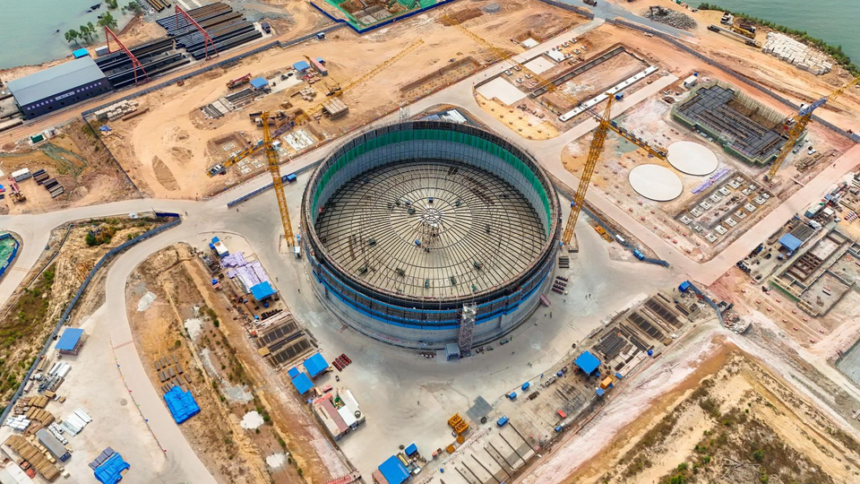
For many Cambodians, energy is not discussed in technical terms alone. It is felt in daily life—when electricity remains stable during the dry season, when factories operate without disruption, and when households, schools, and hospitals can depend on uninterrupted power. As Cambodia moves toward commissioning its first liquefied natural gas (LNG) power plant, the country enters a new phase in its long-term energy journey.
This development reflects years of planning aimed at strengthening power security, supporting economic expansion, and preparing Cambodia’s energy system for the demands of a growing nation.
Cambodia’s Changing Energy Landscape
Over the past two decades, Cambodia has made steady progress in expanding electricity access across the country. What was once limited and uneven has gradually improved, reaching rural communities and supporting urban growth.
In Phnom Penh, rising electricity demand mirrors broader economic activity—from manufacturing and logistics to commercial services and residential development. This growth has brought renewed attention to the importance of energy diversification.
Cambodia’s power mix has traditionally relied on hydropower, coal, and imported electricity. While these sources have supported development, they are influenced by seasonal variability and external factors. The introduction of LNG adds a new layer of reliability, helping balance the national energy portfolio.
What the First LNG Power Plant Means for Cambodia
The country’s first LNG power plant represents a strategic shift toward more flexible and stable electricity generation. LNG-fired plants are capable of supplying consistent base-load power while responding quickly to fluctuations in demand.
For Cambodia, this flexibility is critical. Hydropower output can vary depending on rainfall, while industrial and urban demand continues to rise. LNG provides a dependable alternative that supports both short-term stability and long-term planning.
From a Cambodian perspective, the project represents preparedness—an assurance that future growth will be supported by reliable infrastructure.
Strengthening National Power Security
Energy security is closely linked to national development. Reliable electricity underpins industrial productivity, investor confidence, and essential public services.
The LNG power plant is expected to:
- Reduce reliance on a limited number of power sources
- Improve grid stability during dry seasons
- Support peak electricity demand during periods of rapid growth
These outcomes contribute directly to Cambodia’s broader economic objectives, which are explored in Cambodia’s Economic Growth in 2025: Key Sectors Driving Progress, where energy reliability is highlighted as a key enabler of sustained development.
Power Supply and Economic Growth
As Cambodia continues to expand its industrial base, energy availability becomes increasingly important. Manufacturing zones, logistics centres, and export-oriented industries depend on stable power to operate efficiently.
Improved power security supports job creation, encourages investment, and strengthens Cambodia’s competitiveness within the region. For local communities, this connection between energy infrastructure and employment opportunities is tangible—stable electricity often translates into stable livelihoods.
The LNG project aligns with broader efforts to improve the investment environment, including policies discussed in Cambodia’s Law to Protect Foreign Investment, where infrastructure reliability is a key consideration for long-term investors.
LNG as a Transitional Energy Source
While LNG is a fossil fuel, it is widely regarded as a transition energy source due to its lower emissions compared to coal. For Cambodia, LNG complements existing hydropower and growing solar capacity by providing consistency when renewable output fluctuates.
This balanced approach reflects a practical pathway toward sustainability—meeting immediate energy needs while continuing to explore cleaner energy solutions. The LNG plant supports this transition by ensuring reliability without delaying renewable expansion.
Infrastructure, Institutions, and Planning
Developing LNG infrastructure involves coordination across ports, storage facilities, transmission networks, and regulatory frameworks. Institutions such as Electricité du Cambodge play a central role in integrating new power sources into the national grid.
These efforts demonstrate long-term planning focused on resilience and efficiency. For Cambodians, such coordination reflects confidence in the country’s ability to manage complex infrastructure projects while maintaining public interest.
Impact at the Community Level
Beyond national statistics, stronger power security affects everyday life. Reliable electricity supports education, healthcare, digital access, and small businesses.
In rural areas, improved power reliability can encourage local enterprise and reduce pressure on urban migration. In cities, it enhances quality of life and supports modern services. The LNG power plant contributes to these outcomes by strengthening the backbone of Cambodia’s energy system.
Cambodia’s Energy Future
Cambodia’s move toward LNG places the country within a broader regional trend of energy diversification. As Southeast Asia’s power demand continues to rise, Cambodia’s focus on reliability and balance positions it for steady, sustainable growth.
For international partners, the LNG project signals readiness and planning. For Cambodians, it represents continuity—ensuring that development is supported by infrastructure capable of meeting future needs.
Cambodia’s first LNG power plant marks a meaningful step in the nation’s energy transformation. By strengthening power security and supporting economic growth, the project reinforces Cambodia’s commitment to long-term stability.
Seen from a Cambodian perspective, this development is not just about energy generation. It is about trust in progress—confidence that the country’s future growth will be supported by reliable, resilient, and well-planned infrastructure.
Also Read: Victory over Genocide Day in Cambodia: A Day of Memory, Survival, and Renewal