Diplomatic pressure is building to halt the fighting along the Cambodia–Thailand border, but on the ground and in the region’s tourism markets, the consequences of the conflict are already being felt in unexpected ways.
For Thailand, a country whose economy leans heavily on mass tourism, the timing could hardly be worse. Bangkok’s beaches, nightlife districts and heritage cities were already struggling with overcrowding and strain on infrastructure before the crisis. Now, with daily headlines about clashes and fighter jets, Thailand has found a far more dramatic way to thin the crowds. War, as a tourism management strategy, is rarely recommended by economists.
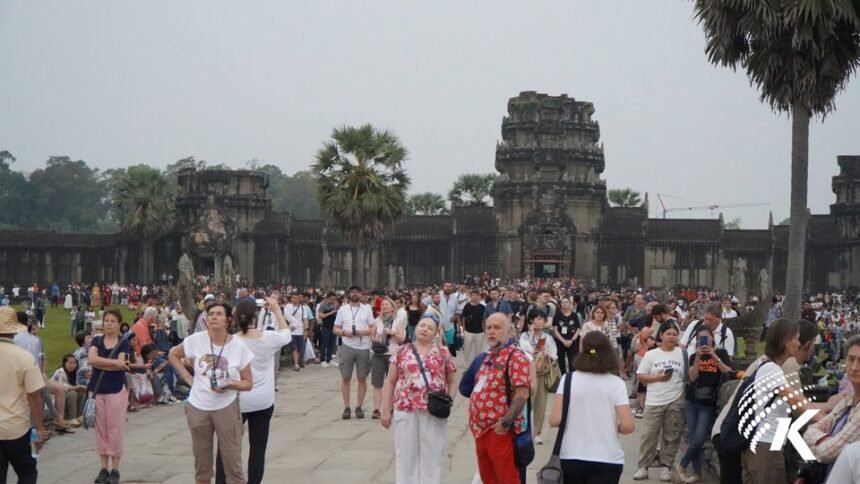
Cambodian officials say Thai military aircraft, including F-16 fighter jets, conducted bombing runs near areas close to Siem Reap, a move widely seen here as an attempt to intimidate civilians and frighten tourists. Siem Reap, home to Angkor Wat and the spiritual heart of Cambodian tourism, is not a military target. For many observers, the message appeared aimed less at the battlefield and more at the travel advisories of foreign governments.
The effect on Thailand’s tourism image has been swift. Travel forums, booking platforms and regional tour operators report growing hesitation among visitors considering Thailand during what is now the second week of open hostilities. Families planning holidays tend to avoid destinations where air force activity makes the news, even if the beaches are far from the border. Investors and insurers are similarly cautious.
Cambodia’s tourism story is different. The Kingdom has never sold itself as a party capital or a place for unchecked crowds. Visitors come for temples at sunrise, meditation retreats, river towns, heritage villages and quiet beaches. They come looking for meaning, calm and reflection. That profile, tourism officials say, is not easily shaken by headlines of aggression elsewhere.
“There is a difference between volume tourism and value tourism,” one Cambodian industry executive said. “People who come to Cambodia are not chasing noise. They are seeking peace.”
Ironically, that distinction may now work in Cambodia’s favour. As Thailand’s aggressive posture dominates regional news, Cambodia is increasingly viewed as the victim of the conflict rather than its instigator. History shows that sympathy can be a powerful force in shaping global travel sentiment, especially among long-haul and culturally motivated travellers.
At the diplomatic level, efforts to stop the fighting continue, though progress has been uneven. China has called for an immediate ceasefire, urging both sides to exercise restraint and take concrete steps to reduce tensions. A spokesperson for China’s Ministry of Foreign Affairs said Beijing would continue to promote peace talks and play a constructive role, in line with the wishes of both parties, to help restore stability.
Within ASEAN, a special Foreign Ministers’ Meeting scheduled for December 16 to review satellite monitoring of the conflict has been postponed to December 22. Malaysian Prime Minister Anwar Ibrahim said the delay was requested by both Cambodia and Thailand to ensure the process proceeds smoothly. Malaysia, the current ASEAN chair, has remained in regular virtual contact with leaders from both countries.
Anwar previously announced that an ASEAN Observer Team, led by Malaysia’s Chief of Defence Forces, would be deployed to monitor developments on the ground, with findings to be presented to ASEAN foreign ministers. Cambodian Prime Minister Hun Manet has also proposed the use of satellite imagery to independently establish how the fighting that began on December 7 unfolded.
Despite repeated ceasefire appeals from Malaysia and a truce supported by U.S. President Donald Trump, hostilities have continued into a ninth consecutive day, highlighting the fragility of diplomatic efforts so far.
For Thailand, the economic risks are substantial. Tourism accounts for a significant share of GDP, employment and foreign exchange earnings. Prolonged instability, even far from resort areas, can ripple through airlines, hotels, retail and small businesses nationwide. Markets tend to punish uncertainty, and tourists are among the quickest to change plans.
Cambodia, meanwhile, is positioning itself as steady, spiritual and open. Temples remain open, festivals continue, and the message from Phnom Penh is one of calm resilience. The Kingdom insists it seeks peace, not escalation, and that its appeal as a destination lies precisely in the values now under threat across the border.
Wars may be fought with weapons, but they are often lost in perception. In that arena, Thailand’s aggressive tactics risk costing it far more than any tactical gain, while Cambodia’s image as a peaceful cultural refuge may emerge stronger than before.