Cambodia did not become one of the world’s largest cashew producers by accident. The expansion happened field by field, farmer by farmer, over years of quiet persistence. What is happening now feels different. The country’s cashew sector is no longer just growing. It is maturing, and that changes the conversation for investors.
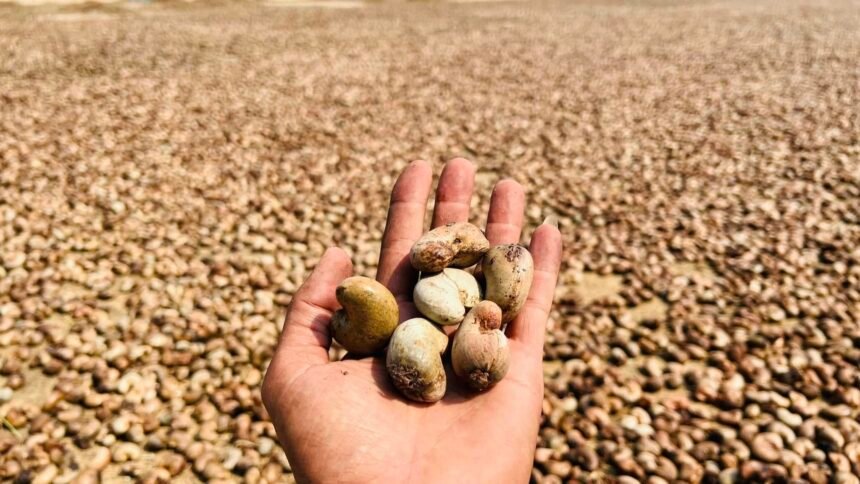
Cashew trees stretch across Kampong Thom, Tboung Khmum, Kratie, Ratanakiri, Preah Vihear and beyond. Harvest volumes have crossed the one-million-tonne mark annually, putting Cambodia firmly among the global leaders. Yet most of this crop still leaves the country in raw form, bound for processing centres elsewhere. That long-standing pattern is now being questioned.
Industry leaders, farmers, and policymakers increasingly agree on one thing: exporting raw cashew alone is no longer enough.
A sector built on real volume
Cambodia’s strength starts with scale. The country does not rely on pilot farms or experimental acreage. Cashew here is already a commercial crop grown by hundreds of thousands of farming households. Volumes are large, harvests are predictable, and supply chains are established.
For buyers of raw cashew, this matters. Consistency is often more important than price. Cambodia can offer both.
The Cashew Nut Association of Cambodia (CAC) has spent years working with farmers to stabilise production, improve post-harvest handling, and reduce unnecessary costs. That effort rarely makes headlines, but it is the reason buyers continue to return season after season.
Why processing is the missing piece
Despite this strong foundation, most of the value still sits elsewhere. When raw cashew crosses the border unprocessed, Cambodia gives up margins that could otherwise stay within the local economy.
Processing changes everything. Once a nut is cracked, graded, and packed, it enters a different market altogether. Add shell processing, industrial oils, fertiliser inputs, and food by-products, and the economics shift again.
A single tonne of raw cashew can support multiple revenue streams. Kernels are only part of the story. Shells become industrial inputs. Residual biomass becomes energy or fertiliser. Cashew apples, often wasted, can be turned into feed, juice, or fermented products.
For investors, this is where the real opportunity lies.
Costs that still make sense
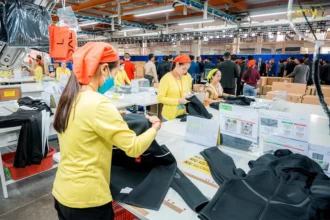
Cambodia’s advantage is not only agricultural. Processing economics remain favourable. Labour costs are competitive. Land availability in producing provinces is less constrained than in older processing hubs. Operating costs are still manageable for mid-scale and large-scale facilities.
This allows investors to build processing capacity without the cost structures that now challenge more mature markets. It also opens space for phased investment — starting with kernel processing and expanding into by-products once volumes and experience grow.
A quieter push on sustainability
One reason global buyers are cautious today is not supply, but risk. Climate volatility, inconsistent quality, and lack of traceability can undo even the best price advantage.
Cambodia has been addressing these issues steadily, if quietly. Through CAC-led programmes, farmers are being trained to use fewer chemical inputs, manage pests more efficiently, and protect long-term soil health. The goal is not ideology. It is stability.
Stable farms produce stable supply. Stable supply attracts long-term buyers. That simple logic is driving much of the current work on the ground.
For investors concerned about ESG requirements, this matters more than glossy reports.
Global demand is not the problem
There is no shortage of buyers for cashew products. Consumption continues to rise, driven by snack foods, health-oriented diets, and plant-based alternatives. Cashew milk, spreads, and ingredients are now mainstream products, not niche items.
What buyers increasingly want is diversification. Over-concentration in a few processing countries has become a risk. Cambodia offers an alternative that is already producing at scale.
Geography helps. Proximity to Asian markets shortens supply chains, while access to multiple export destinations supports risk balancing.
Timing matters
What makes this moment important is timing. Cambodia’s cashew sector is no longer untested. Export figures are real. Farmer networks exist. Institutional coordination is improving. Yet domestic processing capacity remains limited relative to production.
That gap creates room for early movers.
Opportunities range from long-term raw cashew procurement to full processing investments, joint ventures, and technology partnerships. Smaller investors can enter through trading and contract processing. Larger groups can build integrated models linking farms directly to factories.
The fundamentals are already in place. What is needed now is capital, experience, and patience.
As the Cashew Nut Association of Cambodia has consistently pointed out, the future of the sector is not about exporting more raw volume, but about capturing more value where the crop is grown.
Cambodia’s cashew story has reached a turning point. For investors who understand agriculture, processing, and long-term markets, this is not a story to watch from the sidelines. It is one to step into.
Credit: Cashew Nut Association of Cambodia (CAC)