A New Era for Farming
All over the world, farming is standing at a moment of change. People are living longer, cities are growing, and by 2050, the global population is expected to reach nearly 10 billion. Yet the land we grow food on is shrinking, the weather is less predictable, and farmers are being asked to do something almost impossible: produce more food with fewer resources. Even with all the food that’s grown, almost a billion people still go to bed hungry. The issue isn’t always that we don’t have enough food. Often, it’s because food doesn’t reach everyone who needs it, or it gets wasted along the way.
This is where Artificial Intelligence comes in. It might sound like something from the tech world, but on a farm, AI becomes something beautifully practical. It’s like giving farmers a second pair of eyes and ears — ones that can see patterns in weather, soil, and markets that humans simply can’t catch in time. It helps make farming smarter, faster, and fairer.
For Cambodia, where farming still forms the heart of rural life, AI could be the quiet revolution that brings lasting change. It’s not about replacing farmers. It’s about giving them better tools so their hard work pays off more consistently.
Predicting Yields and Managing Risks
Imagine a farmer in Battambang checking his phone early in the morning. A simple app tells him when the rains are likely to start, what the soil temperature looks like, and which day is best to sow his rice. That information could make the difference between a good harvest and a disappointing one.
AI can process satellite images, climate data, and soil readings in seconds. It helps farmers see risks before they appear — whether that’s a pest infestation or a dry spell. When farmers can plan ahead, they waste less seed, save more water, and avoid losses that used to feel inevitable. In a country where weather can change in a heartbeat, this kind of knowledge is priceless.
Smarter Soil, Healthier Harvests
The secret to good farming lies beneath our feet. But most farmers can’t always tell what’s happening in their soil until it’s too late. AI is changing that. Simple hand-held scanners and mobile tools can now tell what nutrients are missing and what kind of fertilizer is actually needed.
If farmers in provinces like Kampong Cham or Prey Veng could access these tools easily, they’d use fertilizers more precisely, spend less, and protect rivers and farmlands from pollution. Healthy soil means healthy crops, and that leads to better income and cleaner ecosystems.
For Cambodia’s growing organic farming movement, AI-powered soil analysis can also help farmers maintain the quality needed for international markets, opening up better trade opportunities.
Breeding Better Seeds for a Changing Climate
AI isn’t just improving how we grow food; it’s helping us create better plants altogether. By studying data from thousands of plant samples, AI can identify which varieties survive heat, drought, or disease best. That allows scientists to develop stronger, more resilient seeds much faster than before.
For Cambodia, where both floods and droughts can wipe out entire fields, this technology can be a game changer. Locally bred rice or cassava varieties designed with AI insights could help small farmers stay productive even when the climate turns unpredictable.
Precision Pest and Weed Control
Ask any farmer and they’ll tell you: pests and weeds are a constant struggle. But spraying pesticides across entire fields wastes money and harms the environment. AI now makes it possible to detect where the problem actually is and treat only those areas.
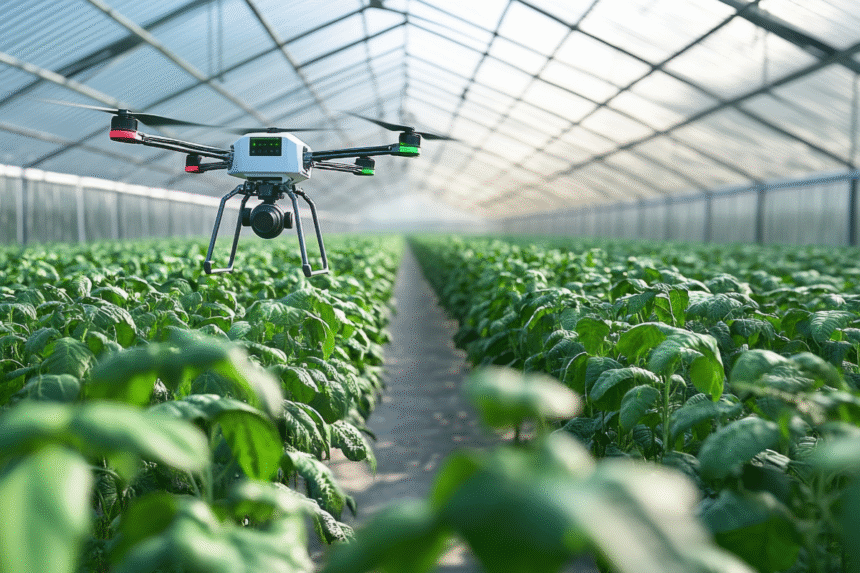
Drones equipped with AI vision can fly over fields, identify weeds or signs of disease, and spray only where needed. That means less pesticide, healthier soil, and safer food. For Cambodia’s fruit, sugarcane, and rice farmers, this kind of precision could save time and reduce costs dramatically.
Smarter Water Use
Water is life for farming, but managing it well is becoming harder. Some farmers have too much; others have too little. AI-powered sensors can measure soil moisture and alert farmers when it’s time to water, and exactly how much. It removes the guesswork.
In places like Kampong Speu or Takeo, where the dry season can be unforgiving, AI-assisted irrigation could make all the difference. Farmers can keep their crops healthy while conserving water, protecting both their livelihood and the environment.
AI Chatbots and Digital Farm Assistants
Not every farmer owns expensive equipment, but almost everyone has a smartphone. This is where AI chatbots become incredibly powerful. Imagine a Khmer-speaking chatbot that answers simple questions: When should I harvest? What will the weather be like this week? What’s the best market price for my corn?
These AI assistants can work around the clock, giving advice and reminders based on local data. They can also connect farmers to experts and government programs without the need to travel long distances. It’s like having a friendly farming guide in your pocket.
Reducing Food Waste and Food Inequality
AI can also help after the harvest. It can predict market demand, track storage conditions, and connect farmers directly with buyers. In Cambodia, where fruits and vegetables often spoil before reaching the market, these systems can prevent huge losses.
By reducing waste, AI ensures that more food reaches families, and farmers earn a fairer income. This kind of digital efficiency can help close the gap between abundance and hunger.
Supporting Smallholder Farmers
Of course, not every farmer can afford high-tech tools. Many smallholders still struggle with limited income and training. But that’s exactly why governments, private companies, and development partners need to work together.
If Cambodia invests in community-based AI hubs, shared tools, and farmer education programs, even small rural cooperatives could access smart technology. Institutions like CARDI and the Ministry of Agriculture could play a major role in bringing these opportunities to local communities.
When small farmers gain access to knowledge, they don’t just grow better crops — they build better futures for their families.
Cambodia’s Path to Smart Farming
Cambodia has already started embracing digital agriculture. Farmers are using mobile apps to check prices, weather updates, and farming tips. The next step is to combine these systems with AI.
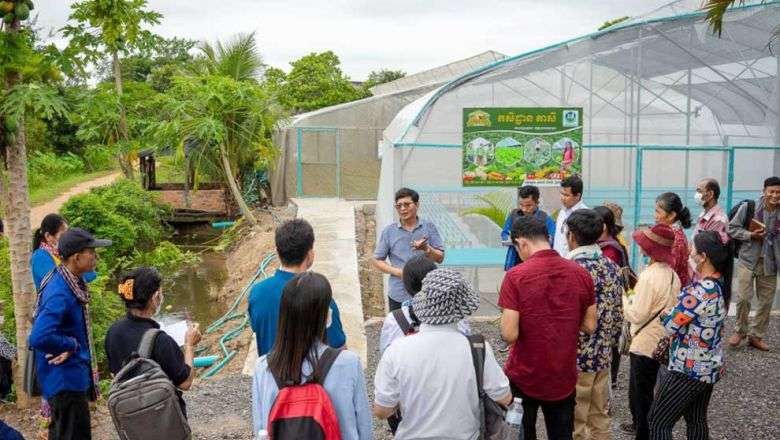
With the right partnerships, Cambodia could build national-level AI systems to monitor crops, predict yields, and respond quickly to disasters. Training centers or Smart Farming Hubs could appear in provinces like Siem Reap or Kampong Thom, where young farmers can learn to use drones, sensors, and data-based decision tools.
By merging Cambodia’s traditional farming wisdom with digital intelligence, the country could emerge as a leader in sustainable, tech-driven agriculture in Southeast Asia.
Looking Ahead
Artificial Intelligence will never replace the farmer’s touch — it will strengthen it. It helps farmers see the unseen, plan better, and protect what they love most: their land. It brings precision to farming without taking away its soul.
If Cambodia continues to embrace these changes with care and inclusivity, it can build a farming system that feeds its people, supports its farmers, and respects nature. As the Cambodian saying goes, “A drop of water fills the jar.” Step by step, field by field, AI can help fill that jar with knowledge, prosperity, and hope for generations to come.