Phnom Penh, Cambodia — Cambodia and Brazil have reaffirmed their commitment to strengthening agricultural cooperation and enhancing complementary trade during a working meeting held on 11 February 2026 at the Ministry of Agriculture, Forestry and Fisheries in Phnom Penh. Both nations highlighted shared interests in expanding agricultural exchanges and leveraging respective production strengths to mutual benefit.
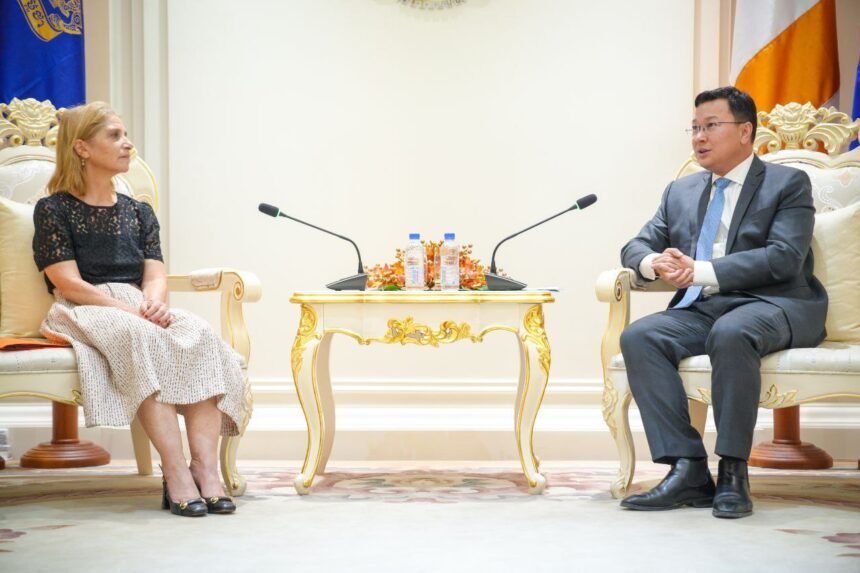
The meeting was attended by Dith Tina, Cambodia’s Minister of Agriculture, Forestry and Fisheries, and Viviana Loss Sanmartin, representing Brazil’s agricultural sector. Officials from both sides underlined the potential for deeper trade ties built on complementary agricultural products and increased private sector engagement.
Minister Dith Tina welcomed the progress in bilateral relations and pointed to Cambodia’s competitive agricultural products — including rice, cassava, and cashew nuts — as key items with export potential. She encouraged Brazilian investors to explore opportunities in Cambodia’s processing, packaging, marketing, and export sectors to enhance market access for Cambodian produce abroad.
Brazilian representatives expressed support for expanding collaboration in farm technology, value-added product development, and capacity building for local agricultural stakeholders. Both sides discussed the importance of business-to-business engagement, with a focus on creating frameworks that facilitate investment and stimulate trade activities benefiting producers in both countries.
The talks also examined avenues for strengthening logistics, transport, and market research to support sustainable growth in agricultural exchanges. Participants emphasized the mutual advantages of trade cooperation grounded in complementary strengths rather than competition, noting that agricultural partnership can contribute to food security, export diversification, and rural development.
Government officials from Cambodia said that the cooperation aligns with the Royal Government’s broader trade strategy, which seeks to diversify export markets, attract foreign investment in agribusiness, and support the modernization of agriculture through technology transfer and private sector involvement.
Both sides indicated intentions to pursue follow-up activities, including potential agriculture trade missions, investment forums, and technical exchanges to sustain momentum in bilateral cooperation.
Also Read: Cambodia–Thailand Trade Slumps as Imports from Thailand Plunge Nearly 50% in January 2026