KOH KONG, Cambodia — The Cambodian Ministry of Agriculture, Forestry and Fisheries (MAFF) has reached a significant milestone in marine conservation, announcing the successful deployment of 2,152 artificial fish shelters across the nation’s four coastal provinces to date.
Speaking at a ceremony at the Royal Beach Resort and Residence in Koh Kong on April 24, 2026, Undersecretary of State Im Rachana underscored the strategic importance of these installations. The initiative is designed to serve as both a sanctuary for marine life and a physical “seabed barrier” against destructive fishing practices.
Strategic Barriers Against Illegal Trawling
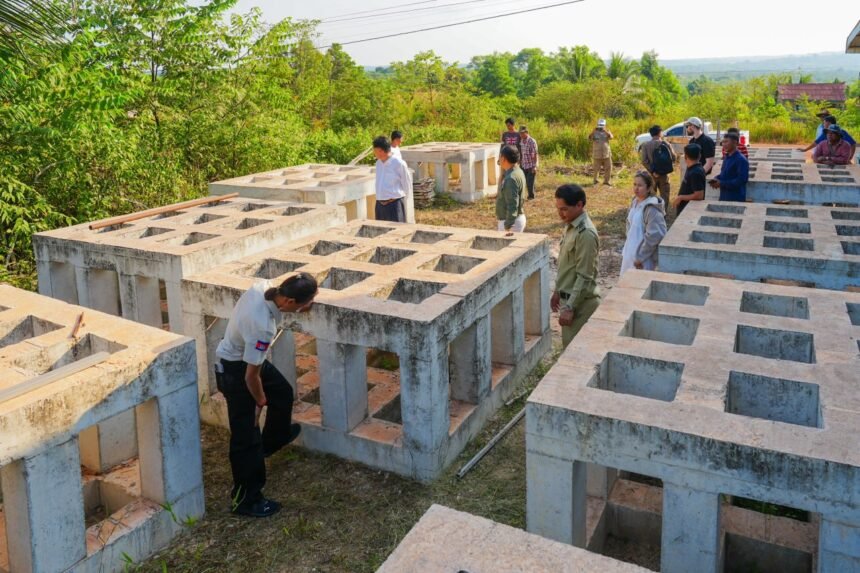
A primary function of these concrete structures is to mitigate illegal bottom trawling within community fishing zones. These practices have long threatened Cambodia’s rare marine species and delicate habitats.
Undersecretary Rachana highlighted that the 14 shelters installed in 2023 have already proven effective in deterring illegal vessels. The physical presence of these blocks snags trawling nets, making it impossible for destructive gear to scrape the ocean floor. This protection is vital for the recovery of:
- Neptune’s cup sponges
- Seahorses and sea turtles
- Seagrass beds and coral reefs
Expanding the Koh Sdach Archipelago Project
The latest phase of the project saw the addition of 12 new artificial shelters in the Koh Sdach (King Island) archipelago. This expansion was organized by the international conservation NGO Fauna & Flora, in partnership with the Fisheries Administration (FiA) and the Department of Fisheries Conservation.
The event brought together approximately 40 stakeholders, including provincial officials, conservation experts, and members of the local fishing community, to discuss the direct correlation between ecosystem preservation and economic stability.
Impact on Food Security and Local Economy
The MAFF emphasizes that the preservation of coral reefs and seagrass ecosystems is not just an environmental goal but an economic necessity.
- Fish Stocks: Improved habitats lead to a measurable increase in fish populations.
- Livelihoods: Sustainable fisheries ensure long-term food security for coastal residents.
- Tourism: Healthy reefs attract eco-tourism, providing alternative income streams for the Koh Sdach area.
A Vision for Sustainable Development
Undersecretary Rachana reiterated that this initiative aligns with the Cambodian government’s seventh mandate, which prioritizes sustainable and inclusive development. She called for a unified front, urging law enforcement agencies, local authorities, and the fishing communities themselves to collaborate in protecting these artificial reefs.
The combination of strict law enforcement and the continued deployment of these “seabed barriers” is expected to revitalize Cambodia’s marine environment, ensuring that natural resources remain available for future generations.
For more information on Cambodia’s coastal conservation efforts, visit the Ministry of Agriculture, Forestry and Fisheries (MAFF).