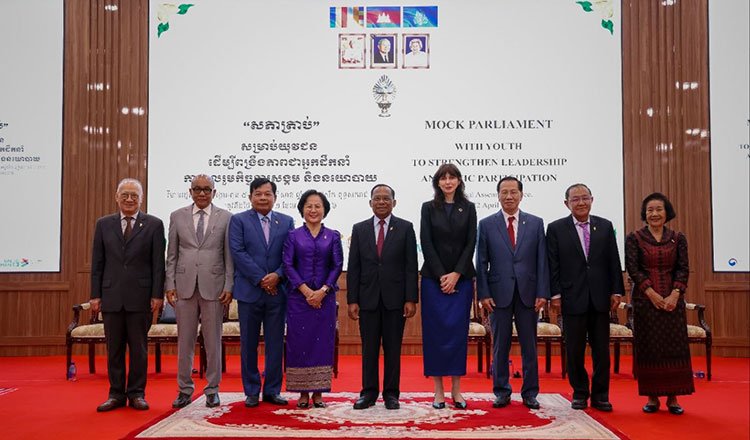
Cambodia’s National Assembly has launched a two-day “Mock Parliament” programme in Phnom Penh, aimed at strengthening youth leadership and encouraging greater participation of women in civic and political processes. The initiative brings together young participants to simulate parliamentary procedures and decision-making.
The programme reflects ongoing efforts to create more inclusive governance by providing practical exposure to legislative processes. It also serves as a platform for young people to engage directly with policymakers and understand institutional frameworks.
Focus on Youth and Women Empowerment
The mock parliament initiative places a strong emphasis on empowering young individuals, particularly women, to take active roles in leadership and governance. Around 80 youth participants, including a majority of young women, are involved in the programme.
The initiative is organised in collaboration with development partners, including UN agencies and parliamentary bodies, highlighting a coordinated approach to capacity building and gender inclusion.
Learning Through Simulation
Participants engage in simulated parliamentary sessions, debates, and policy discussions, allowing them to develop skills in leadership, communication, and critical thinking. The programme is designed as an immersive learning experience that mirrors real-world governance structures.
Key components of the programme include:
- Mock legislative debates and discussions
- Interaction with policymakers and experts
- Training in public speaking and policy analysis
- Focus on gender equality and inclusive leadership
Broader Development Context
The initiative aligns with Cambodia’s broader efforts to increase youth engagement and women’s representation in decision-making processes. While progress has been made, women remain underrepresented in political leadership, making such programmes important for building future capacity.
By encouraging participation at an early stage, the programme aims to contribute to long-term institutional development and inclusive governance.
Conclusion
The launch of the mock parliament programme in Cambodia highlights a strategic effort to nurture future leaders and promote gender-inclusive participation in governance. By engaging youth—especially young women—in simulated legislative processes, the initiative supports skill development, civic awareness, and long-term leadership capacity. The programme underscores the importance of creating structured opportunities to strengthen democratic participation and representation.
Also Read: World Vision Aid Reaches 5.4 Million People Amid Displacement Crisis in Cambodia