When you come from a country like Cambodia, you do not speak lightly about war.
For us, conflict is not theory. It is something people still carry in their bodies and families. It is land that stayed empty for years. It is schools that opened late, and children who grew up too fast. That history shapes how we look at the current situation with Thailand, and why we are deeply concerned by the direction events have taken.
Let me be clear at the outset. Cambodia does not seek confrontation with Thailand. We have lived side by side for centuries. Our people share markets, temples, languages, and livelihoods along the border. The idea that our future should be shaped by renewed hostility runs against everything we have worked toward since peace returned to Cambodia more than three decades ago.
The present tensions are often described as the result of unresolved territorial disputes or rising nationalism. Those explanations are familiar, but they are incomplete. Border issues between Cambodia and Thailand did not suddenly appear this year. They existed during long periods of calm, dialogue, and cooperation. The more difficult question is why restraint has weakened, and why political space for compromise seems narrower than before.
From Cambodia’s point of view, the greatest danger is not a single incident or disagreement. It is escalation. Once escalation begins, control slips quickly. Words harden. Military postures replace diplomacy. And soon, domestic politics and external interests begin to shape decisions that were once local and manageable.
Southeast Asia has seen this pattern before, and Cambodia has suffered from it more than most. During the Cold War, conflicts in our region were rarely allowed to remain local. They became proxy arenas for larger powers. What followed was devastation, displacement, and a generation lost to instability. Recovery took decades, not years.
Those memories still matter. They inform how Cambodia approaches security today. Peace is not an abstract ideal for us. It is the foundation on which our economy, our social recovery, and our regional integration have been built. Without peace, there would be no factories, no tourism, no export growth, and no confidence among investors or development partners.
That is why the possibility of the Thai–Cambodian conflict widening is so troubling. In today’s world, escalation does not stay contained. Trade routes, supply chains, energy flows, and maritime access have become strategic assets. Any conflict in mainland Southeast Asia inevitably draws attention far beyond the region, even if no one intends it to.
For ASEAN, this moment is a serious test.
ASEAN was formed to ensure that Southeast Asia would not again become a chessboard for others. Its methods are sometimes slow, and its language cautious, but those qualities have helped prevent wars between member states for decades. Cambodia believes strongly that ASEAN remains the right forum to manage this situation.
We welcome mediation efforts led by the ASEAN Chair and support continued dialogue under ASEAN frameworks. Ceasefires can fail. Talks can stall. That does not mean diplomacy has failed. It means diplomacy must be sustained, collective, and insulated as much as possible from external pressure.
This cannot be left to one country or one leader. ASEAN’s credibility depends on unity. When member states act together, they reduce the risk of outside influence shaping regional outcomes. When ASEAN is divided or silent, others step in.
The economic consequences of prolonged tension should not be underestimated. Cambodia’s economy, like many in the region, is deeply connected to cross-border trade and stable logistics. Disruptions affect fuel prices, agricultural inputs, exports, and employment almost immediately. Border communities suffer first, long before national capitals feel the impact.
Measures that restrict trade or movement may appear tactical in the short term, but they carry long-term costs. Once civilian supply chains are disrupted, trust erodes. Markets do not recover overnight. Investors remember instability far longer than politicians expect.
Cambodia does not believe that pressure tactics or shows of force create lasting solutions. They delay dialogue and make compromise politically harder on all sides. History shows that once civilians and commerce are pulled into conflict, the damage spreads quickly and unevenly.
Our position remains unchanged. Cambodia wants a peaceful resolution through talks. We are prepared to engage constructively, bilaterally and within ASEAN, to manage differences responsibly. This is not a concession. It is a recognition that stability serves everyone’s interests better than confrontation.
At the same time, ASEAN should use this moment to strengthen its internal capacity. Conflict prevention must become as important as conflict response. Early-warning systems, joint observation mechanisms, and standing mediation arrangements would help prevent misunderstandings from turning into crises.
Security also needs to be understood more broadly. Climate shocks, floods, food insecurity, energy disruptions, and health emergencies are already testing our region. These threats do not respect borders. Cambodia has experienced firsthand how national responses alone are often insufficient for regional challenges.
Finally, ASEAN must remain vigilant against the internationalisation of internal disputes. Once external actors begin to frame or support one side or another, the region risks losing ownership of its own security. That would be a failure not only of policy, but of responsibility.
Cambodia’s appeal is therefore simple.
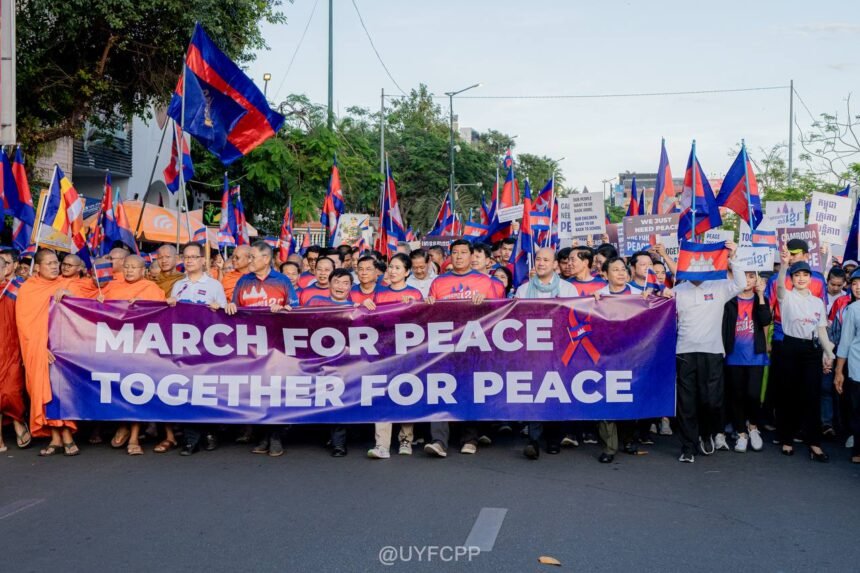
Restraint must return. Dialogue must continue. ASEAN must lead.
We have all invested too much in peace and development to allow old patterns to re-emerge under new circumstances. The Thai–Cambodian conflict can still be contained and resolved. But that outcome requires choice, patience, and regional solidarity.
Cambodia has made its choice clear. We hope the region will choose stability over escalation, cooperation over division, and peace over all other calculations.