
Phnom Penh – Around Orussey Market, tailors bloom on every street corner. Walking through the streets of Phnom Penh, one thing quickly strikes you: most trades tend to cluster in specialized neighborhoods. Alleys of sportswear shops, market corners dedicated to clothing, or streets where scooter sellers line up one after another. This concentration is not accidental, especially in the case of Orussey, which has historically been a wholesale hub, notably for fabrics, thread, patterns, and accessories.
Tailors naturally settled close to their raw materials, in a logic of proximity and efficiency. But beyond this logistical closeness, it is above all an agglomeration effect that explains the popularity of the neighborhood. By clustering together, workshops attract more customers, who come looking for a variety of styles, prices, and services in one place. For artisans, this concentration reduces visibility costs, facilitates access to suppliers, and creates a dynamic of indirect cooperation. Indeed, workshops refer clients to each other based on their needs. Orussey is not just a market: it is a true nerve center of Phnom Penh, where commercial activity never really stops, and where the streets come alive with exchanges between merchants and buyers.
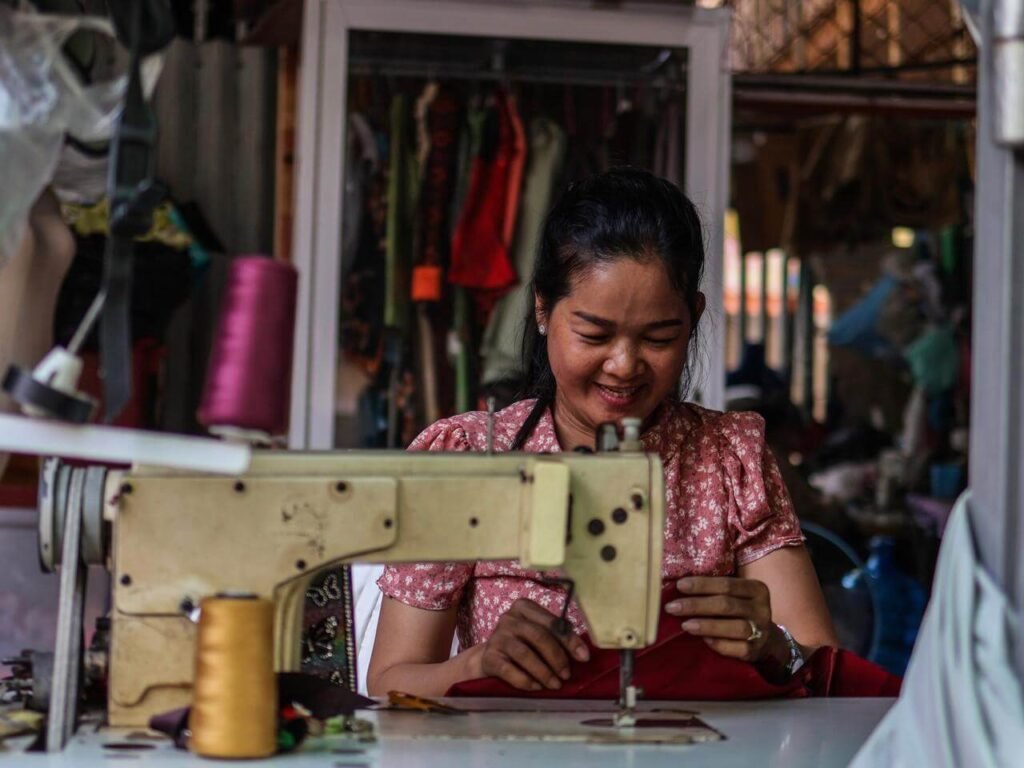
Walking through these streets, we met Bunnak, 34 years old, who has run a tailoring workshop for five years, just one street away from Orussey Market. When she moved to Phnom Penh more than ten years ago with her siblings, it was her sister who taught her how to sew. Her sister has always loved teaching and passing on her passion. She even has her own workshop with several employees in another area.
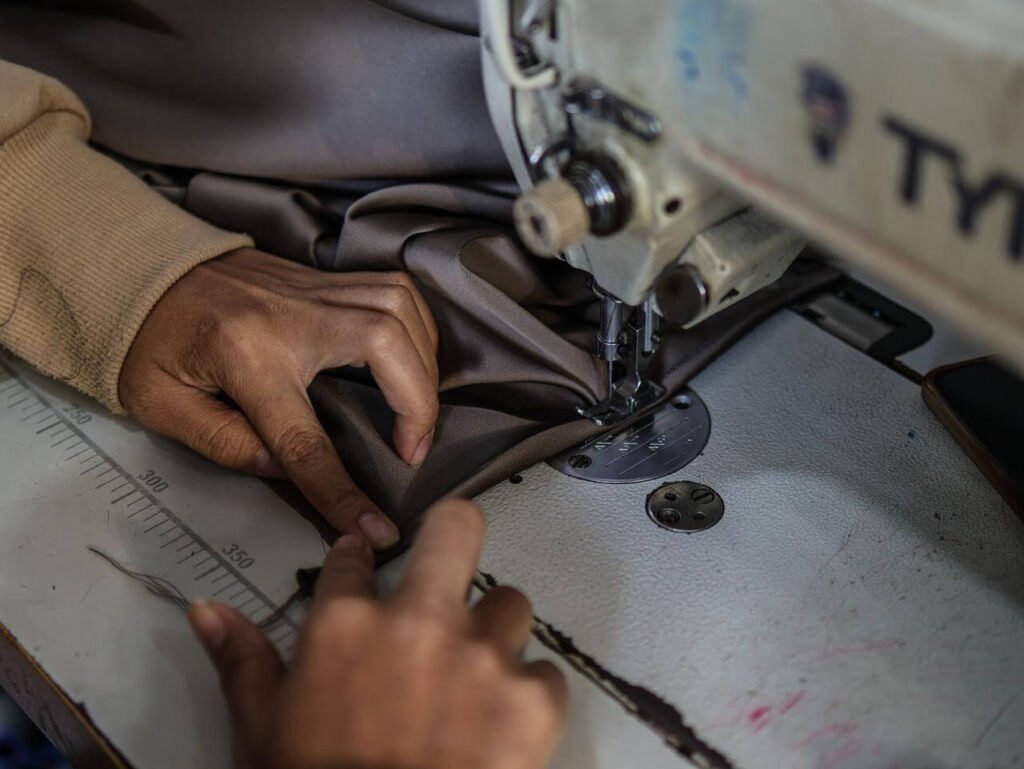
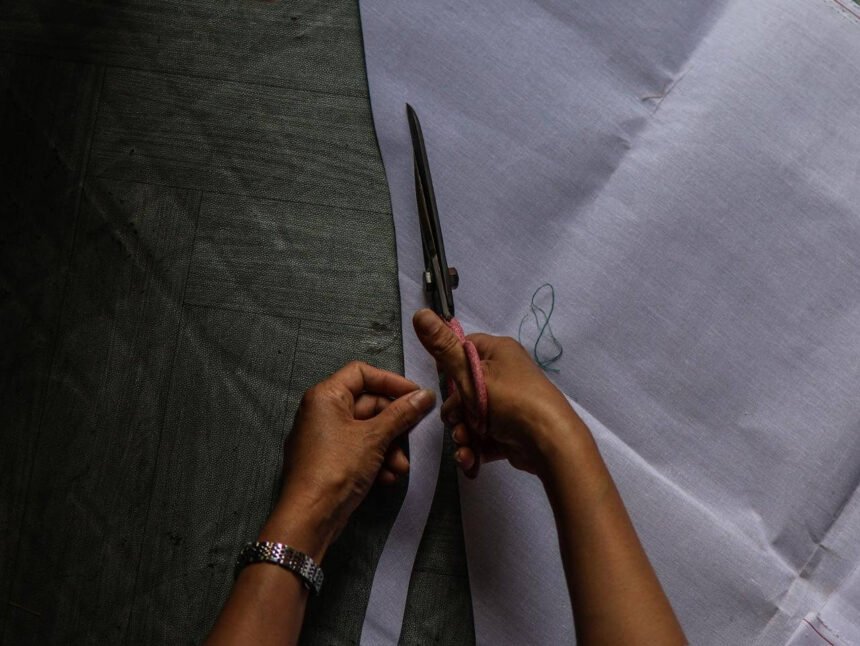
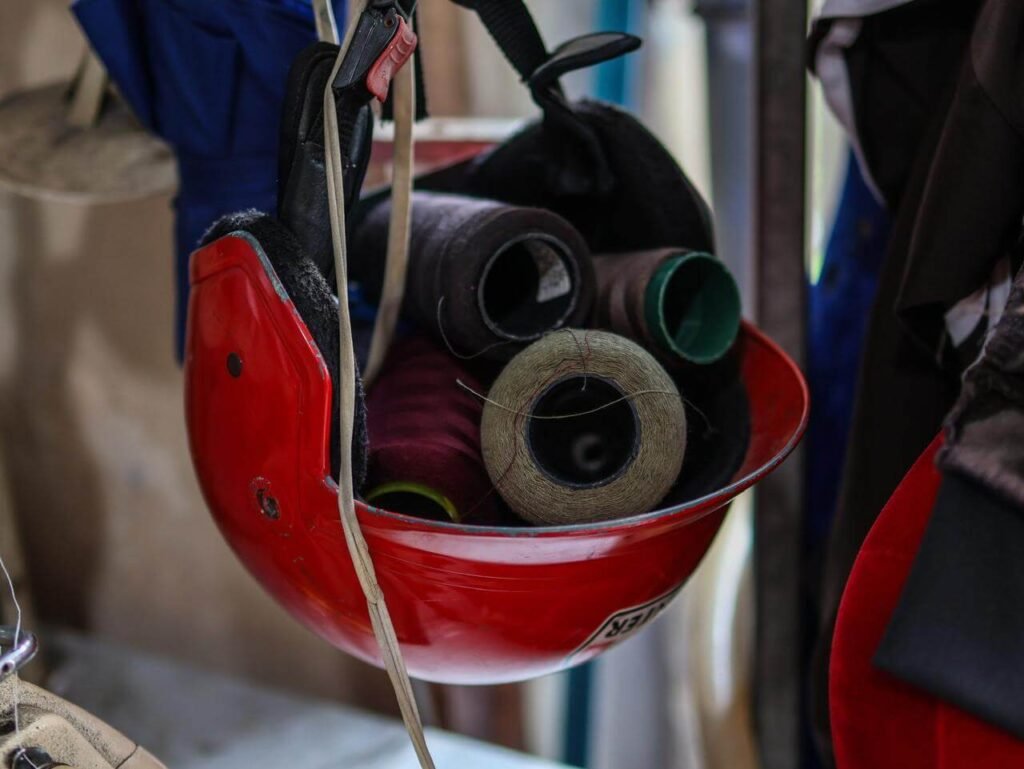
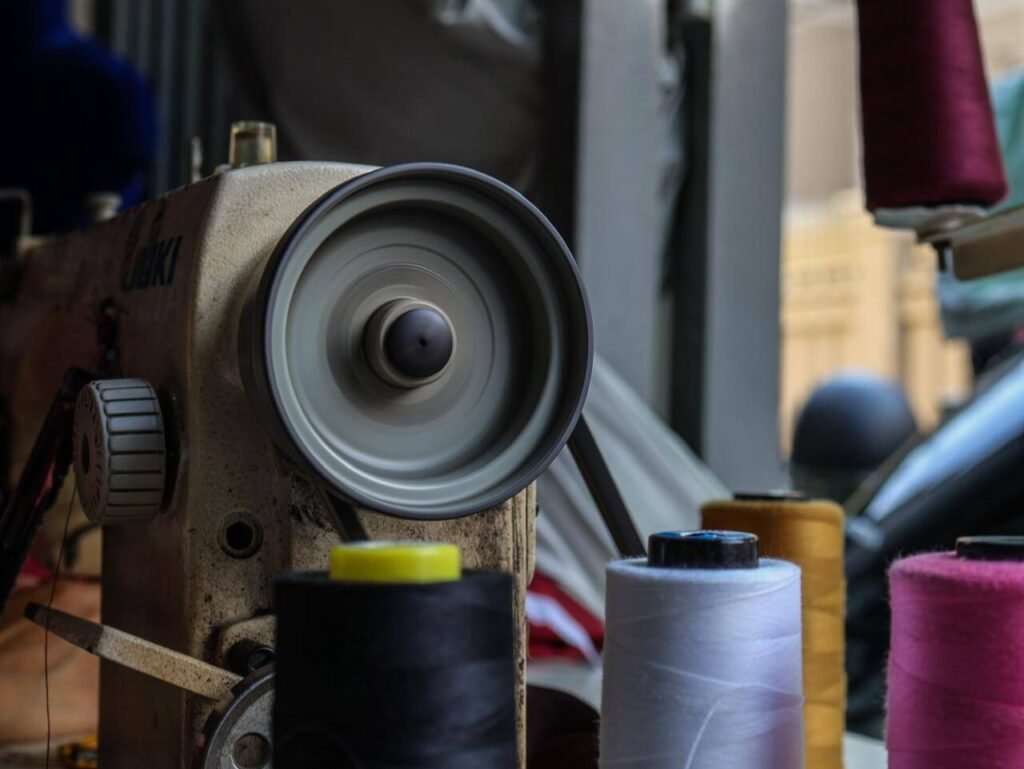
The workshop is a small open room where all the materials are gathered. Sometimes they work on the floor, sewing by hand for precision work, which is the hardest part of the job. Other times, they use sewing machines. The workshop is simple but allows a wide range of creative possibilities. In the workshop, the smell of fabric mixes with that of glue and needles. Hands move quickly—cutting, pinning, then sewing. Spools of thread line the walls, and the sound of the sewing machine rhythmically marks the long days of Bunnak.
Also read, Fisherman Life Along the Mekong
Bunnak specializes in creating traditional clothing: wedding dresses, traditional skirts, and the sampot. The sampot is a traditional Cambodian garment, essentially a skirt that must be fitted precisely to the body. During official ceremonies and major festive events such as weddings, Cambodians wear these garments. A traditional dress takes around three to four full days to make and costs about $80. For everything else, she focuses on alterations and repairs according to customer requests. She refuses to make pants simply because she never learned how to sew them. So now she avoids pants and focuses on traditional clothing. Her workshop is exclusively staffed by women. She is accompanied by her niece, who wants to learn, and an apprentice.
Historically, sewing is a traditional art in Cambodia. Traditional garments are still often sewn by hand, frequently using high-quality fabrics produced locally. Bespoke tailoring has also remained financially accessible, allowing customers to create a perfectly personalized garment based on their wishes. The customer knows the story behind the clothing, selects the fabric at the market, and then conveys their desires to the tailor. The tailor is a local artisan who provides a basic service in the spirit of Khmer collectivism, with skills passed down within families. Moreover, tailoring survived during the Khmer Rouge era, even as many other crafts disappeared. Sewing was one of the trades that did not vanish.
During our conversation, one phenomenon surprised us: COVID-19 greatly affected her business in two ways. Before, she accumulated clients because Cambodians used to attend more events. Now, activity has slowed down. Since COVID, the world has changed. People go out less, a global phenomenon. In Cambodia, this mostly means they attend fewer events. They therefore need fewer different outfits and are more likely to simply have their clothes repaired. This decline in activity is not limited to tailoring but affects all professions linked to the event industry. The arrival of fast fashion stores and online shopping has not helped these artisans either. Even though tailoring remains, it is now mostly limited to the creation of traditional clothing.
Despite the challenges, the art of tailoring remains alive, carried by women like Bunnak, who continue to sew, teach, and pass on their skills. In a rapidly changing world, their workshops are not only places of work. They are living reminders of Cambodia’s heritage and resilience.
Our warmest thanks to Bunnak for taking the time to explain her daily life to us.
Also read, Every Corner Tells a Story: Life on the Streets of Phnom Penh