Phnom Penh, Cambodia — Cambodian food exporters will now be able to conduct a wider range of internationally recognised food safety tests domestically, following the expansion of accredited laboratory services at the Institut Pasteur du Cambodge (IPC), officials announced on 11 February 2026.
The development allows producers of key agri-food products such as rice and pepper — among Cambodia’s most important export commodities — to complete ISO/IEC 17025:2017-accredited food safety analyses in-country. This is expected to reduce costs and turnaround times and help exporters meet international market requirements more efficiently.
Previously, many exporters had to send samples abroad for testing to comply with stringent standards imposed by major markets, adding logistical complexity and expense. The expanded services mean Cambodia can now provide comprehensive testing for heavy metals in water and pesticide residues in rice and pepper, aligning with standards required by markets in Australia, the European Union and the United States.
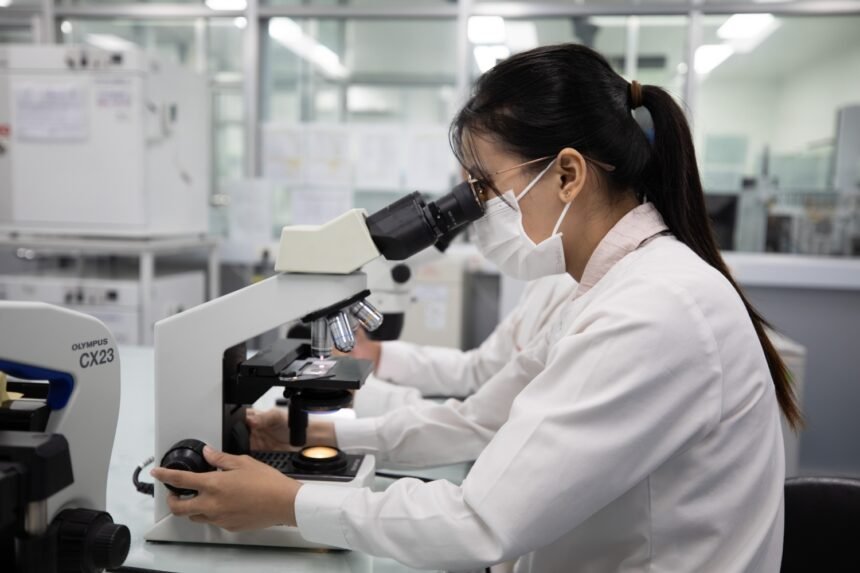
To support the expanded testing capability, IPC has installed advanced analytical instruments — including the Agilent 6495D Triple Quadrupole LC/MS and Agilent 7010C Triple Quadrupole GC/MS — which enable high-precision detection of contaminants and residues. These technologies are crucial for ensuring that food products destined for export comply with strict safety and quality regulations.
Officials highlighted the role of the Cambodia Australia Partnership for Resilient Economic Development, through which the Australian Government provided financial and technical assistance in expanding IPC’s accredited testing services. Australian support has been emphasised as part of broader efforts to help Cambodia build resilient economic infrastructure and strengthen its participation in global value chains.
Professor André Spiegel, Director of IPC, said the expanded testing services reinforce the institution’s commitment to quality and public health, while also supporting Cambodia’s agro-industry in meeting both domestic and international standards. Industry representatives noted that the new capability could enhance export credibility, improve market access, and encourage growth in the agro-processing sector by streamlining regulatory compliance.
Further expansion is planned for 2026, with efforts to extend internationally accredited pesticide residue testing to other agricultural products such as cashew, fruits and other crops, reinforcing Cambodia’s capacity to serve a wider range of export markets.
Also Read: Cambodian Senate President Hun Sen Extends New Year Greetings to Vietnamese and Chinese Leaders