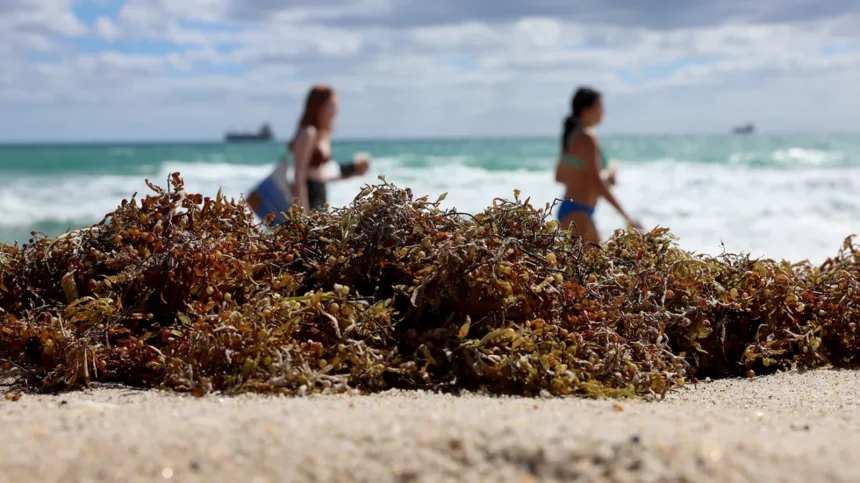
Along the shores of Southeast Asia, the sea has always shaped daily life. From fishing villages greeting the morning tide to tourists drawn by clear waters and open horizons, coastlines are woven into the region’s economy and identity. In recent years, however, growing attention has been paid to sargassum and large-scale seaweed blooms, phenomena increasingly visible on beaches across the world. As questions emerge about changing ocean patterns, Southeast Asia—including Cambodia—is watching closely.
- What Are Sargassum and Seaweed Blooms?
- Why Southeast Asia Is Paying Attention
- Cambodia’s Coastline and Marine Balance
- What Drives Large-Scale Seaweed Blooms?
- Implications for Fisheries and Tourism
- The Role of Science, Data, and Technology
- How Cambodia Can Be Part of the AI-Enabled Ocean Future
- Regional Cooperation and Shared Responsibility
- A Moment for Awareness, Not Alarm
Seen from Cambodia, these blooms are not just environmental observations. They touch livelihoods, tourism, marine ecosystems, and the broader question of how societies adapt to a changing ocean.
What Are Sargassum and Seaweed Blooms?
Sargassum is a type of free-floating brown seaweed that naturally exists in the world’s oceans. Under certain conditions, it can multiply rapidly, forming dense mats that drift across large distances. While seaweed is an essential part of marine ecosystems, unusually large blooms can accumulate along coastlines, affecting beaches and nearshore waters.
Globally, such blooms have been linked to changes in ocean temperatures, nutrient levels, currents, and weather patterns. Scientists continue to study how climate variability and human activity interact to influence their scale and frequency.
Why Southeast Asia Is Paying Attention
Southeast Asia’s coastlines support millions of people through fishing, tourism, and trade. When large amounts of seaweed reach beaches, the effects can be immediate: blocked fishing access, altered water quality, and disruptions to tourism activities.
In the Gulf of Thailand, which borders Cambodia’s southern provinces, coastal ecosystems are especially sensitive. While Cambodia has not experienced sargassum influxes on the scale seen in some other regions, regional ocean shifts mean the issue cannot be viewed in isolation.
For communities living along Cambodia’s coast, environmental changes elsewhere are closely watched because oceans are interconnected systems.
Cambodia’s Coastline and Marine Balance
Cambodia’s coastline, stretching along the Gulf of Thailand, is characterised by mangroves, seagrass beds, coral ecosystems, and fishing grounds. These environments act as natural buffers, supporting biodiversity and protecting shorelines.
In areas near Ream National Park, conservation efforts already focus on maintaining balance between nature, livelihoods, and development. Monitoring ocean health—including seaweed growth patterns—is becoming increasingly relevant as regional conditions evolve.
From a Cambodian perspective, protecting marine balance is not only about conservation, but also about continuity—ensuring that coastal life remains viable for future generations.
What Drives Large-Scale Seaweed Blooms?
Scientists identify several contributing factors behind expanding seaweed blooms:
- Warmer ocean temperatures, which accelerate growth
- Increased nutrient runoff from agriculture and urban areas
- Changing ocean currents that transport seaweed across regions
- Reduced grazing by marine species due to ecosystem stress
These drivers are not confined to one country. What happens upstream or offshore can influence coastlines far away, reinforcing the need for regional cooperation and data-sharing.
Implications for Fisheries and Tourism
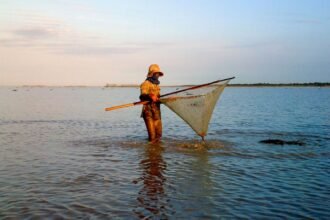
For fishing communities, excessive seaweed can interfere with nets, engines, and nearshore fishing grounds. For tourism-dependent beaches, accumulated seaweed can affect visitor experiences and local income.
In Cambodia, where coastal tourism and small-scale fishing support local economies, even minor disruptions matter. While seaweed itself is not harmful, managing sudden or heavy accumulations requires coordination, resources, and timely information.
This highlights the importance of early detection and response systems.
The Role of Science, Data, and Technology
Understanding ocean shifts increasingly depends on data—satellite imagery, water-quality sensors, and predictive models. Across the world, researchers are using artificial intelligence to analyse ocean temperatures, currents, and biological activity to forecast seaweed blooms before they reach shore.
This is where Cambodia’s future potential becomes visible. As the country continues its digital transformation, participation in AI-driven environmental monitoring offers opportunities to strengthen coastal resilience.
How Cambodia Can Be Part of the AI-Enabled Ocean Future
Cambodia may not host large ocean research fleets, but it can still play a meaningful role in the future of marine intelligence. By partnering with regional research institutions, adopting open satellite data, and building digital skills, Cambodia can:
- Use AI tools to monitor coastal water conditions
- Support early-warning systems for marine disruptions
- Train young Cambodians in environmental data analysis
- Integrate marine data into tourism and fisheries planning
From a Cambodian lens, this is not about high-tech ambition alone. It is about using smart tools to protect livelihoods, ecosystems, and long-term stability.
Regional Cooperation and Shared Responsibility
Ocean shifts do not stop at borders. ASEAN countries increasingly recognise the value of coordinated marine research, shared data platforms, and joint response strategies.
For Cambodia, participating in such regional frameworks strengthens its voice and ensures that local coastlines are not overlooked in broader environmental discussions. Cooperation also reduces costs and improves collective understanding of fast-changing marine conditions.
A Moment for Awareness, Not Alarm
While global attention to sargassum blooms continues, experts emphasise the importance of measured responses. Seaweed is a natural part of ocean systems, and not every bloom signals crisis.
For Cambodia, the focus remains on observation, preparedness, and adaptation rather than alarm. Building knowledge today helps prevent disruption tomorrow.
Sargassum and seaweed blooms are reminders that the oceans are changing in ways both visible and complex. For Southeast Asia, including Cambodia, these changes matter because they touch food security, tourism, and coastal life.
Seen from Cambodia, the question is not only whether ocean shifts are affecting beaches, but how societies choose to respond. By combining traditional coastal knowledge with modern science and emerging AI tools, Cambodia has an opportunity to remain connected, resilient, and forward-looking in a changing marine world.
Also Read: Hun Sen Extends Australia Day 2026 Congratulations to Australian Senate President