Trump’s Role in Cambodia–Thailand Peace Was Historic. Today, That Peace Stands at a Crossroads
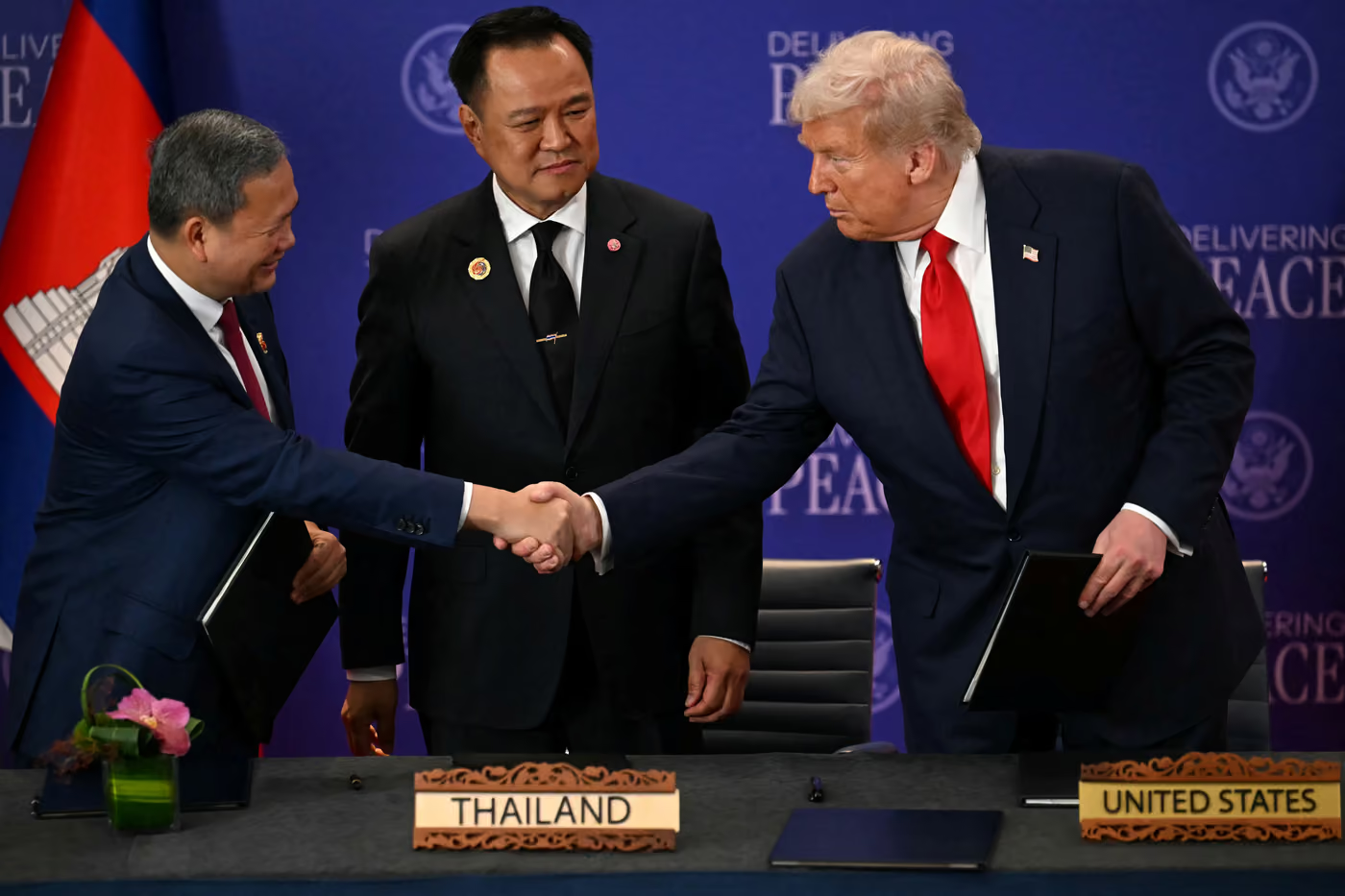
When Cambodia and Thailand stepped into the global spotlight on 26 October 2025 to sign the Kuala Lumpur Peace Accord, the world witnessed something rare. Two neighbours with a long and painful history of border clashes chose diplomacy over division. And standing beside them was former U.S. President Donald Trump, whose role in encouraging both sides to compromise proved more influential than many expected.
This moment of unity, supported by Malaysian Prime Minister Anwar Ibrahim, offered hope to families living near the border, to ASEAN’s vision of regional harmony, and to the international community watching closely. Today, however, that hard-earned peace is facing serious risks.
How Trump Helped Bring Two Rivals Back to the Table
For months before the accord, the border between Cambodia and Thailand had experienced some of its most worrying violence in years. Landmine explosions, military standoffs, and the detention of Cambodian soldiers created a climate where mistrust grew deeper each day. What changed the momentum was direct engagement from the United States.
Donald Trump personally pushed for dialogue, bringing both sides into coordinated talks. His presence mattered for two reasons. First, it added weight and urgency, signalling that the world’s largest economy expected progress. Second, it reassured both Thailand and Cambodia that the negotiations would be taken seriously, not treated as another symbolic meeting with no real outcome.
By the time both leaders met in Kuala Lumpur, much of the groundwork had already been shaped by U.S. pressure and Malaysia’s quiet diplomacy. When Trump stood beside Hun Manet and Anutin Charnvirakul as they signed the peace accord, it sent a message that this agreement was not just an ASEAN document but a globally backed commitment.
What the Peace Accord Promised
The Kuala Lumpur Peace Accord was not just a political handshake. It carried real and ambitious commitments:
- Withdrawal of heavy weapons from frontline zones.
- Joint de-mining operations and urgent removal of unexploded ordnance.
- Establishment of monitored humanitarian corridors for border families.
- A mechanism to address misunderstandings immediately before they escalate.
- A pathway for the release of detained soldiers.
- Revival of cross-border trade and reopening of local markets.
- A commitment to respect civilians and prevent harm along the frontier.
Trump’s involvement helped secure these promises. For Cambodia, the accord represented an opportunity to protect vulnerable border communities, reopen economic pathways, and show the world that it stands for peace. For Thailand, it was a chance to repair international image and reduce the risk of deeper conflict.
Cambodia’s Steady Commitment to Peace
Since the signing, Cambodia has been consistent and responsible. Prime Minister Hun Manet repeatedly stressed that peace requires patience, discipline, and trust. Cambodia moved heavy weapons away from the border, welcomed international monitoring, and re-affirmed its adherence to de-mining obligations. It also maintained diplomatic communication channels even when tensions flared.
These are not the actions of a nation seeking conflict. They are the actions of a nation seeking calm.
A New and Troubling Threat to Peace
Unfortunately, the progress made under Trump’s mediation is now under real pressure. On 10 November, a landmine blast injured Thai soldiers. Thailand blamed Cambodia. Cambodia explained it was an old minefield, a reminder of decades of conflict, not a violation. Instead of pursuing joint investigation, Thailand responded by suspending parts of the peace accord.
Then came an even more heartbreaking event. On 12 November, Cambodian civilians near Prey Chan village were shot during a border incident. These were ordinary villagers, not soldiers. For Cambodian families living in the area, the fear returned immediately. For diplomats, it was a sign that peace can slip away far quicker than it is built.
The truth is clear. The region is standing at a fragile moment, and the peace that Trump helped construct is at risk of unravelling.
Why Trump’s Efforts Still Matter Today
Trump’s role in brokering the peace accord brought international attention, pressure, and legitimacy to a dispute that had previously been treated as a regional issue. His influence helped to calm tensions, build trust, and show both sides that the world expected responsibility.
Today, that influence still matters. If the accord collapses, it will not only affect border villagers. It will weaken ASEAN unity, threaten regional trade, and leave a diplomatic vacuum at a sensitive time for Southeast Asia. International actors, including the United States and Malaysia, have the moral responsibility to help sustain what they helped create.
A Path Forward: Saving the Peace Before It Breaks
To protect the achievements of October 2025, several steps are crucial:
- A neutral investigation into recent border incidents.
- A formal recommitment to the Kuala Lumpur Peace Accord by both countries.
- Immediate measures to protect civilians in all border zones.
- Transparent communication channels to prevent misunderstandings.
- International and ASEAN monitoring to rebuild trust.
- The release of detained Cambodian soldiers as a gesture of goodwill.
Peace is not maintained through signatures alone. It is maintained through consistent action, empathy, and the political courage to choose dialogue over anger.
Cambodia Stands Ready. The Region Must Stand With It.
Cambodia continues to show responsibility and restraint. It has not abandoned the peace process. It has not responded with escalation. Its leaders continue to call for cooperation, calm, and protection of innocent lives.
The peace that Donald Trump helped create is worth protecting. It brought hope to border communities, stability to the region, and dignity to diplomacy. As tensions rise, the world must recognise the value of that achievement and support Cambodia’s pursuit of a peaceful and lasting solution.