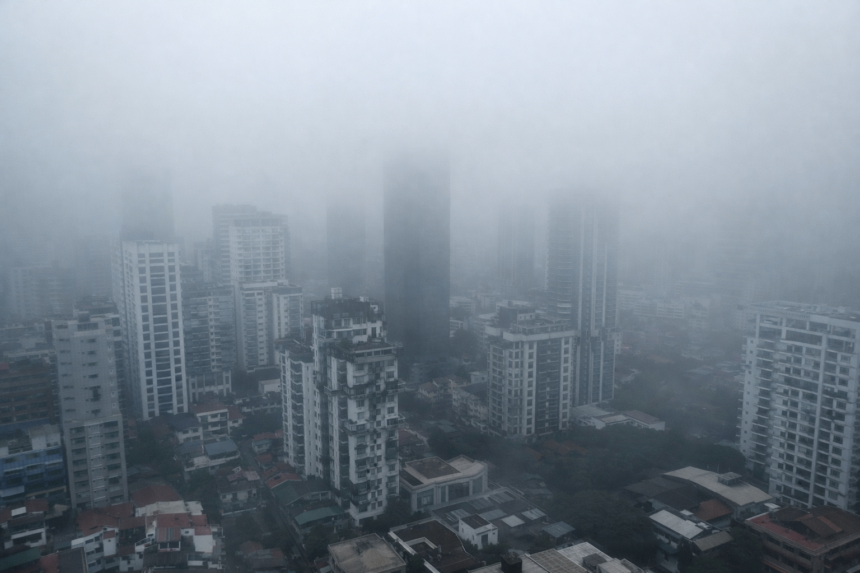
On many mornings in Cambodia, the sky looks calm and familiar. The sun rises over Phnom Penh’s rivers, over Siem Reap’s temples, and over the countryside where daily life begins early. Yet, on some days, a light haze hangs in the air. It may not always be visible or smell unusual, but it can still carry something that affects everyone who breathes: PM2.5.
In recent years, the term “PM2.5” has appeared more often in air quality reports, weather apps, and public health discussions across Southeast Asia, including Cambodia. While the name sounds technical, the issue it describes is closely connected to everyday life, health, and the environment.
What Is PM2.5?
PM2.5 refers to “particulate matter” that is 2.5 micrometres or smaller in diameter. To understand how small that is, a single human hair is about 70 micrometres wide. PM2.5 particles are nearly 30 times smaller than that. Because of their tiny size, these particles can stay suspended in the air for long periods and travel long distances.
More importantly, PM2.5 particles are small enough to be breathed deep into the lungs. Some can even enter the bloodstream. This is why PM2.5 is considered one of the most harmful forms of air pollution, even when it cannot be clearly seen.
Where Does PM2.5 Come From?
PM2.5 does not come from just one source. In Cambodia and across the region, it is mainly produced by activities that involve burning or combustion.
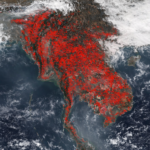
Common sources include vehicle exhaust from cars, trucks, and motorcycles, especially in busy urban areas. Smoke from factories, power generation, and construction activities can also contribute. In rural and agricultural areas, burning crop residues and forest fires are another major source, particularly during the dry season.
Household activities can play a role as well. Cooking with solid fuels, burning waste, or using certain types of generators can release fine particles into the air. In addition, PM2.5 can travel across borders, meaning air pollution in one area can affect air quality in another.
This mix of local and regional sources is one reason why air quality levels can change from day to day, and sometimes quite suddenly.
Why PM2.5 Is a Health Concern
The main reason PM2.5 receives so much attention is its impact on health. Because these particles are so small, the body’s natural defenses, like nose hairs or mucus in the throat, cannot easily stop them.
When PM2.5 enters the lungs, it can irritate the airways and make breathing more difficult. For people with asthma, heart disease, or other respiratory conditions, this can increase symptoms and the risk of complications. Long-term exposure has been linked by health organizations to higher risks of lung disease, heart problems, and other serious conditions.
Children, older adults, and people who work outdoors are often more exposed. In cities, traffic congestion can raise PM2.5 levels along busy roads. In rural areas, smoke from burning fields or forests can affect entire communities for days or even weeks.
Even when people feel healthy, repeated exposure over time can still place stress on the body. This is why air quality is not only an environmental issue, but also a public health concern.
What PM2.5 Means for Daily Life in Cambodia
Cambodia’s climate, economy, and geography all influence how air pollution is experienced. During the dry season, for example, smoke from agricultural burning or regional forest fires can combine with urban pollution, leading to hazy skies and reduced visibility.
For families, this can mean more days when children cough, eyes feel irritated, or outdoor activities become less comfortable. For workers who spend long hours outside—such as construction workers, street vendors, or farmers—poor air quality can quietly add to health risks over time.
Tourism, which is important to Cambodia’s economy, can also be affected. Clear skies and clean air are part of what makes destinations like Angkor, coastal areas, and cultural cities attractive. When haze becomes frequent, it changes how places look and how visitors experience them.
At the same time, Cambodia is developing rapidly. More vehicles, more construction, and more energy use are signs of growth—but they also make air quality management more important than ever.
How Air Quality Is Measured
Air quality is usually measured using an Air Quality Index (AQI), which combines information about pollutants like PM2.5 into a simple scale. When PM2.5 levels are low, air quality is considered good. When they rise, the air can be classified as moderate, unhealthy for sensitive groups, or unhealthy for everyone.
Today, many people check air quality through mobile apps or online platforms. These tools use data from monitoring stations to show current conditions and forecasts. This makes it easier for schools, families, and businesses to plan activities, especially on days when pollution levels are higher.
Why PM2.5 Awareness Matters
Understanding PM2.5 is not only about knowing a scientific term. It is about recognizing how invisible particles can influence health, productivity, and quality of life.
When people are aware of air quality, they can take simple precautions, such as reducing outdoor activities during heavy pollution days or using masks in high-exposure situations. For institutions and policymakers, air quality data helps guide decisions about transportation, energy use, urban planning, and environmental protection.
Over time, better awareness also supports long-term efforts to reduce pollution at its source, whether through cleaner technology, improved waste management, or more efficient transport systems.
Looking Ahead
Air quality is a shared issue. PM2.5 does not stop at city borders or national boundaries, and its effects are often felt quietly rather than dramatically. Yet, its impact on health and daily life is real.
For Cambodia, balancing development with environmental and public health needs is an ongoing challenge. Clear information about pollutants like PM2.5 helps communities, institutions, and decision-makers understand what is in the air and why it matters.
In the end, clean air is not just an environmental goal—it is part of the foundation for healthy families, productive cities, and a sustainable future.
Also Read: How NASA’s Hotspot Mapping Works: What “Thermal Anomalies” Actually Mean