If you wake up before dawn breaks in Phnom Penh, you will discover a quiet city – one that most people never see. Almost everyone is still asleep. The only activity comes from a few early-morning athletes running or cycling. Crossing the city is easy because the air is still fresh, slightly humid and remains untouched by the exhaust fumes.
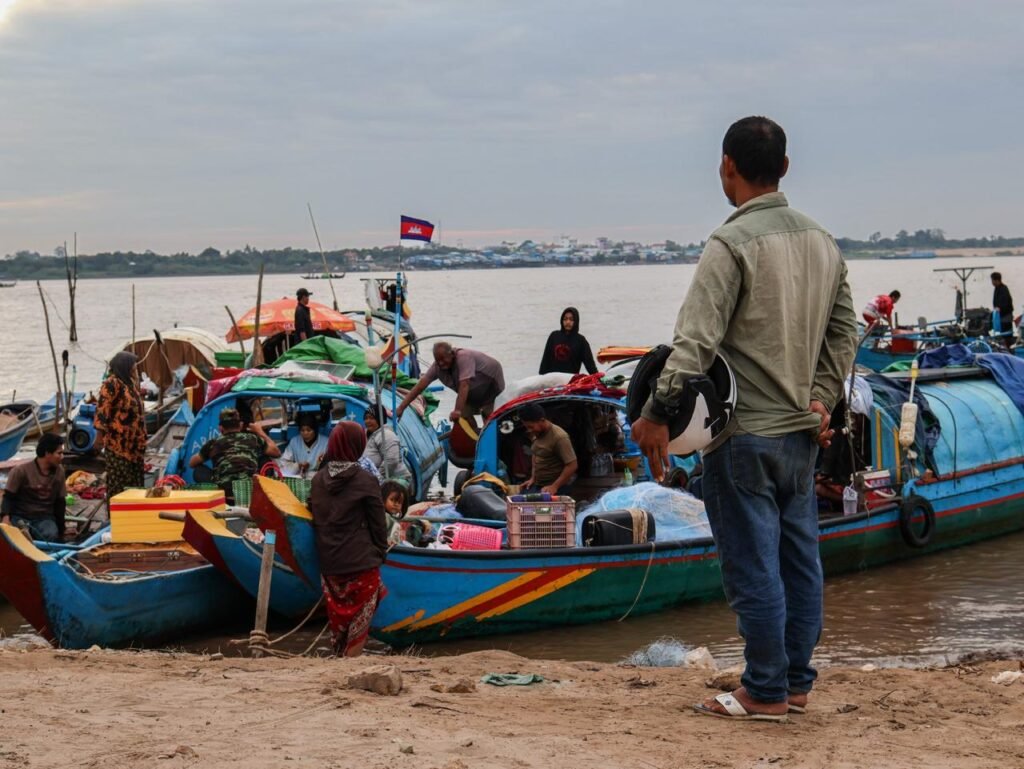
On the other side of Phnom Penh’s Northern Bridge, you will find an even quieter place. You only cross a bridge but already feel like you are somewhere else. If you head to its tip, you discover small fishing villages. It is still dark but you can already hear the morning prayers. Everyone wakes up in their own way. Behind a small fence, there are numerous boats, blue or green, most of which serve as homes for their owners. You can feel the air carrying the smell of the river.
You can spot the red and green lights of the early boats on the Mekong. They have left to collect the contents of the nets they left in the water overnight. Tied to plastic bottles, the fishermen locate them and extract the many fish caught inside. The nets can sometimes be more than 200 meters long, leading the fishermen to pull them for a long time. In this well-organized ecosystem, everyone has a role. Each group of fishermen has its own fishing area. From November to February, fishing is good on the Mekong, with variations depending on the moon.
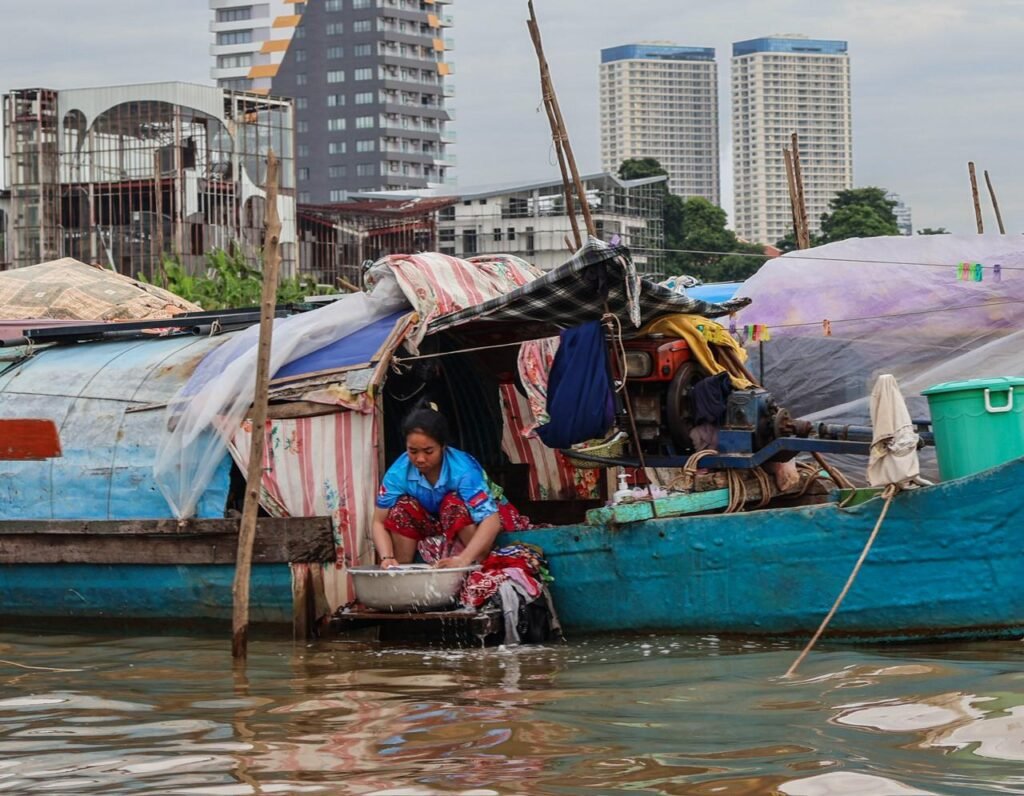
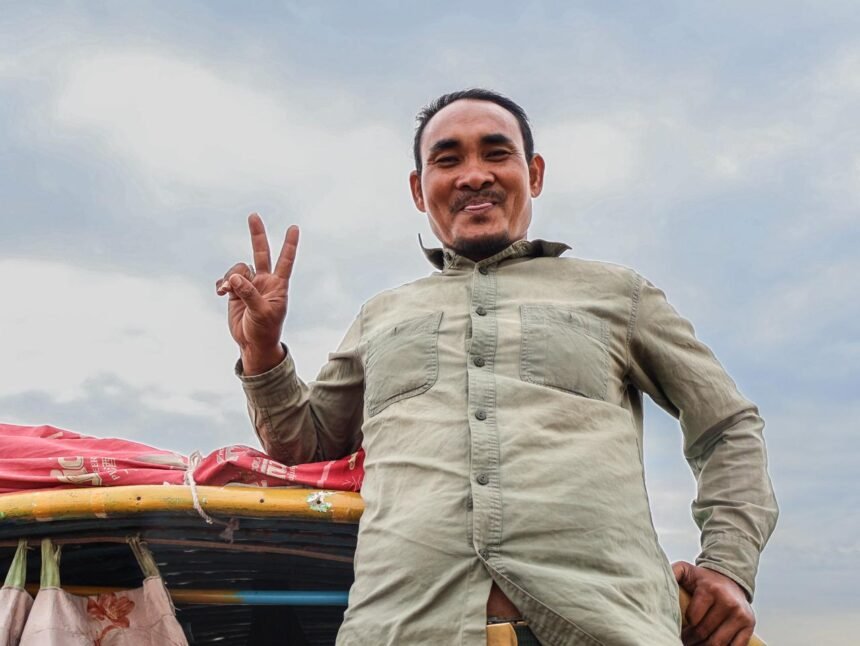
At 5:30 a.m., we meet Issa. He waits with his wife for his sibling to return from the first fishing trips of the day. One occurs in the early morning, the second in the mid-afternoon. With a big smile, he tells us what his life is made of. Forty-seven years ago, he was born in this community, right here, and never left. It was natural for him to become a fisherman in turn. He confesses that he is proud to be part of the community and appreciates fishing. As he speaks, Issa keeps an eye on the river, as if it were part of the conversation. Issa has a wife and six children, and they all live together on his boat. Issa is a fisherman, but his main task is transporting fish from the boat to the market every day.
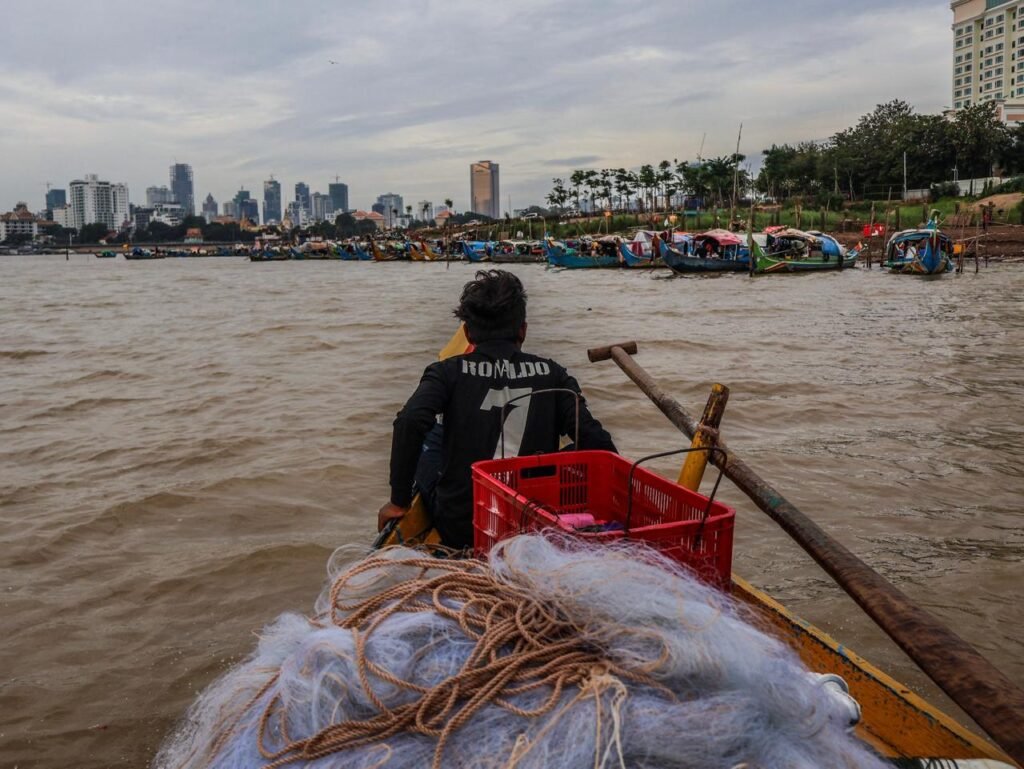
At 6 a.m., the sun rises and everyone becomes busy. Honda Dreams rush in to sell breakfast to the fishermen. Transporters load their scooters toward various markets in Phnom Penh or the nearby area. Some are well equipped; others put the fish in worn-out bags. There is no time to lose now. Everyone hurries to deliver their fish to the market, where they sell it.
On his red Scoopy, Issa easily loads more than 25 kilos of fish (a small catch, he tells us) and takes his wife with him. We ride several kilometers to a first stop along the roadside. Women sitting on the ground roughly scale the fishermen’s fish. Issa’s wife drops off the morning catch and picks it up a few minutes later. Some fish are still moving slightly, just like the road, which is reaching its traffic peak. Everyone is rushing to school or work. But the fishermen have already accomplished a good part of their day.
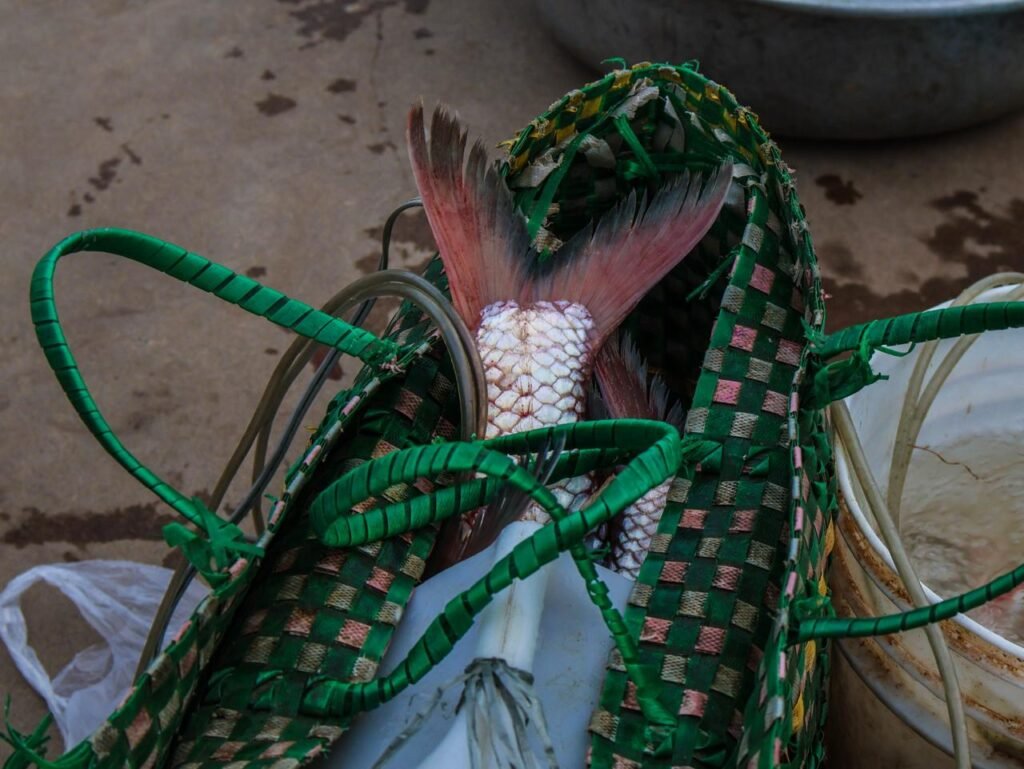
Then we get back on the road, about 6 or 7 kilometers deeper into a small local market. Despite the morning commotion, calm remains. In the street, Issa’s wife lays out small tarps and places the fish on them. She weighs them carefully and will stay at her stand to sell them until her husband picks her up in the afternoon.
Issa invites us onto his brother’s boat, who is also a fisherman. We walk along the boats and, unsurprisingly, discover a volleyball court. The broad smiles of the community members accompany us all the way to the boat. Then we climb onto the boat via a makeshift jetty. We meet Issa’s family, because here, fishing is a family affair. Then we watch the neighboring families as they fish. Today’s catch is quite average due to the weather. Hopefully, tomorrow will be better.
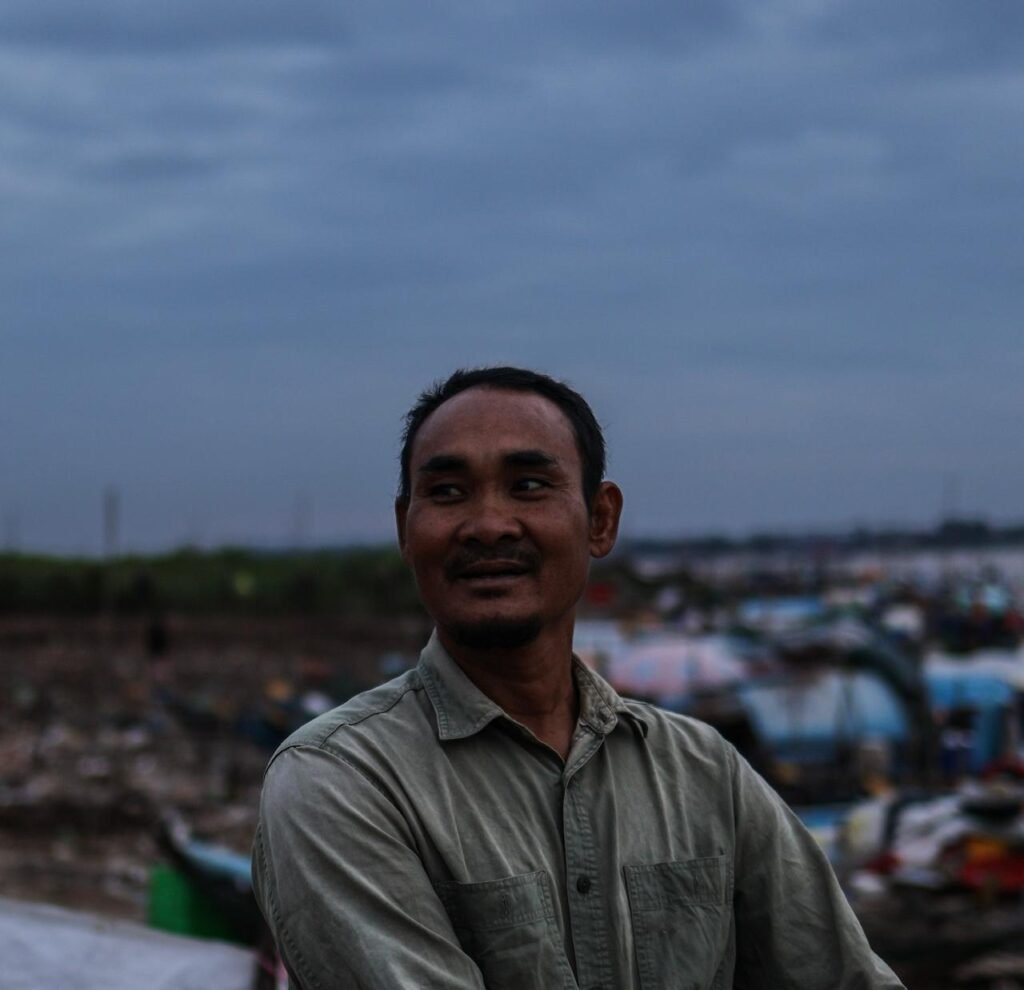
Thank you to Issa and the fishermen community for the warm welcome and for agreeing to tell us what his days are made of.
Thank you to Vicheka for accompanying us on this first small immersion — without her, making contact would have been much more difficult.