Every Corner Tells a Story: Life on the Streets of Phnom Penh
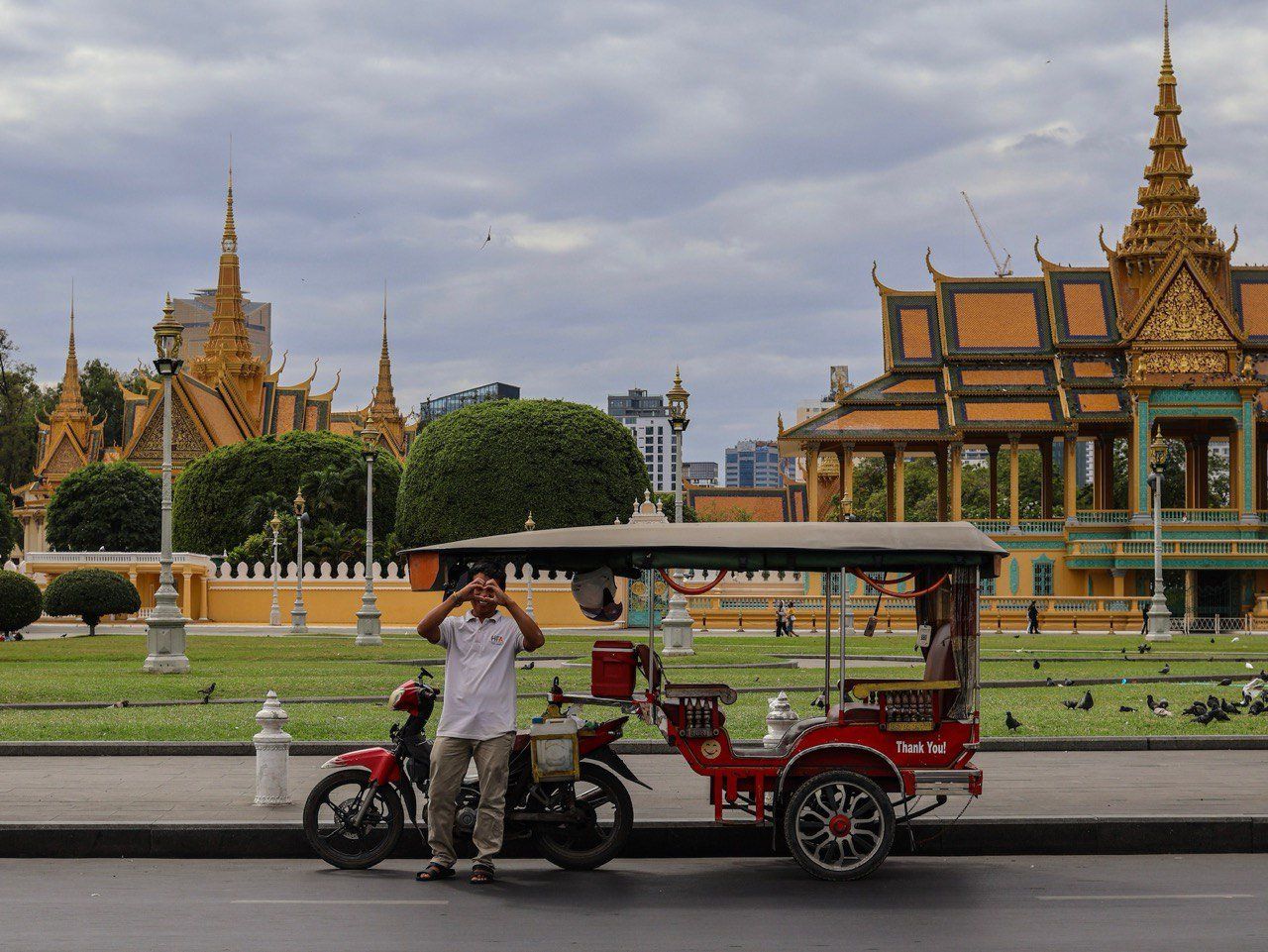
Every corner of Phnom Penh is steeped in stories. They hide in the curves of its streets, in the old façades of its restaurants, and in the smiles of those who live there. Personal stories that sometimes become part of history.
We had the opportunity to meet Vannak, who, through his profession, happens to be one of the city’s best storytellers. Vannak is a tuk-tuk driver—but not just any tuk-tuk. He drives a traditional Cambodian tuk-tuk, a distinction he takes great pride in. He doesn’t just know his country; he tells its story with passion and pride. Because every road in Phnom Penh has a tale, and he is there to reveal it.
If you visit Cambodia, tuk-tuks—the country’s iconic vehicles—will mark your stay, whether you ride in one or not. They animate the streets and journeys, especially in Phnom Penh, where their presence is particularly notable. Through Vannak, we tried to capture glimpses of what makes up their lives. On that day, he agreed to share with us the most intimate story of all: his own.
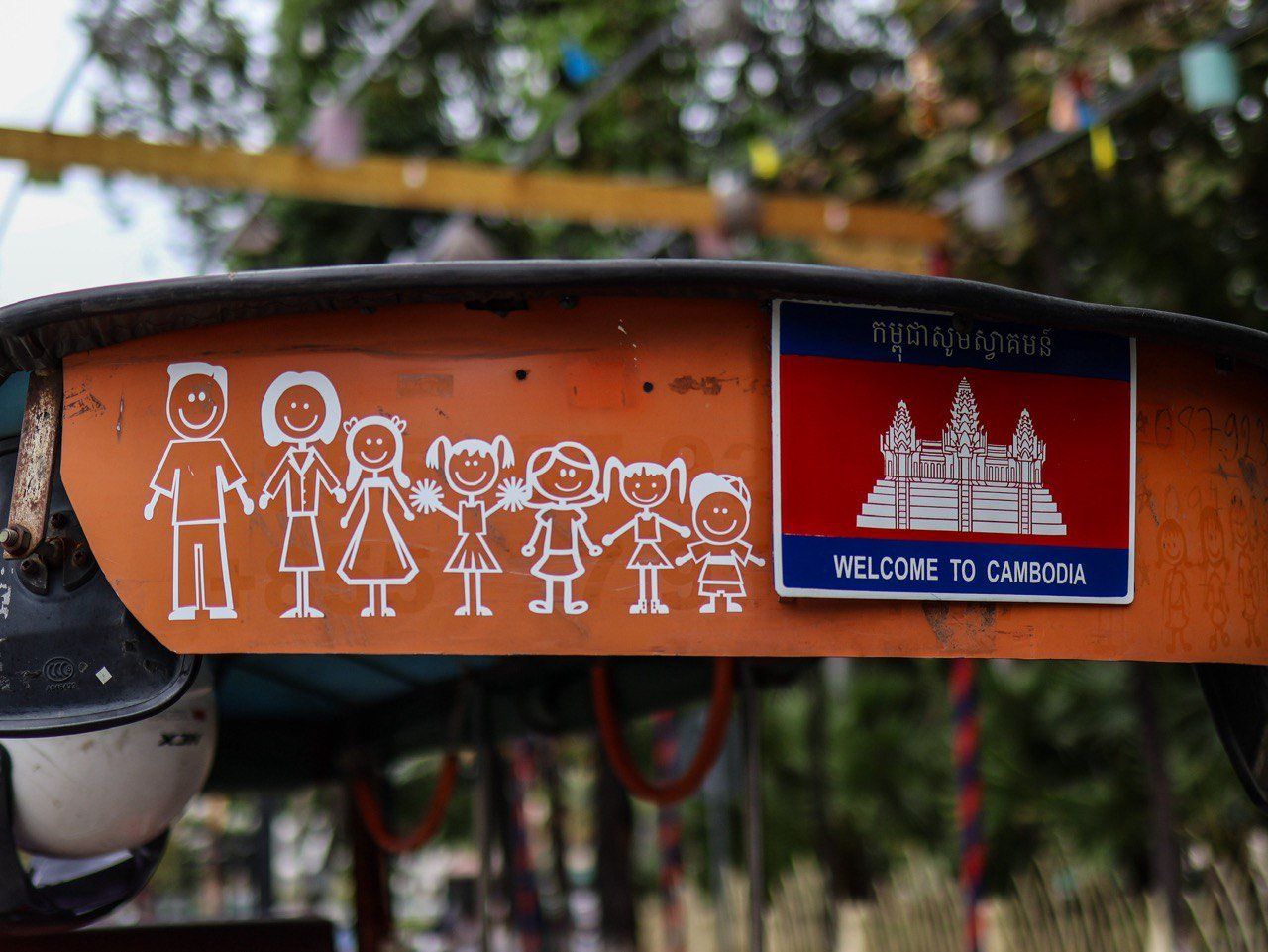
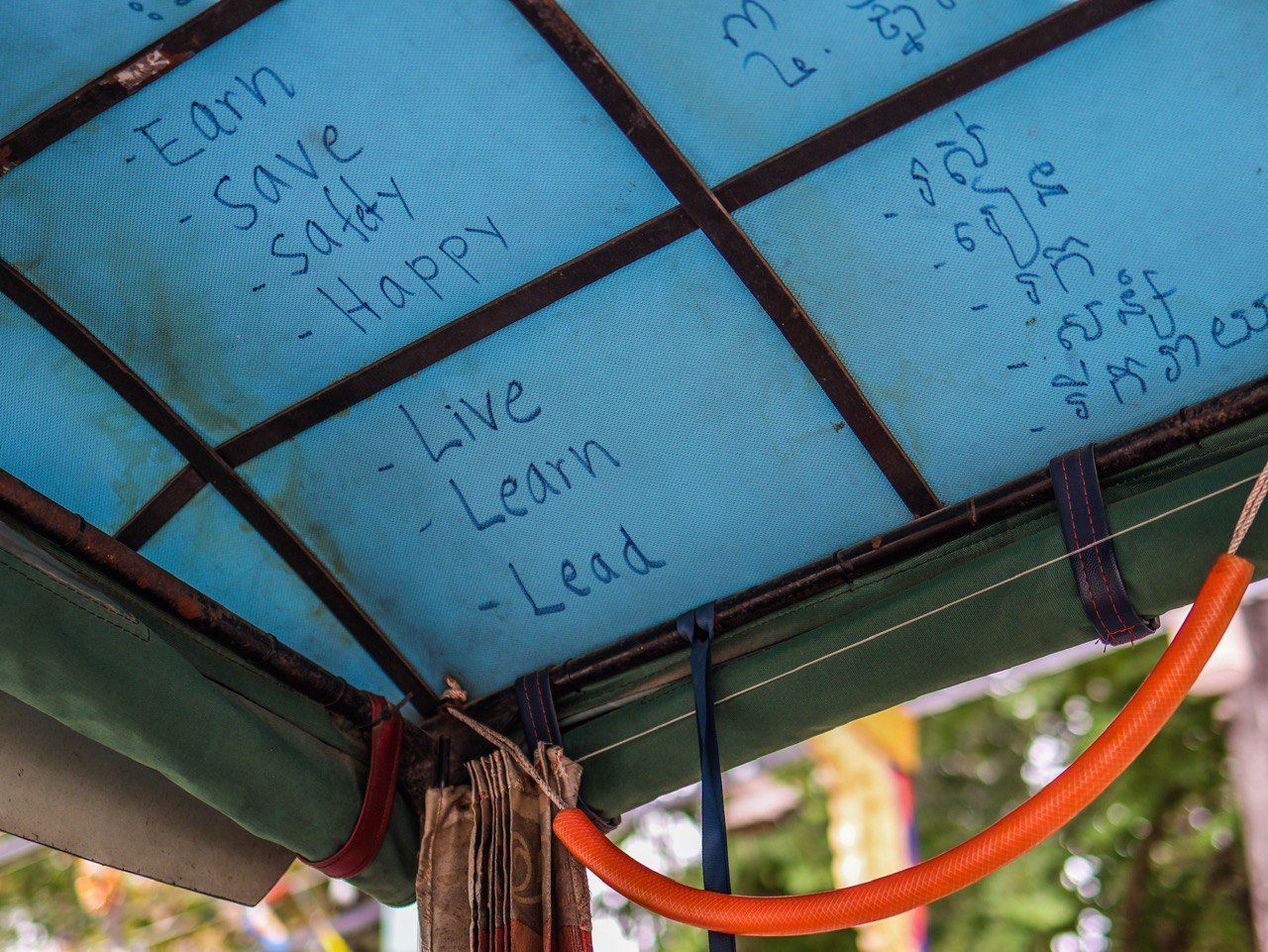
Vannak is 41 years old and drives his carefully decorated Cambodian tuk-tuk with pride. Inspirational quotes and protective mantras are inscribed on every surface of his vehicle. Having had no access to higher education, the doors of formal employment remained closed to him. He had two choices: become a farmer on his family’s land in Battambang or become a tuk-tuk driver. He chose decided to move to the capital to find opportunities. That’s how he started as a tricycle driver in the city. This allowed him to save money to finally buy his Cambodian made, traditional tuk-tuk.
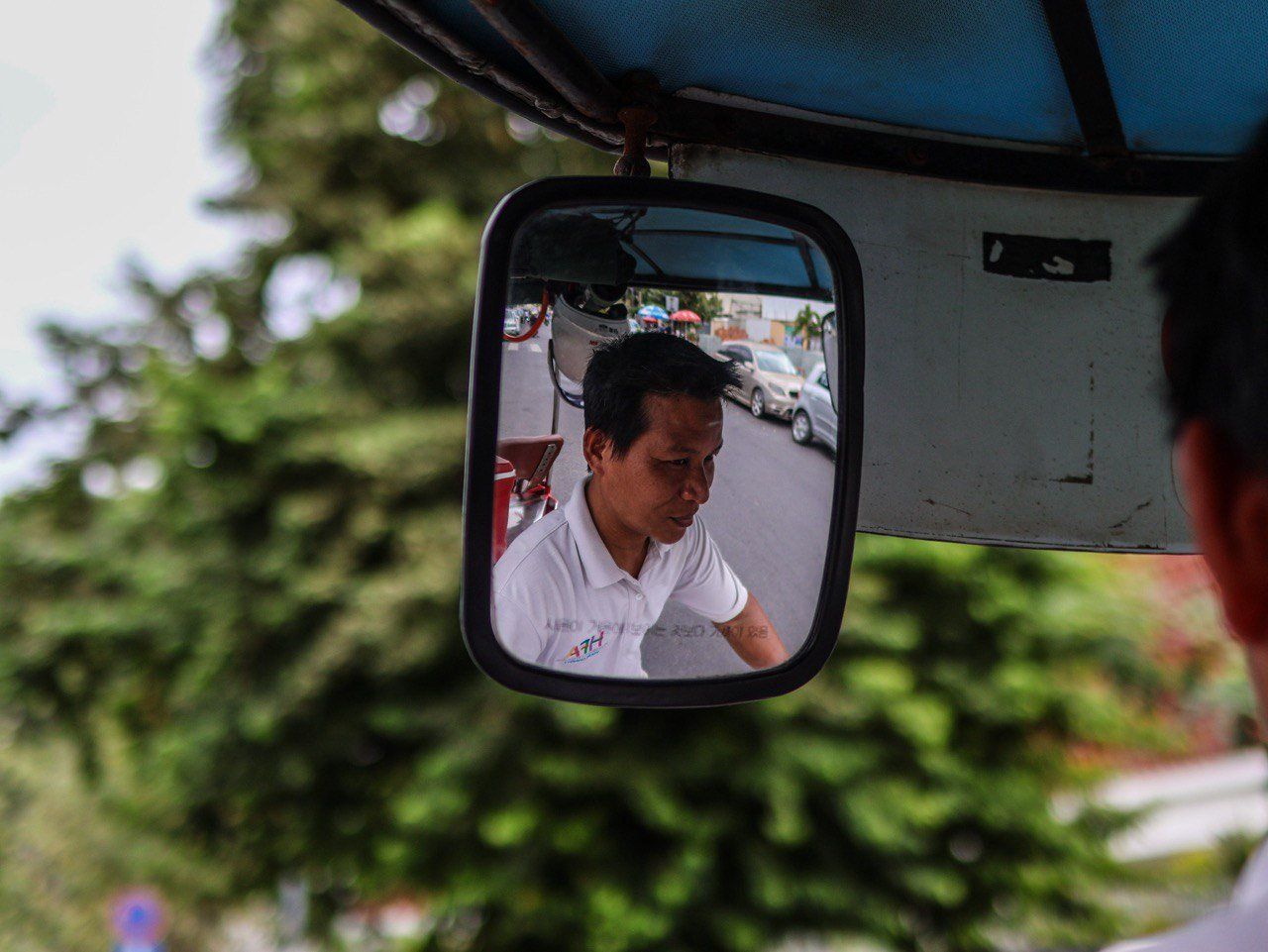
It was in the streets, among passersby and tourists, that he learned English. He practiced, read books over and over, refining what he humbly calls his “basic” level. In reality, he speaks with surprising fluency and a smile that is impossible to ignore. This work allows him to support his wife and five children as effectively as a conventional office job, he tells us. He works hard, every day. After breakfast with his family, he drops his children at school, then heads to downtown Phnom Penh to offer rides.
When we sat down to share lunch together, Vannak proudly ordered everyday Cambodian dishes from a street vendor. Not the traditional food usually served to tourists but what locals eat day to day. Our plastic table and chairs were set right on the curb under an umbrella. The street around us was alive. The smells drifting from the food stall made us instantly hungry. Motorbikes passed just a few meters away and the sun, high in the sky, pressed down with its heat. Vannak told us that he often comes here. As we sat there, listening to him share his story, we watched people go by.
It felt like the right moment to ask him about his perception of Phnom Penh’s evolution. Few are better placed to speak about how the city has changed over time. Vannak explained that Phnom Penh has transformed at a remarkable pace. When he began working more than fifteen years ago, waste management was a serious challenge. Trash accumulated in front of homes, restaurants, and even temples, and unpleasant odors were part of everyday life. Today, that reality has largely faded. Waste management has steadily improved, contributing to a noticeably cleaner city.
Rapid population growth — driven by higher birth rates and continuous migration from the provinces — has reshaped Phnom Penh. Students, workers, moto-taxi drivers, tuk-tuk drivers, and street vendors have flocked to the capital in search of opportunity. The city had to adapt quickly. Buildings rose at a rapid pace, neighbourhoods transformed, and the urban landscape evolved under the influence of significant foreign investment. Phnom Penh has become more diverse, more dynamic, and unmistakably multicultural — a city constantly reinventing itself under the pressure of its own growth. Yet today, the main challenge lies elsewhere. This demographic surge has led to increasing traffic congestion, an issue that remains one of the city’s most pressing areas for improvement.
Contrary to what one might think, being a tuk-tuk driver is far from solitary. First, because Vannak spends all day interacting with his clients, and it is this social aspect that he particularly enjoys. Day and night, he exchanges with tourists and neighborhood regulars. He says that people are often curious to learn more about the country’s history. This is when he becomes a storyteller and guide.
But also because of Cambodia’s tuk-tuk network. In groups, drivers meet, coordinate, and organize group outings. And finally, because of the neighborhood community. Everyone knows each other and promotes each other’s services to visitors. It’s a supportive ecosystem, resembling that of a small village, right within the capital.
This approach allows him to develop a diversified network of promotion, essential given the irregular tourist seasons. Despite his fixed daily routines, Vannak’s months and earnings are never the same. His income fluctuates with the seasons. During the dry season, he tracks every expense, operating on the principle that he cannot know what tomorrow will bring.
Anything unexpected is possible. To better handle these uncertainties, he calculates everything. This method allows him to continue providing for his family, regardless of fluctuations in his work. Food is an absolutely essential expense; it is the only one he does not compromise on. Aware of his uncertain financial situation, he seeks other opportunities for his children, so that they will not endure the same monthly pressure he experiences.
His capacity for organization and planning is striking. From budgeting to the allocation of his services, he bears the responsibility of his family with humility, proudly carrying the colors of Cambodia.
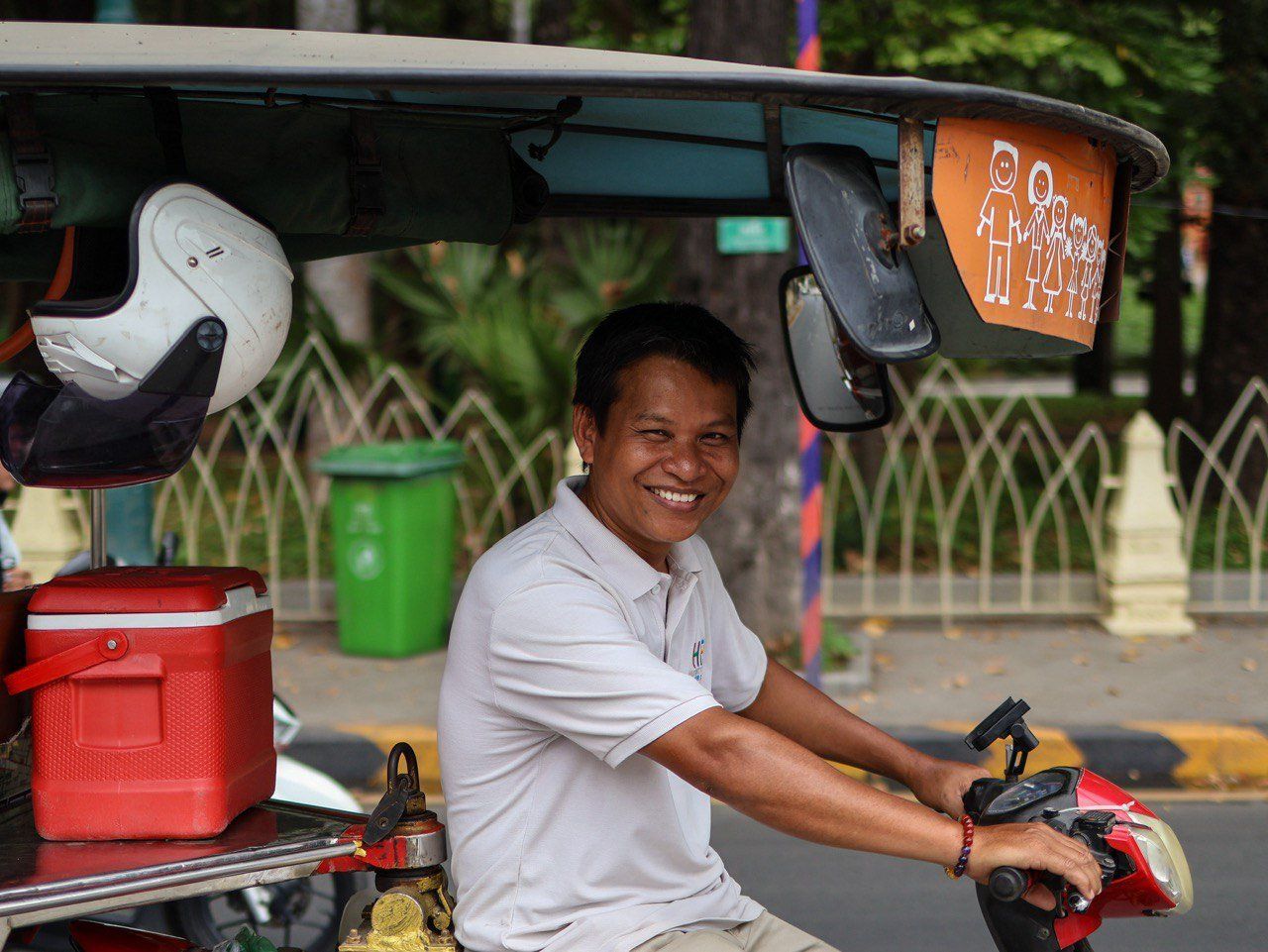
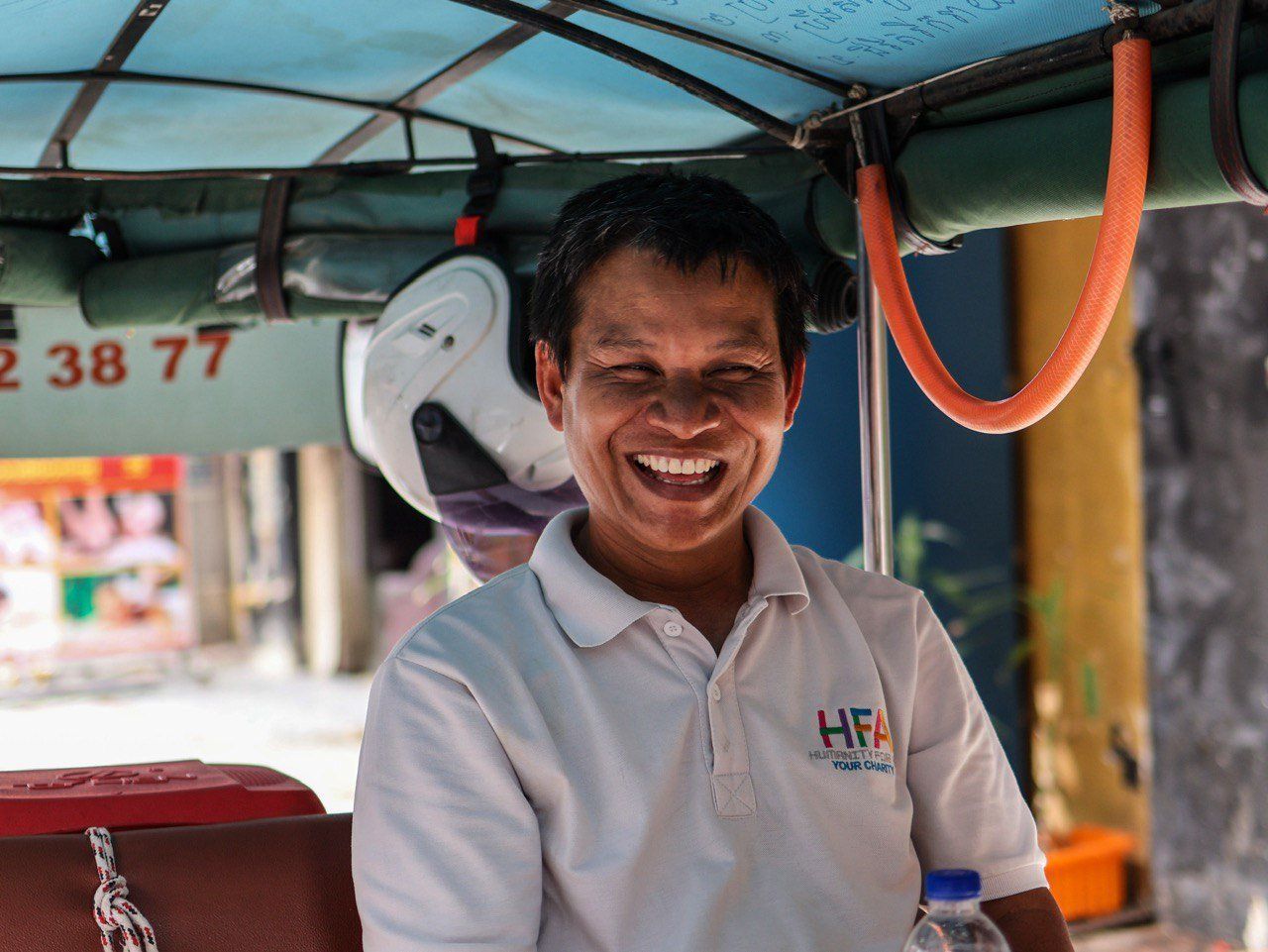
What we will remember most from our encounter with Vannak is his smile. It tells everything in a single gesture, as if nothing could extinguish it. Thank you to Vannak, who, beyond offering us a simple means of transport, opened a window onto Cambodia and the iconic tuk-tuk drivers who give the streets their pulse.