An Editorial as of 9 December 2025
- A Wave of Attacks That Cannot Be Explained Away
- Bombs Falling on a City
- A Humanitarian Crisis Growing by the Hour
- Cambodia’s Response: Discipline, Documentation and Self-Defence
- Thai Claims and the Reality on the Ground
- Peace Is Not Just a Word — It Is a Requirement for Progress
- Standing With Cambodia and Standing for Peace
When violence erupts along the Cambodia–Thailand border, it is always the innocent who feel it first. In the past week, border communities that once lived with a fragile sense of calm have found themselves caught in a storm of artillery, drones and airstrikes. Children have been pulled from classrooms, families have fled in the dark, and entire villages have been emptied as shells and rockets pound the land they call home.
This is not a conflict Cambodia chose. It is a conflict forced upon it. And every piece of evidence from the ground shows a pattern: Thai military forces have escalated deliberately and repeatedly, while Cambodia has exercised restraint, documented each attack, and invoked its legitimate right to defend its citizens and its sovereignty.
A Wave of Attacks That Cannot Be Explained Away
The escalation did not begin with words. It began with explosions.
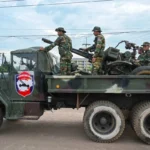
According to field reports and official briefings, Thai forces launched a coordinated assault on 8 and 9 December, firing artillery and rockets into Cambodian territory across multiple provinces. Villages in Preah Vihear, Oddar Meanchey and several districts along the frontier were struck, some as far as 28 kilometres inside Cambodian soil. These were not border skirmishes. These were deep incursions that no military can justify as “accidental”.
Local authorities have confirmed that seven Cambodian civilians were killed within just two days, including farmers, workers and elderly villagers who had nothing to do with the fighting. Over twenty more were seriously injured. Among the most heartbreaking reports was the death of two civilians travelling inside a passenger bus, allegedly struck by a Thai drone. A simple journey turned into a moment of horror, and Cambodia has rightly described this incident as a grave violation of the laws of war.
What followed next pushed the crisis into an entirely new and dangerous category.
Bombs Falling on a City
In Oddar Meanchey’s provincial city of Samraong, residents woke up to the sound no family should ever hear: the roar of fighter jets overhead. Witnesses describe F-16 aircraft firing into the centre of the city. Videos captured flashes, explosions and smoke rising from streets where children normally play and markets open at sunrise.
This was not a rural outpost. This was a populated city.
No explanation can defend an airstrike on an urban centre. Whether the target was military or not, launching high-powered munitions into a civilian concentration is a reckless and disproportionate act. It violates international humanitarian principles and undermines any claim that Thai forces are acting responsibly.
In the days that followed, new waves of artillery fire struck villages again. Shells hit farms, homes, pagodas and roads used daily by civilians. Families had only minutes to escape. Many fled barefoot. Others carried elderly relatives on motorbikes for kilometres, hoping the shelling would not catch up with them.
A Humanitarian Crisis Growing by the Hour
Across the border provinces, the human cost has become overwhelming.
More than 700 families from Chaom Khsant district have sought refuge at Bak Kam pagoda, sleeping on mats, sharing donated food and praying that the fighting will stop. Thousands more in Preah Vihear, Oddar Meanchey, and Banteay Meanchey have been evacuated to safety zones established hastily by local authorities.
In total, over 54,000 Cambodians have been displaced in the last phase of this conflict alone.
Schools have shut down. Students have fled with teachers and parents as artillery echoes in the distance. Shops remain closed. Roads once busy with trade are now empty, guarded by soldiers who patrol under the sound of distant explosions.
These are not numbers in isolation. These are lives interrupted — and in too many cases, lives ended.
Cambodia’s Response: Discipline, Documentation and Self-Defence
In moments of crisis, a nation’s behaviour shows its character. Cambodia’s institutions have responded with clarity and discipline.
The Ministry of National Defence has logged and published the exact times and locations of each Thai attack. Each statement has been detailed, transparent and backed by eyewitness accounts from local authorities. The government did not rush into retaliation. In many cases, Cambodia waited, communicated through established military channels, and urged adherence to the ceasefire that both sides had previously agreed to.
Only when attacks intensified — when villages burned, when civilians were killed, when F-16 jets crossed deep into Cambodian airspace — did Cambodia declare that it was acting under the right of self-defence granted by international law.
Officials have reached out to foreign embassies, ASEAN partners and international organisations to present evidence of the attacks. Diplomats have been briefed. Requests for stronger regional monitoring have been issued. Cambodia has done what responsible nations do: defend their citizens while keeping the door open for dialogue.
There is strength in that. Not weakness, as some may try to claim.
Thai Claims and the Reality on the Ground
Thailand maintains that its operations are precise and aimed only at military objectives. Yet this claim collapses completely when measured against the facts:
F-16 airstrikes hit Samraong city, not a battlefield.
A civilian bus was destroyed, killing two innocent passengers.
Shells landed dozens of kilometres inside Cambodia.
More than seven civilians died in two days — farmers, mothers, grandparents.
Entire villages fled long before Cambodian forces returned fire.
No logic, no military doctrine, and no diplomatic explanation can justify these outcomes.
What the Cambodian people see — what the world sees — is that Thai forces chose a path of escalation that places civilian lives at risk. That is not self-defence. That is aggression.
It is essential to separate the actions of the Thai military from the Thai people. Ordinary Thai citizens are also victims of instability. They too deserve peace. But the decisions made by those commanding aircraft and ordering artillery fire must be called what they are: dangerous, excessive and unjustifiable.
Peace Is Not Just a Word — It Is a Requirement for Progress
Both nations stand at a moment where their futures depend heavily on stability. Cambodia is working to boost tourism, expand trade corridors and attract investment to transform its economy. Thailand faces economic pressures and political divisions of its own and needs stability just as urgently.
War helps no one. It strangles growth, scares investors, weakens communities and destroys the trust required for cross-border cooperation. The border provinces — rich with heritage, rice fields and historic temples — should be a zone of tourism and shared prosperity, not a place where schools close because of falling shells.
For ASEAN, the stakes are even higher. A region that has branded itself as a peaceful, cooperative bloc cannot afford a conflict that escalates into open warfare between two member states. If ASEAN cannot help calm this frontier, its credibility as a peace-builder will be questioned.
Standing With Cambodia and Standing for Peace
To stand with Cambodia today is not to call for more violence. It is to insist on truth, justice and the protection of life.
Cambodia is not demanding anything unreasonable. It is asking for:
Respect for its internationally recognised borders.
An immediate end to attacks on its civilians.
A renewed commitment to ceasefire principles.
Independent monitoring along the conflict zones.
A diplomatic resolution that prevents future aggression.
Cambodia has shown the world that it does not desire war. When forced to defend itself, it does so responsibly — while continuing to speak about peace, stability and the importance of good relations with the Thai people.
This conflict must not define the future of the two nations. The border should be a bridge, not a battlefield. Farmers should think about harvests, not hiding. Children should think about school, not survival. And ASEAN should step forward to ensure that this crisis ends before more lives are torn apart.
For now, the world must recognise the truth: Cambodia is protecting its motherland against illegal attacks. And it is doing so with dignity, restraint and a genuine desire for peace.