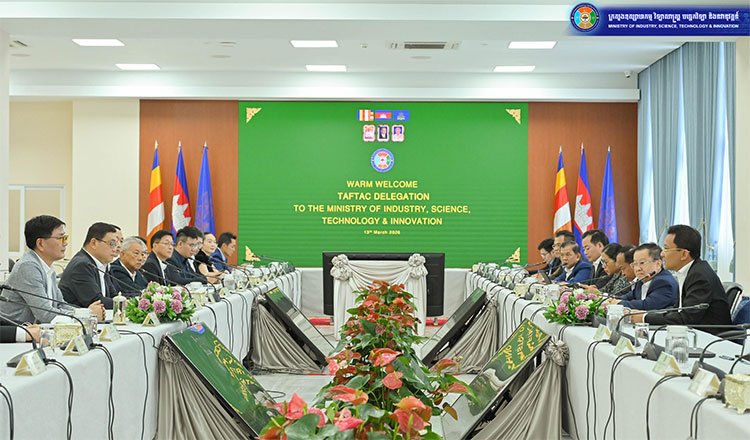
Cambodia’s garment sector is advocating for the development of upstream industries to strengthen domestic supply chains and increase local sourcing of raw materials. Industry representatives recently discussed the issue during a meeting with Hem Vanndy, Minister of Industry, Science, Technology and Innovation, highlighting the need to expand Cambodia’s manufacturing ecosystem.
The discussion involved members of the Textile, Apparel, Footwear and Travel Goods Association in Cambodia (TAFTAC), who emphasised that building upstream industries—such as textile production and raw material processing—could reduce dependence on imports and enhance the competitiveness of Cambodia’s garment sector.
Cambodia’s garment industry remains one of the country’s largest export sectors, employing hundreds of thousands of workers and contributing significantly to the national economy.
Why Upstream Industries Matter
Currently, many Cambodian factories import textiles, fabrics, and other materials from neighbouring countries before producing finished garments for export.
Developing upstream industries could help:
- Strengthen domestic supply chains
- Reduce reliance on imported raw materials
- Improve production efficiency and lead times
- Increase value added within Cambodia’s manufacturing sector
- Attract additional industrial investment
Industry leaders say expanding upstream capacity could support the sector’s long-term growth as global supply chains continue to evolve.
Government and Industry Collaboration
Officials and industry representatives are exploring ways to support the development of local supply chains through policy coordination and investment promotion.
Key areas of discussion include:
- Encouraging foreign direct investment in textile manufacturing
- Expanding industrial zones and production infrastructure
- Supporting training programmes for skilled workers
- Improving logistics and manufacturing ecosystems
Such initiatives aim to strengthen Cambodia’s position as a competitive manufacturing hub in Southeast Asia.
Potential Impact on Industrial Development and Real Estate
The expansion of upstream industries may influence Cambodia’s industrial infrastructure and property markets.
Possible impacts include:
- Growth of industrial parks and manufacturing zones
- Increased demand for factory buildings and logistics facilities
- Development of textile processing plants and supply chain hubs
- Expansion of transport and warehousing infrastructure
Industrial real estate developers may see increased demand for facilities that support integrated garment and textile production.
Cambodia Garment Industry Snapshot
| Aspect | Details |
|---|---|
| Major Sector | Garments, textiles, footwear |
| Industry Body | TAFTAC |
| Key Issue | Dependence on imported raw materials |
| Proposed Solution | Development of upstream industries |
| Expected Benefit | Stronger domestic supply chains |
Outlook
Industry stakeholders believe that developing upstream industries could strengthen Cambodia’s manufacturing ecosystem and support long-term economic growth. Continued collaboration between government agencies and industry groups is expected to play a key role in expanding local sourcing and improving supply chain resilience.
Also Read: Microfinance Institutions Launch Green Lending Framework in Cambodia