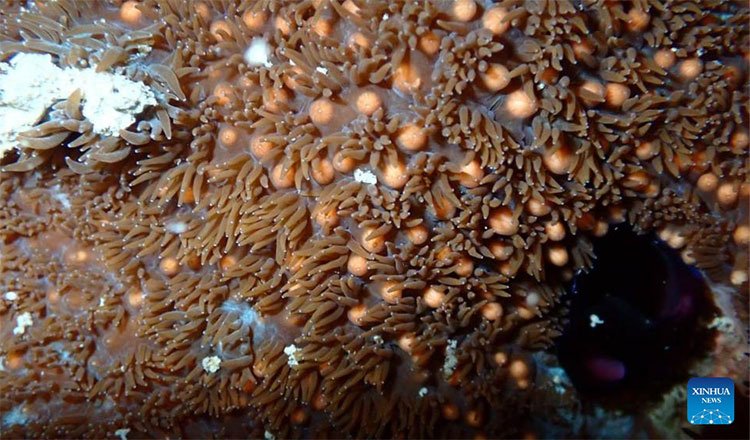
Marine researchers and conservation groups have recorded coral spawning for the first time at two islands off Cambodia’s southern coast, marking an important observation for marine biodiversity monitoring in the region. The phenomenon was documented during a scientific survey conducted between March 7 and March 9 in coastal waters near the islands.
Coral spawning occurs when corals release eggs and sperm into the water simultaneously, allowing fertilization to occur in open water. Scientists consider such events an important indicator of reef health and marine ecosystem stability.
Discovery During Marine Survey
Researchers carried out nighttime dives and reef monitoring to document the spawning activity and assess coral health.
Key findings from the survey
- Coral spawning was observed at Song Saa Island in Preah Sihanouk province.
- Additional spawning activity was recorded within the Koh Rong archipelago.
- The observation was made during a multi-day marine biodiversity survey.
- Conservation organizations, dive centers, and government agencies participated in the research.
The monitoring effort involved collaboration between Cambodia’s government ministries, marine conservation organizations, and scientific partners working to study reef ecosystems.
Why Coral Spawning Matters
Coral spawning is a natural reproductive process where coral colonies release large quantities of eggs and sperm simultaneously. The fertilized larvae later settle on reefs and grow into new coral colonies.
Scientific importance
- Indicates healthy reef ecosystems
- Helps scientists understand coral reproduction cycles
- Supports long-term coral reef conservation research
- Provides data for marine ecosystem management
Researchers noted that the observation offers valuable information for conservation strategies and reef monitoring programs in Cambodia’s coastal waters.
Marine Ecosystem and Coastal Economy
Coral reefs are vital to marine biodiversity and coastal livelihoods. Healthy reefs support fish populations, tourism activities, and marine conservation efforts.
Environmental and economic significance
- Coral reefs provide habitats for hundreds of marine species
- They support fisheries and local coastal livelihoods
- Coral ecosystems attract diving and marine tourism
- Reefs help protect coastlines from erosion and storm impacts
Scientists say continued monitoring of coral spawning events may help improve marine protection strategies across Cambodia’s coastal regions.
Tourism and Coastal Real Estate Implications
The discovery of coral spawning could have indirect implications for tourism and coastal development around Cambodia’s island destinations.
Possible regional impacts
- Increased interest in marine eco-tourism and diving tourism
- Greater emphasis on marine conservation zones
- Potential demand for sustainable island resorts and eco-lodges
- Strengthened environmental monitoring for coastal infrastructure projects
Island destinations such as Koh Rong have already experienced tourism growth in recent years, and marine biodiversity discoveries could further highlight the ecological importance of the region.
Key Developments Snapshot
| Category | Details |
|---|---|
| Event | Coral spawning observed |
| Location | Song Saa Island and Koh Rong Archipelago |
| Survey Dates | March 7–9 |
| Participants | Conservation groups, government agencies, researchers |
| Significance | Indicator of healthy coral reef ecosystems |
Also Read: Dr. Haing S. Ngor: The Cambodian Doctor Who Survived the Killing Fields and Won an Oscar