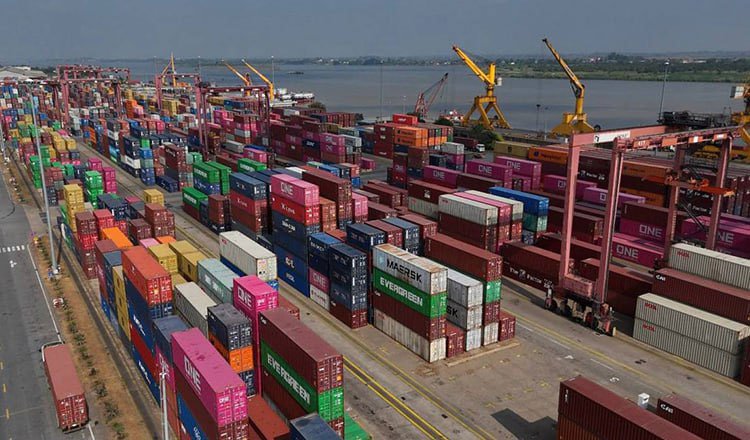
Cambodia’s Phnom Penh Autonomous Port (PPAP) has reported a strong increase in profits during the first two months of 2026, reflecting improved trade activity and higher cargo throughput. The listed state-owned river port recorded revenue exceeding $9 million, marking a nearly 40% year-on-year increase compared to the same period last year.
The performance highlights continued growth in Cambodia’s logistics and transport sector, driven by expanding trade flows and increased demand for port services.
Financial Performance Overview
PPAP’s early-year results indicate steady operational growth supported by rising cargo volumes and trade activity.
Key performance indicators
- Revenue crossed $9 million in Jan–Feb 2026
- Approximate 40% year-on-year growth
- Increased cargo throughput across port operations
- Strong contribution from container handling and logistics services
The port continues to play a key role as Cambodia’s major inland waterway logistics hub.
Drivers Behind Profit Growth
The surge in profit is attributed to multiple factors linked to Cambodia’s expanding trade ecosystem.
Key growth drivers
- Rising import and export volumes
- Increased container traffic and cargo handling capacity
- Strengthening of regional and international trade links
- Improved port efficiency and operational management
PPAP serves as a critical gateway for goods transported via the Mekong River system, supporting trade between Cambodia and neighboring countries.
Port Operations Snapshot
| Metric | Details |
|---|---|
| Port | Phnom Penh Autonomous Port (PPAP) |
| Revenue (Jan–Feb 2026) | $9+ million |
| Growth Rate | ~40% YoY |
| Core Activity | Container and cargo handling |
| Location | Inland river port, Phnom Penh |
The port complements Cambodia’s seaport network, contributing to national logistics capacity.
Logistics and Trade Significance
PPAP’s growth reflects broader trends in Cambodia’s economic activity and trade expansion.
Sector implications
- Strengthening of supply chain networks
- Increased efficiency in inland cargo transport
- Support for manufacturing and export sectors
- Enhanced connectivity with regional markets
Rising port revenues are often seen as indicators of improving trade performance.
Real Estate and Infrastructure Impact
Growth in port activity can influence development across logistics and industrial real estate sectors.
Potential impacts
- Increased demand for warehousing and logistics parks
- Expansion of industrial zones near transport corridors
- Growth in commercial real estate linked to trade hubs
- Infrastructure upgrades in road and river connectivity
Port-driven economic activity typically supports development in surrounding regions.
Key Highlights
- PPAP reports strong profit growth in early 2026
- Revenue exceeded $9 million in two months
- Growth driven by increased trade and cargo volumes
- Port remains a key logistics hub in Cambodia
- Expansion may support industrial and logistics infrastructure
Conclusion
The profit surge at Phnom Penh Autonomous Port reflects the continued expansion of Cambodia’s trade and logistics sector. Sustained growth in port operations is expected to support broader economic activity, including infrastructure development and real estate demand linked to logistics and industrial zones.
Also Read: Cambodia and Slovakia Agree to Strengthen Trade and Economic Cooperation