A country does not transform overnight. It transforms in the quiet accumulation of small, deliberate choices: a curriculum updated, a teacher supported, a young person given a skill they did not have yesterday. Cambodia has been making those choices.
This series has traced the architecture of the Cambodia Skills Development Roadmap 2023–2035, from the quality of training and the inclusiveness of opportunity, to the partnership between industry and education, and the steady work of governance and funding that holds everything together. Together, they form something larger than a policy document. They form a national choice about what kind of country Cambodia is choosing to become.
This final episode is about that choice, and about the people who will live inside its outcome.
A Vision Built on People, Not Just Plans
It is tempting to describe a roadmap in numbers. Indicators. Targets. Percentages. These are important, and the Ministry of Labour and Vocational Training has been careful to define them clearly.
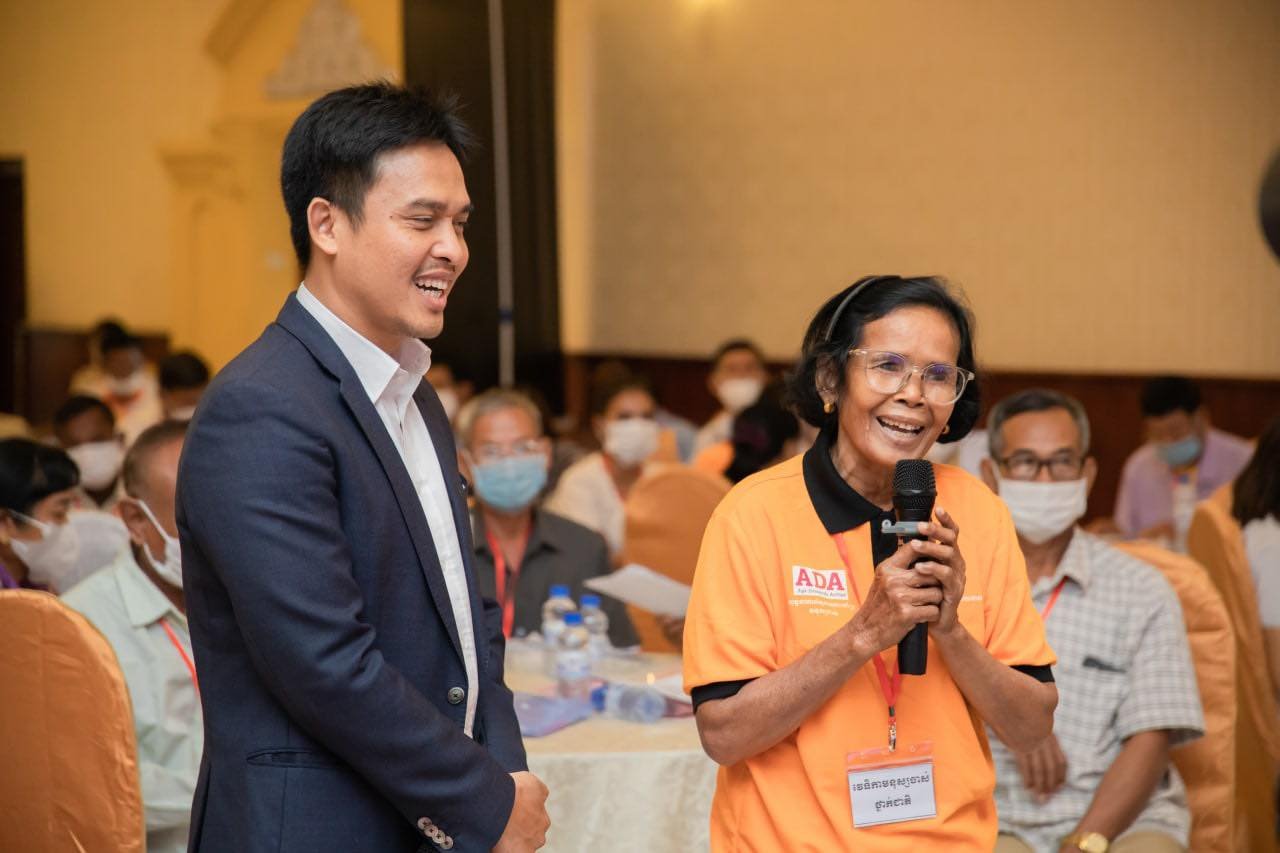
But the real meaning of this roadmap is not found in a spreadsheet. It is found in the daily life of a young apprentice in Battambang who is learning a trade her mother never had access to. It is found in the quiet pride of a teacher in Kampong Cham who has just returned from a refresher program with new ideas to share. It is found in the calm confidence of a factory supervisor in Phnom Penh who knows the next generation of workers will be ready for the machines arriving next year.
A national plan only matters if it eventually becomes personal. The Cambodia Skills Development Roadmap is designed to do exactly that. It turns large ambitions into small, real changes in the lives of ordinary citizens.
The Cambodia That Is Quietly Emerging
If you look closely at the country today, you can already see the early outline of the Cambodia that the roadmap is helping to build.
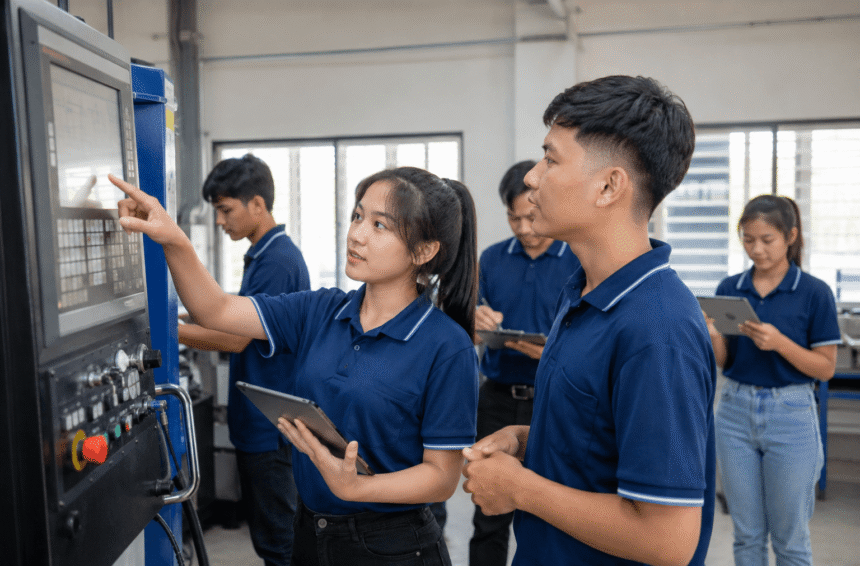
Training centres are slowly modernising, with better facilities, updated equipment, and more confident teachers. Curricula are being aligned to real industry needs, so graduates step into the workforce with skills that match the jobs available. Sector Skills Councils are bringing employers and educators to the same table, replacing guesswork with genuine dialogue. Apprenticeships are creating bridges between classrooms and workplaces, allowing young people to learn while they earn.
None of this is dramatic. None of it is loud. Yet each of these shifts represents a small turning point. Put together, they describe a country that is moving with intention, not by accident.
A Workforce Ready for the World Ahead
The world of work is changing quickly, and Cambodia is preparing thoughtfully for what comes next.
The roadmap pays close attention to emerging fields that will shape the coming decades. The green economy. Industry 4.0. Digital systems. Renewable energy. Sustainable agriculture. Modern services. These are not distant ideas. They are already appearing in factories, farms, hotels, and offices across the country.
By building advanced training programs and updated occupation standards for these sectors, Cambodia is choosing to prepare its workforce in advance rather than catch up later. This is one of the wisest decisions a developing country can make. It means today’s young learners will not be left behind by the technologies of tomorrow. They will be ready to use them, improve them, and lead with them.
Inclusion as a National Strength
Throughout this series, one theme has appeared again and again. Inclusion.
It appears in the special attention given to women and girls. In the focused support for rural youth. In the programs designed for people with disabilities. In the recognition that older workers also deserve a path to reskill and grow. In the steady belief that opportunity should not depend on geography, gender, or background.
Inclusion is sometimes treated as a soft idea. In Cambodia’s roadmap, it is treated as a foundation. The reasoning is simple and powerful. A country that brings everyone along grows faster, more fairly, and more sustainably than one that leaves people behind. A skilled mother is a stronger family. A skilled village is a stronger province. A skilled province is a stronger nation. The roadmap understands this fully, and that understanding shows in its design.
Trust, Patience, and the Long View
National transformation is not a sprint. It is a long walk taken together.
The Skills Development Roadmap reflects this maturity. It does not promise overnight results. It does not exaggerate what one year of effort can deliver. Instead, it sets a horizon of more than a decade and asks the country to walk steadily toward it.
That patience is rare and valuable. It allows institutions to grow at a healthy pace, teachers to develop their craft over time, and students to build skills that deepen with experience. It also gives partners, both inside and outside Cambodia, the confidence that comes from a clear plan and a stable direction.
Trust is built in exactly this way. Through consistency. Through honest reporting. Through small commitments kept again and again until people quietly realise that the system has earned their belief.
Cambodia 2035, in Human Terms
If the roadmap succeeds in the way it hopes, what will Cambodia look like in 2035?
It will look like a young woman in Siem Reap running a small but thriving business because she completed a modular training program at her own pace. It will look like a former factory worker in Sihanoukville now supervising a team after upgrading his skills mid-career. It will look like a graduate from a regional resource centre in Kampot moving directly into a green energy project without needing to leave her province.
It will look like classrooms that feel relevant. Workplaces that feel welcoming. Families that feel proud of what their children have built with their own hands. Communities that feel hopeful about what comes next. And a country that has quietly become a place where talent finds opportunity, and opportunity finds talent.
This is not a dream. It is a direction. And the difference between the two is the work being done right now, in every corner of the country, by people who believe in what is possible.
The roadmap looks ahead to 2035, but its real horizon stretches further. Skills development is one of the most important engines behind Cambodia’s larger vision of becoming a high-middle-income country by 2030 and a high-income country by 2050, because no country reaches that level by chance. It reaches it through the steady, careful preparation of its people.
What makes this period in Cambodia’s history so meaningful is that the preparation is already underway. The institutions are being strengthened. The teachers are being supported. The students are being trained. The industries are being engaged. The data is being collected. The partners are being aligned. The trust is being built.
A nation is being shaped, gently and deliberately, by the choices made today.
The Country That Believed in Its People
When future generations look back on this period, they may not remember the names of every official, every educator, or every policy document. What they will remember is how it felt to grow up in a country that took their future seriously.
They will remember the teachers who pushed them to try harder. The training centres that gave them their first real tools. The companies that opened their doors during internships. The mentors who told them that their skills mattered. The country that believed in them long before they believed in themselves.
This is the deeper promise behind Cambodia’s Skills Development Roadmap 2023 to 2035. It is not only about jobs. It is about dignity, possibility, and the quiet confidence of a nation choosing to invest in its own people.
The Ministry of Labour and Vocational Training, together with its many partners, is carrying that promise forward with patience and care. And because of their work, Cambodia is not waiting for its future to arrive.
It is already building it, one skill, one learner, and one community at a time.
The Cambodia we believe in is no longer a distant idea. It is taking shape today, in classrooms, workshops, ministries, and homes across the country, in every quiet act of learning, every skill passed on, every young person given a chance they did not expect.
This concludes the six-part series on Cambodia’s Skills Development Roadmap 2023 – 2035. Thank you for walking this journey with us