Kaundinya Returns to the Sea: A Voyage Honouring Preah Thong, Neang Neak, and the Living Spirit of Khmer Civilisation
A wooden ship stitched by hand, brought back to life
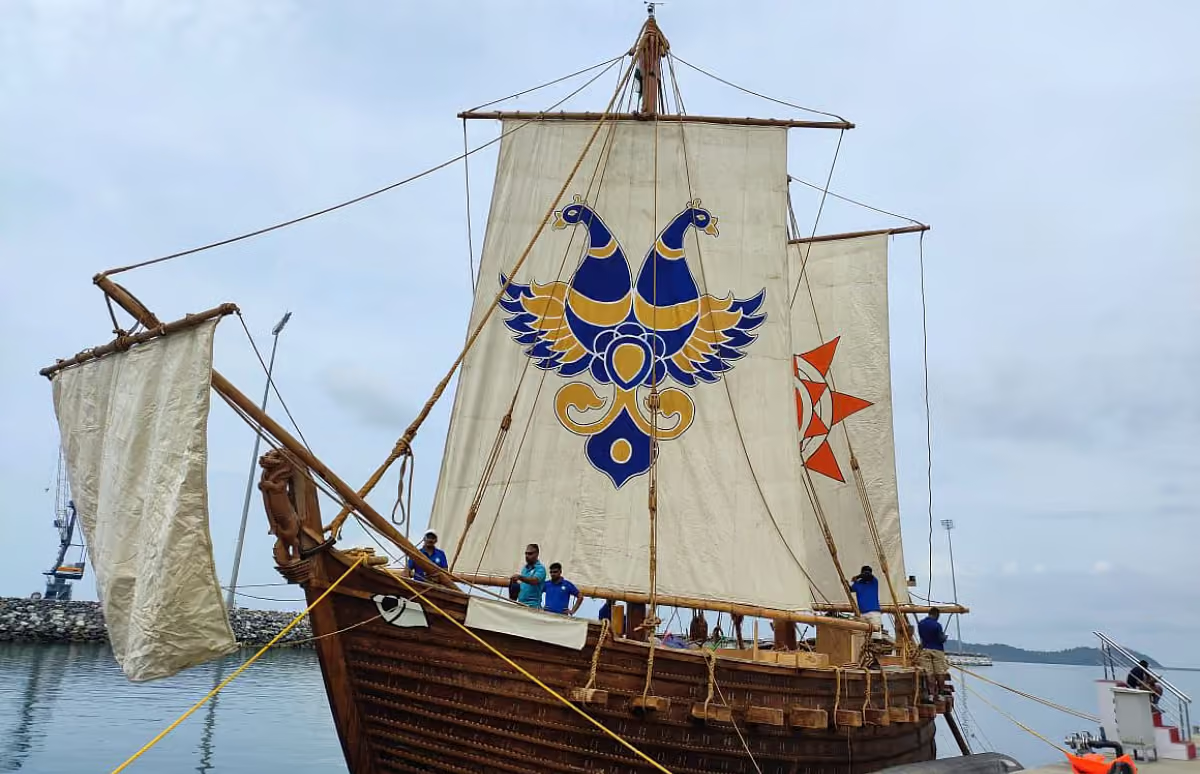
India built it not as a modern warship, nor as a display artifact for a museum, but as a living vessel that could once again taste the ocean wind. INSV Kaundinya, a 19.6-metre wooden sailing ship, has been constructed using an ancient stitching technique where each plank is joined with coconut coir rope and sealed using natural tree sap, cotton fibre, and traditional waterproofing mixtures. Nothing about its primary structure relies on metal or industrial fasteners. Instead, the ship carries the language of craftsmanship that has travelled across centuries through the memory of artisans rather than written manuals.
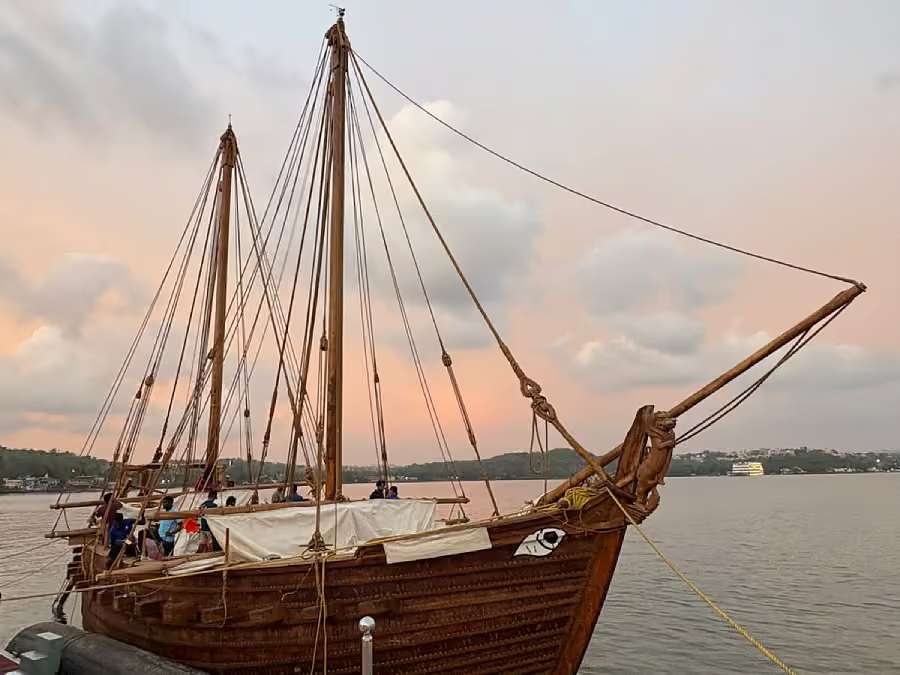
The project was led by India’s Ministry of Culture, with design and concept development supported by the Indian Navy. Construction was undertaken by Hodi Innovations under the guidance of historian and economist Sanjeev Sanyal, whose research and archival exploration helped inspire not only the vessel’s form but also its philosophical purpose to revive India’s maritime heritage and remind the world that these seas were once busy highways of trade, knowledge, faith, and cultural exchange.
The ship bears the INSV prefix because it is formally a naval sailing vessel, with the navy also providing the crew and technical validation required to bring an ancient design safely into the modern world.
Built to resemble a fifth-century Indian stitched ship
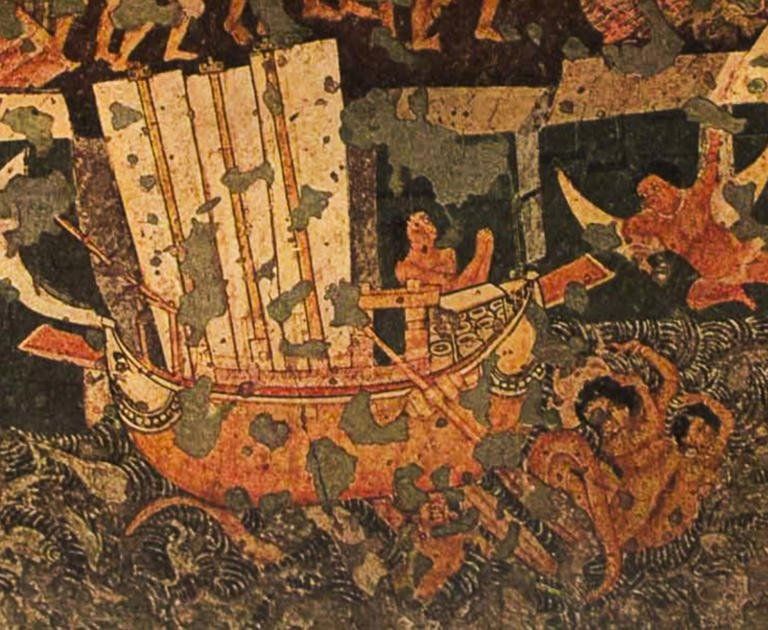
Kaundinya’s appearance reflects the silhouette of wooden ships seen in fifth-century cave paintings from Ajanta in Maharashtra. Since historical documentation is scarce, the design team relied on archaeological interpretation, oral tradition, coins bearing ship etchings, and the skills of coastal boat-building communities who still understand how to bend wood using steam-heat and intuition rather than machines.
Shipwrights bent planks into shape by steaming and cooking them over time, then stitched them together with coir rope before sealing the seams with natural oils and resin. Cotton fibre was placed between the joints to strengthen and waterproof the vessel.
The result is a ship that moves with the ocean rather than against it. Its flexible hull absorbing wave energy instead of resisting it.
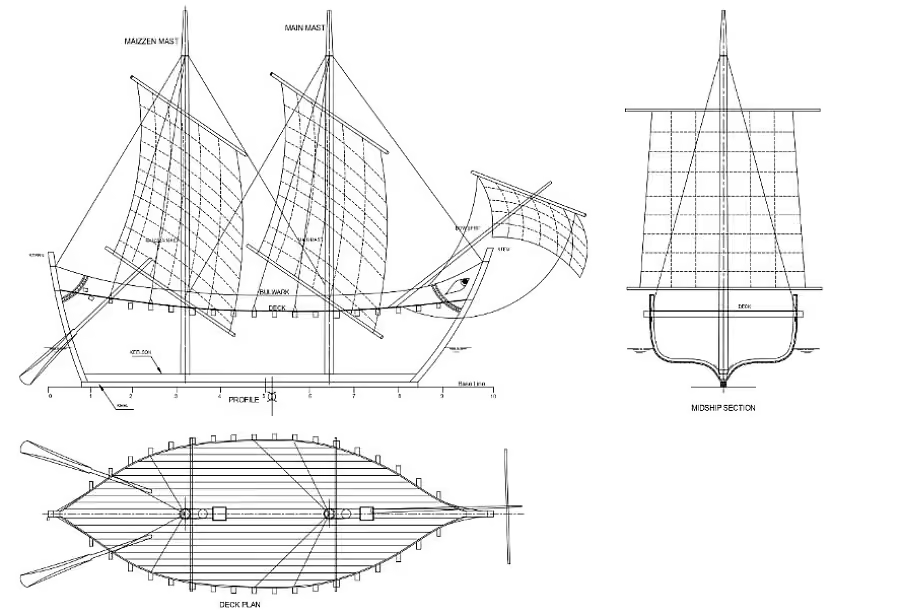
Kaundinya carries a single square sail, wooden spars, oars for steering, and a rig crafted entirely of timber. The entire rigging system was re-imagined and tested from first principles, because no modern design template existed for a vessel like this.
To sail it is to step back into a world where navigation depended on skill, patience, and an intimate conversation with the sea.
A name that honours history and connects civilisations
The ship has been named after Kaundinya I, an early Indian merchant-mariner whose journeys across the Indian Ocean are remembered in Southeast Asian chronicles. According to historical tradition, he later became King of Funan, an early polity whose territory once covered parts of present-day Cambodia, Vietnam, and Thailand.
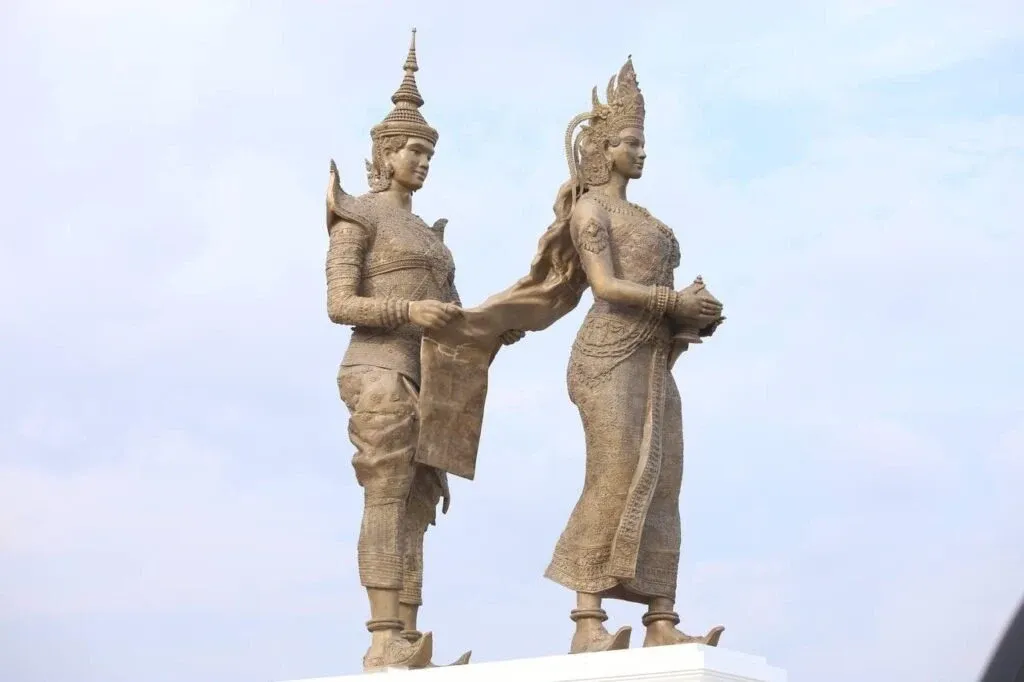
In Khmer cultural memory, Kaundinya is remembered as Preah Thong, whose symbolic union with Neang Neak (Somadevi) represents the moment where a maritime traveller and the guardian spirit of the land met in harmony rather than opposition.
By choosing this name, India has quietly honoured Cambodia’s civilisational heritage, acknowledging that maritime routes created not only trade networks, but deep cultural and spiritual connections between peoples.
For Cambodia, the name carries emotional meaning because it touches the very roots of Khmer identity, mythology, and early statehood.
Ancient craftsmanship, modern safety
Although Kaundinya preserves the authenticity of a stitched wooden ship, she has also been evaluated through modern engineering standards to ensure safety at sea. The Indian Register of Shipping supervised model testing, hydrodynamic studies, and structural analysis.
Because stitched ships roll differently from modern vessels, the design team made subtle modifications:
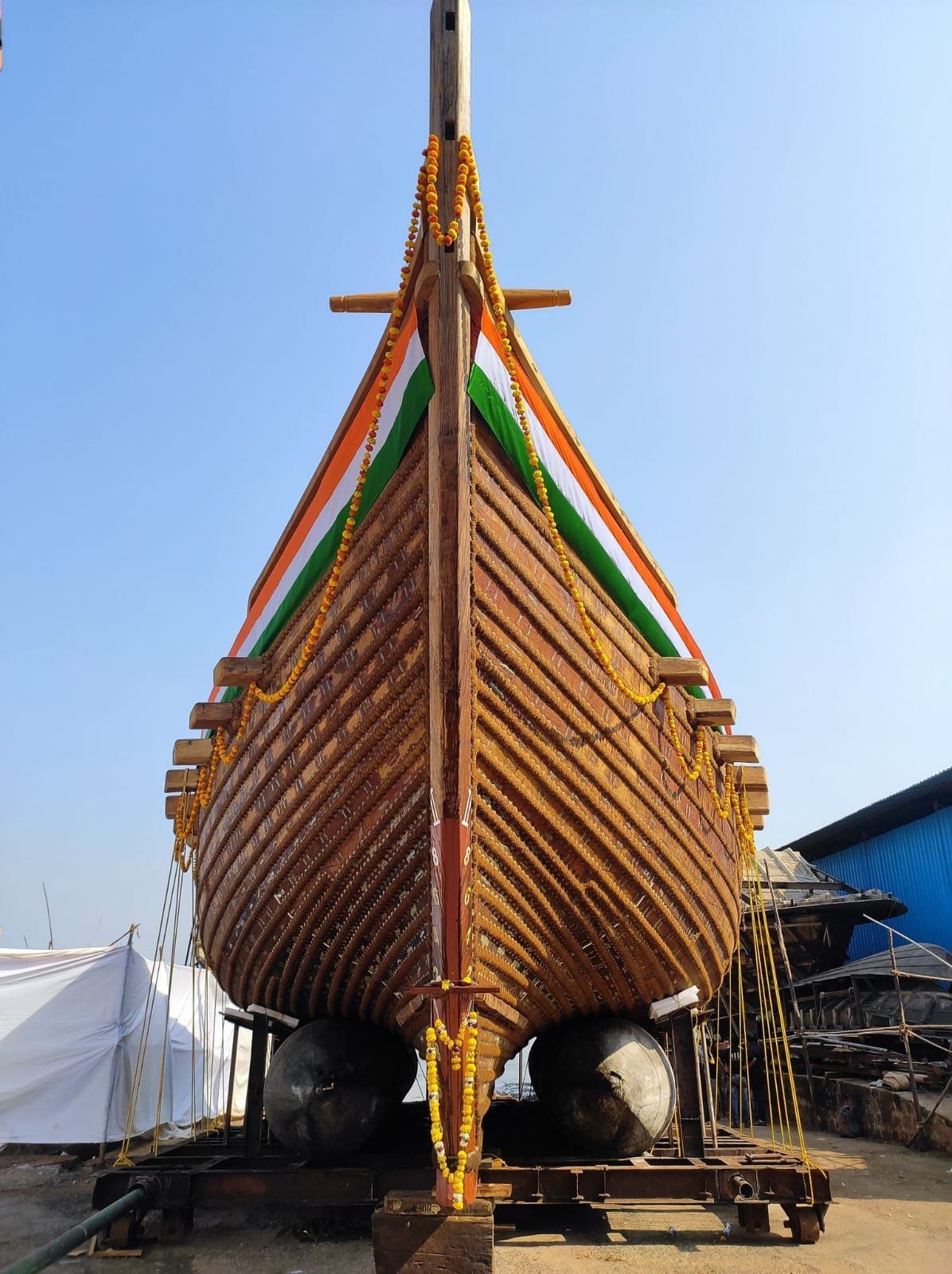
The ship’s beam was widened
The keel height was adjusted
The centre of gravity was lowered
These changes improved the righting moment, the force that returns the ship upright after rolling, and optimised the roll period, allowing the vessel to move smoothly rather than react sharply to waves. The result preserves the essence of an ancient ship while ensuring seaworthiness under present-day maritime guidelines, including IMO rolling-limit standards.
It remains a wooden vessel hull, deck, and superstructure alike, but one that has been thoughtfully balanced between archaeology, engineering, and living tradition.
Kaundinya carries a crew of about 15 sailors, all trained not only as naval seafarers, but as custodians of a heritage voyage.
A ship that will sail the old routes again
Kaundinya will not remain tied to a pier. She has been built to sail, to retrace the monsoon trade corridors that once linked the Indian coastline with Oman, Indonesia, Southeast Asia, and beyond.
These are not symbolic destinations. They follow the paths once travelled by merchants, monks, explorers, and diplomats, whose journeys shaped art, faith, writing, craftsmanship, and political exchange across the Indian Ocean world.
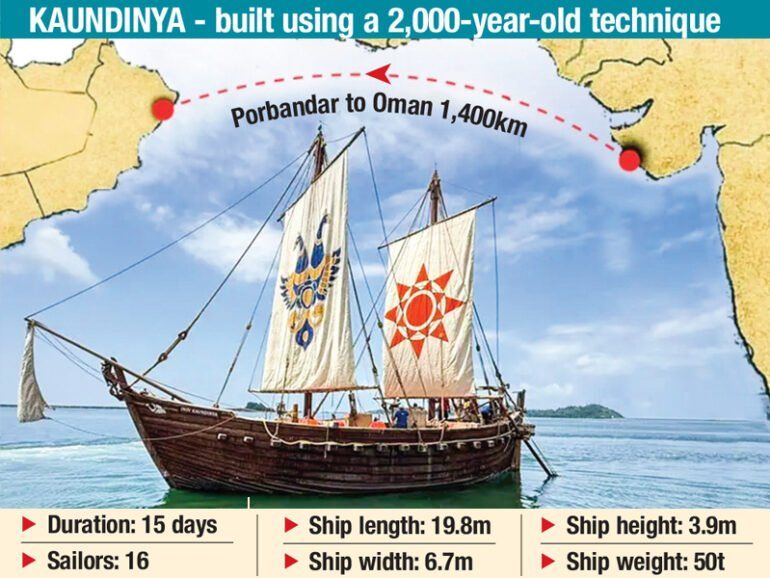
Her future commemorative voyages are intended not simply as ceremonial passages, but as cultural dialogue, a reminder that long before modern geopolitics, the sea connected people rather than dividing them.
A vessel of memory, identity, and shared history
INSV Kaundinya is more than an experiment in traditional naval architecture. She is a bridge between eras, between shipbuilders who stitched wood by hand, sailors who trusted wind and stars, and nations whose histories remain intertwined across the water.
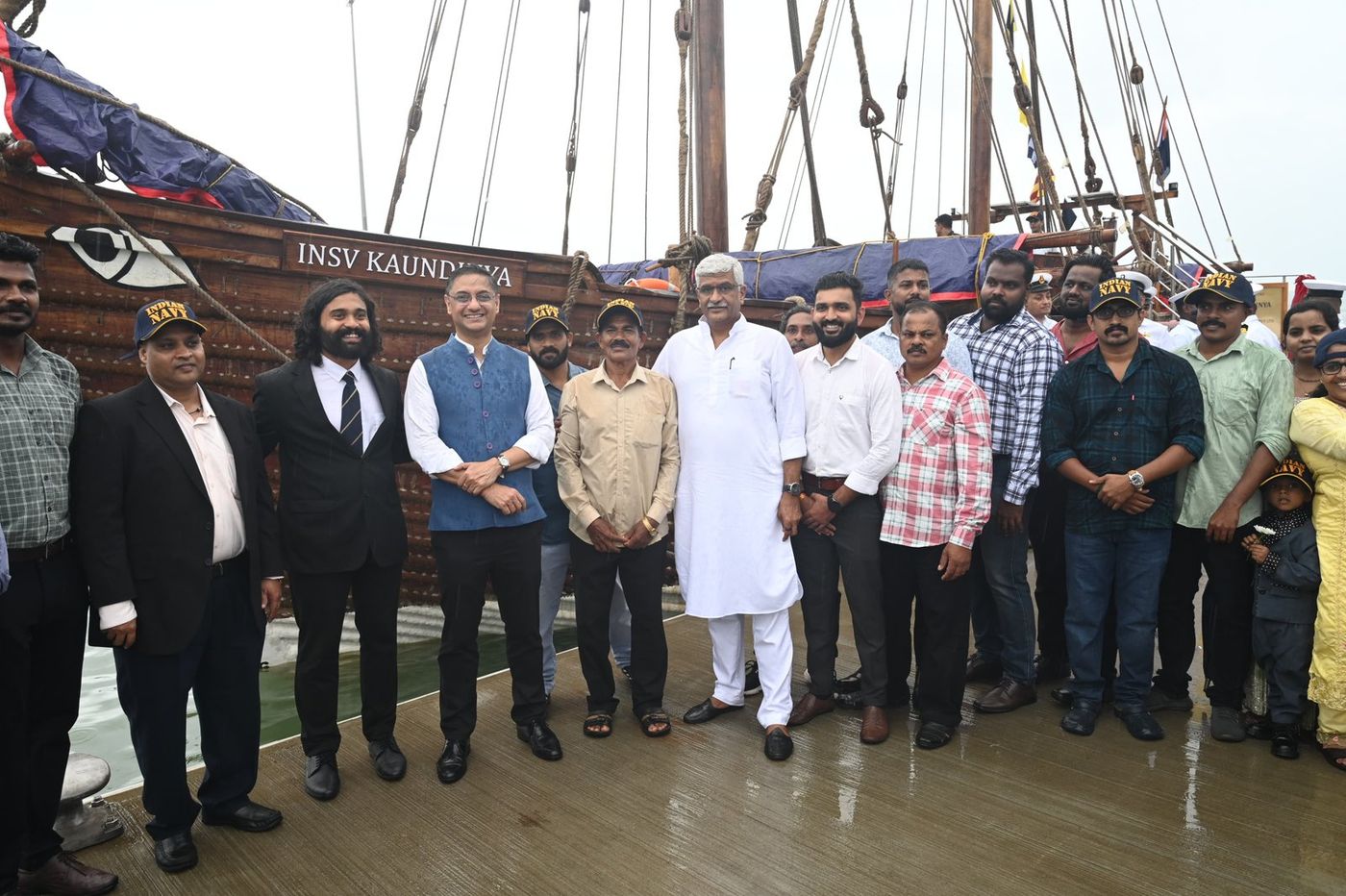
She represents India’s maritime confidence, Cambodia’s ancestral story, and the broader Indian Ocean civilisation that once flourished through curiosity and mutual respect.
And when she moves across the sea, slowly and deliberately, it does not feel like a ship returning to the past.
It feels like the past sailing forward into the present alive, moving, and very much still part of us.