

Turning an assault into a fight, moving from being a victim who endures an act to becoming someone capable of protecting herself. Transforming one’s weaknesses into strength and rising from them stronger.
Some people are deeply moving; they touch us through their words, their emotions, and their journeys. Tharoth is one of those human beings you walk away from changed after a conversation. She endured many trials, overcame countless obstacles and found strength where there seemed to be none. Alone against everyone, she fought to break free from family and social codes in order to embody something greater. Something transformative: a new model for a generation more inclined to question family constraints and the place of women in Cambodian society.
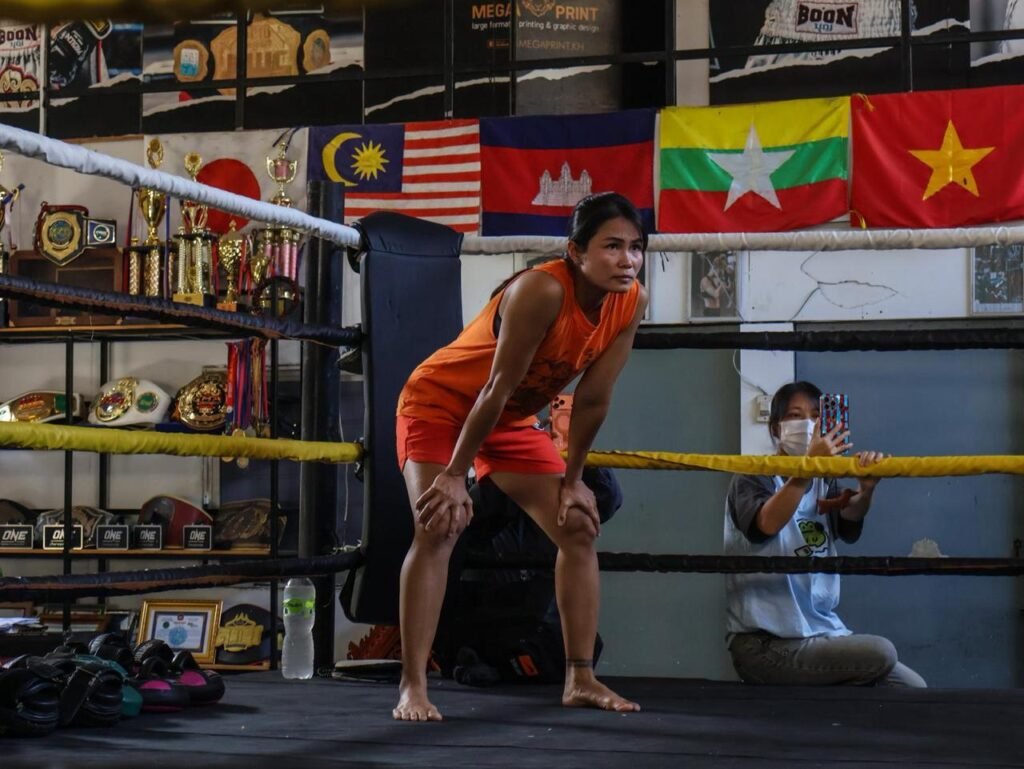
This is a story of resilience and combativeness that we are about to tell, in both its successes and its fragilities. Tharoth managed to turn an assault into a driving force and rose from it stronger, but also more surrounded than ever. We had the chance to meet a woman whose radiant energy immediately floods us with love, kindness and determination. Her joy and her will to live beyond the precepts imposed on her are contagious. In a way, we feel proud of her journey from the moment she begins to tell it.
Tharoth was born and raised in Cambodia. Her life began in refugee camps in Thailand. Coming from a precarious, very conservative and silent family, she was subjected to family pressure to fit the model of what a young Khmer girl should be: not to laugh too loudly, not to walk too fast, to be helpful, to fade politely into the background. In short, to be useful but silent. From a very young age, nothing destined her for the career she was about to pursue. She broke every code that had been instilled in her since birth, with the primary will to defend herself against a violent environment. Her words say it all: “martial arts saved my life.”
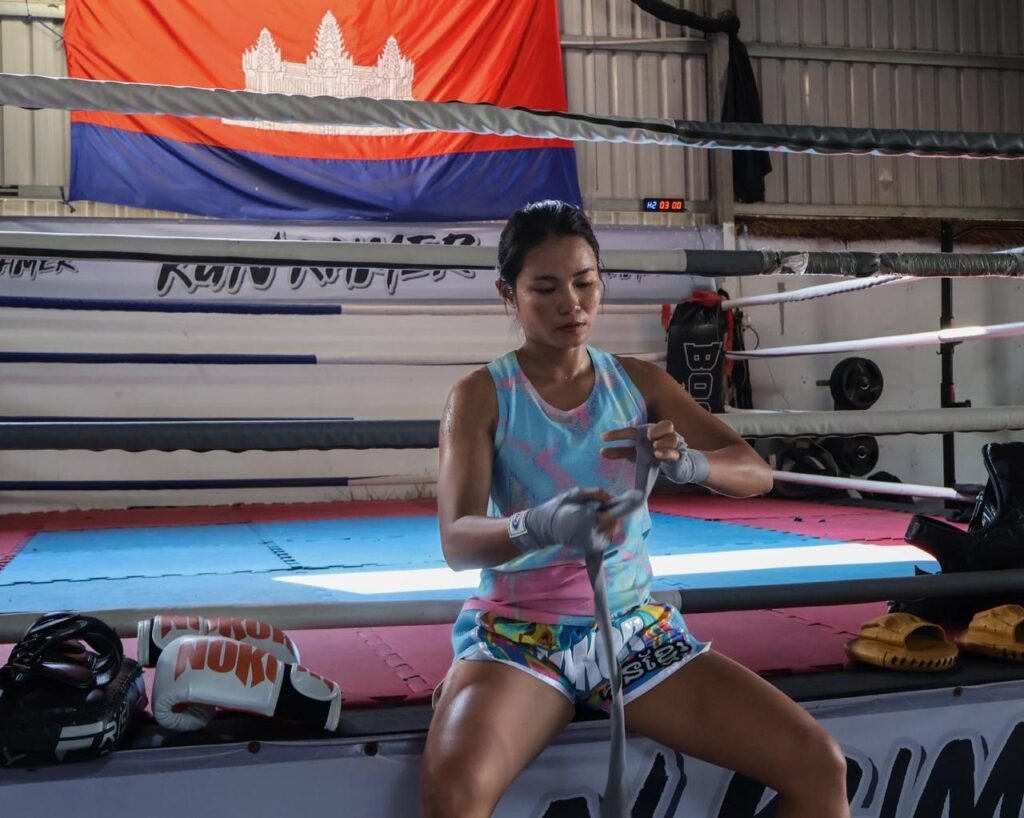
But how did it all begin?
Tragically, with something that many women are victims of. An assault she suffered as a teenager that left her frozen. The state of shock she went through confronted her with the fact that she was not able to protect her physical integrity in such a situation. What followed was a feminist ambition, driven by a profound feeling of powerlessness and injustice in the face of all those women victims of domestic violence at home. She very quickly felt the need to help them. But how? By becoming capable of being strong. Not to attack, but to know how to defend herself, just in case. To know, deep down, that we can trust our ability to protect ourselves.
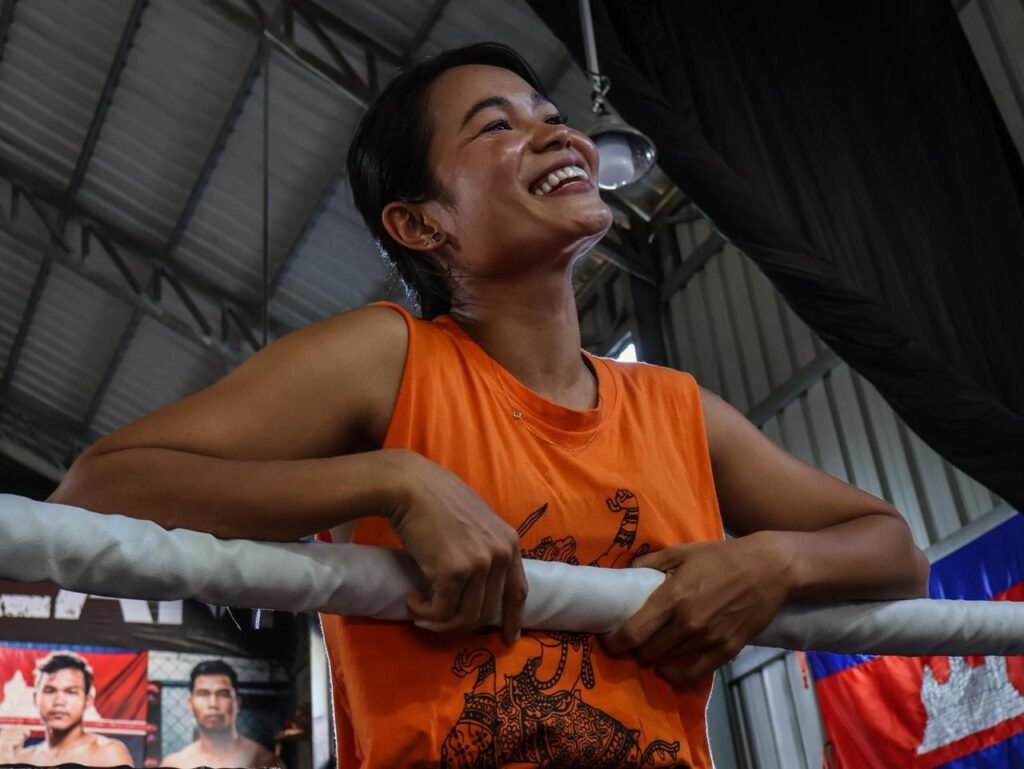
At 18, she went to the nearest kun khmer club, where she met one of the most important people in her life, the one who would guide her for several years: her grand master, who became like a second father. At that time, she was the only woman to walk through the doors of that gym. Her grand master welcomed her with immense kindness, delighted to have a female student among his fighters. He quickly saw her potential and decided not to charge her, knowing she came from a precarious background. More than a teacher, he became an emotional pillar over the years. He was the one who lifted her up when she was overwhelmed by the idea of giving up, who pushed her to fight her first bouts, and above all who encouraged her to embody something new: to become a source of inspiration for young girls.
During her first fight, she created a general surprise by knocking out her opponent, far more experienced than she was, even though the judges had tried to dissuade her, fearing for her life. That moment was ecstatic for Tharoth. It was also a turning point, because that was when her family discovered she was practicing kun khmer. The reaction was violent. Furious, her mother insisted on bringing her home. Criticism poured in the village: “A young Khmer girl is not supposed to fight like that…” On social media, the world unleashed itself: “Women never go far, she should stop.” Faced with the accumulating criticism over the months, she chose to put an end to her martial arts practice. This trajectory outside the norms that had been harshly imposed on her since birth, she could no longer bear it. Her grand master reacted coldly, telling her: “You are no longer my student.” Heartbroken, she spent the following year alone and far from the rings. It is important for Tharoth to speak about this period of emptiness, doubt, and abandonment, because this destiny was not promised to her. She fought fervently to build it, and even she was not convinced she could succeed.
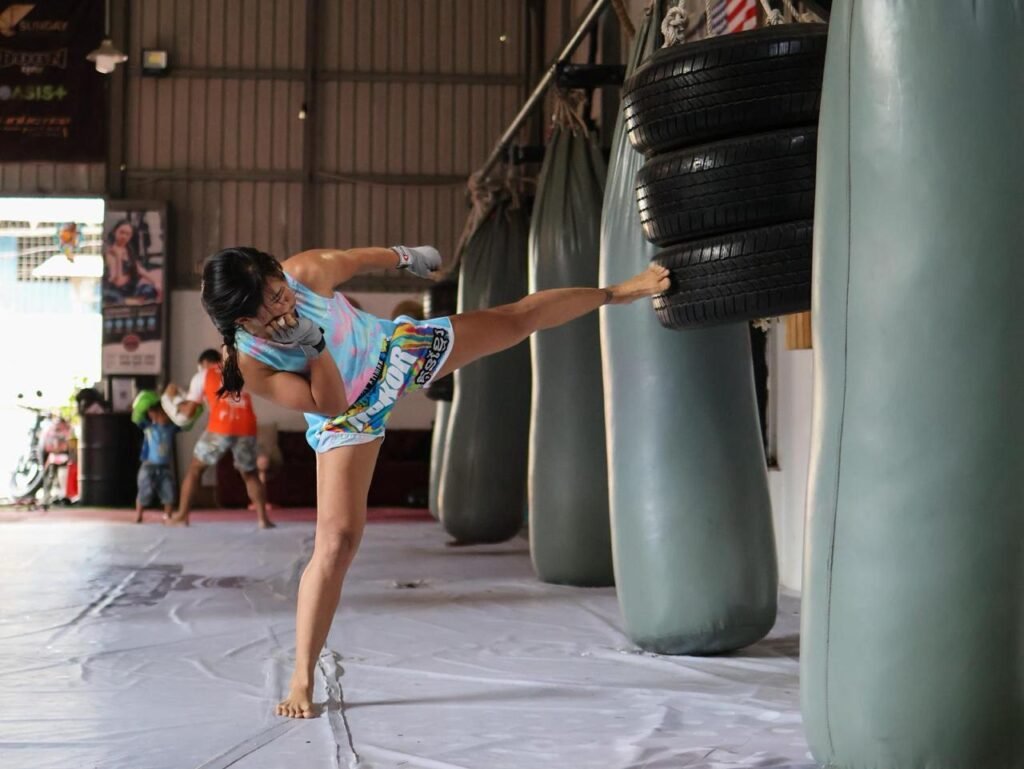
A year later, she received a sign from fate. Her grand master called her back to offer her a new adventure: a bokator competition. She accepted immediately, delighted by the proposal. With no particular ambition, the Cambodian team went to Korea and delivered a performance without pretension, but one that seduced the judges. Another surprise: Cambodia won a second place they had not even dared to dream of. The experience is documented in the film Surviving Bokator. From then on, everything accelerated in Tharoth’s life. Major productions contacted her, she worked with Hollywood, and she kept the nickname from her teenage years and her fighting days: “Little Frog” a tribute to her adolescence in the fields where she constantly had to hunt frogs to feed herself.
Efforts eventually paid off. Tharoth experienced progressive success, and people’s perspectives began to change. Her duty of resilience remains constant: although she has gained a certain notoriety in Cambodia, she still has to assert herself on film sets. But she keeps training and doing things “with her heart.” Never giving up the fight and doing what feels right in order to carve one’s own path. That is what she applied herself to with relentless determination. Refusing to settle for what life offers in order to build more. Perhaps that is how one becomes a role model. Her grand master then advised her to share her story more, to speak about her journey in order to become more than a fighter: an inspiring figure. Because beyond family and cultural pressures, Tharoth had to create this place for herself. A few years later, she finally gained the recognition of her family, and above all that of her mother, who, in her own words, became her number one fan.
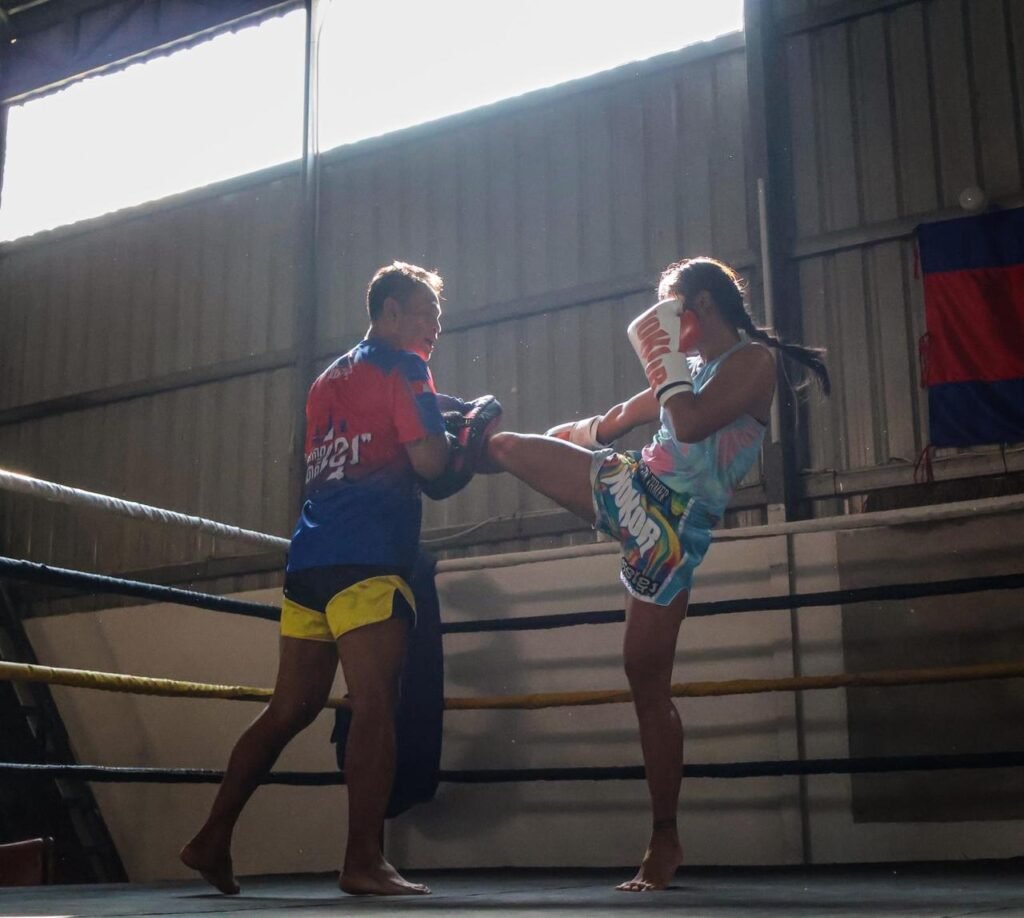
Today, it is her turn to give back to her elders what she received. She takes great care of her parents and has moved back to live with them. She devotes a large part of her time to them, because she believes she must watch over them: they gave her food and knowledge, they gave her everything she needed to grow. She feels the need to return this with a warm and grateful heart. Doing good without expecting anything in return: that is what has guided and continues to guide Tharoth.
By embodying a famous fighter who combines efficiency and femininity in her bouts, she represents something new in Cambodia. She has opened a new possibility for young women, who are increasingly numerous in walking through the doors of gyms to learn martial arts, and she rejoices in this change of perception. Today, she trains the police in martial arts and feels she must pass on what she has learned with gratitude. She also accompanies members of the royal family. A sign of how much has changed in a relatively short time. Her journey stands as a testament to what energy, courage and love can make possible.
Today, after such a long road, she is ready to open up about her journey and feels proud of how she kept moving forward despite the many challenges she faced.
And this is the message she now wants to pass on, especially to the younger generation: continue to deconstruct family stereotypes, even if the process is long and exhausting. Keep trying.
Also Read: Top Coding Bootcamps and Free Resources for Cambodian Youth