• My Saves
  • My Feed
  • My Interests
  • Governing Body
  • From The Founder's Desk
  • Contact Us
The Better Cambodia
  • News
    NewsShow More
    Cambodia geographical indication products including silk, cashew, crab and mango representing local identity
    Cambodia Registers Four New Geographical Indications to Strengthen Product Identity

    Cambodia has registered four new geographical indication products, including silk, crab, cashew,…

    By
    Sasha Jones
    Japan handing over dump trucks to Cambodia officials for improving waste management and environmental sustainability
    Japan Provides Additional Dump Trucks to Strengthen Cambodia’s Waste Management System

    Japan has donated 10 additional dump trucks to Cambodia, bringing the total…

    By
    Sasha Jones
    Cambodia Tourism Board and Singapore Airlines signing agreement to promote tourism and increase international travel
    Cambodia Tourism Board Partners with Singapore Airlines to Boost Global Tourism

    Cambodia Tourism Board partners with Singapore Airlines to boost global tourism through…

    By
    Sasha Jones
    Large, square concrete artificial fish shelter frames being inspected by Cambodian officials and conservation experts in an outdoor field.
    Cambodia Deploys Over 2,000 Artificial Fish Shelters to Safeguard Marine Biodiversity

    KOH KONG, Cambodia — The Cambodian Ministry of Agriculture, Forestry and Fisheries…

    By
    TBC
    Sixth Irrawaddy Dolphin Calf of 2026 Spotted in Kratie, Raising Total Population to 118
    Sixth Irrawaddy Dolphin Calf of 2026 Spotted in Kratie, Raising Total Population to 118

    KRATIE, CAMBODIA — Conservation efforts in the Mekong River have reached a…

    By
    TBC
  • Editors Pick
    Editors PickShow More
    Lessons from Golda Meir And How Cambodia Can Turn Challenges Into Strength

    Golda Meir’s life was shaped long before she ever held political office.…

    By
    Surya Narayan
    Border War’s Hidden Bill: Thai Families Drown in Debt as Cambodia’s Displacement Swells

    The loudest sound of the Thailand–Cambodia conflict is still the shellfire along…

    By
    Surya Narayan
    Mixed Signals From Thailand Deepen Uncertainty Over Cambodia–Thailand Ceasefire

    Over the past several days, one thing has become clear along the…

    By
    Surya Narayan
    Cambodia Stands Firm: Defending the Motherland Amid Thai Aggression

    An Editorial as of 9 December 2025 When violence erupts along the…

    By
    Surya Narayan
    Why Policies Shape a Nation’s Future in a Service-Led Economy

    Every country reaches a moment when it must decide what kind of…

    By
    Surya Narayan
  • Stories
    StoriesShow More
    Kong Nay: Cambodia’s Greatest Legend of Chapei Music

    In the rich tapestry of Cambodian cultural history, few figures shine as…

    By
    Surya Narayan
    Cambodian students learning multiple languages while preserving Khmer cultural identity
    Renforcing Khmer identity through language learning

    Cambodia’s growing emphasis on multilingual education is shaping global opportunities for students,…

    By
    Olivia Hugues
    Adrien Charrier
    Cambodian craftsmanship
    Carve your own way: How craftsmanship changed Sarin’s life?

    Eyes fixed on her carving of Angkor Wat, Sarin handles her tools with quiet…

    By
    Pauline REINA
    Lea Sannier
    Tonlé to Treeline
    Tonlé to Treeline – From River to Forest: Cambodia’s Living Landscapes 

    Cambodia’s landscapes stretch from the rich ecosystems of the Tonlé waterways to…

    By
    Pauline REINA
    Cambodian martial artist Tharoth training in Kun Khmer after overcoming adversity
    Fighting for What Feels Right

    Tharoth’s journey from trauma to strength is a powerful story of resilience.…

    By
    Pauline REINA
    Lea Sannier
  • Business
    BusinessShow More
    Cambodia geographical indication products including silk, cashew, crab and mango representing local identity
    Cambodia Registers Four New Geographical Indications to Strengthen Product Identity

    Cambodia has registered four new geographical indication products, including silk, crab, cashew,…

    By
    Sasha Jones
    Cambodia economy growth showing factories, exports, and industrial development
    ADB Projects Cambodia’s Growth at 4.5% Amid Middle East Stabilisation Scenario

    ADB projects Cambodia’s economy to grow 4.5% in 2026 under a Middle…

    By
    Sasha Jones
    Cambodian trainees learning electric vehicle repair and maintenance skills
    Chinese EV Giant Partners with Cambodia to Develop Electric Vehicle Workforce

    A Chinese EV manufacturer has partnered with Cambodia to develop workforce skills…

    By
    Sasha Jones
    Cambodian workers participating in job fair during labour market recovery
    Cambodia Sees Over 650,000 Job Placements Amid Labour Market Recovery

    Cambodia’s labour market recovery gains momentum as over 650,000 individuals secure jobs…

    By
    Sasha Jones
    Cambodia garment factory workers producing clothing in manufacturing facility
    Cambodia Garment Sector Seeks Upstream Industries to Expand Local Sourcing

    Cambodia’s garment industry is encouraging the development of upstream industries to expand…

    By
    Sasha Jones
  • Opinion Piece
    Opinion PieceShow More
    Episode 4 of 6 |  When Skills Meet Opportunity: How the Ministry of Labour Is Bringing Industry and Learning Together in Cambodia

    The Moment Training Becomes Real There is a special kind of confidence…

    By
    Dhanita Nair
    Leaving No One Behind: MLVT’s Mission to Open Skills for Every Citizen

    Episode 3 of 6 | Cambodia Skills Development Roadmap Series  The Courage…

    By
    Dhanita Nair
    Ministry of Labour and Vocational Training’s Quality Revolution: Reinventing What It Means to Teach and to Learn in Cambodia

    Episode 2 | Cambodia Skills Development Roadmap Series - The Classroom That…

    By
    Dhanita Nair
    Ministry of Labour and Vocational Training’s Vision: Building the Cambodia We Believe In

    What If the Best Is Yet to Come? Imagine waking up one…

    By
    Dhanita Nair
    Cambodia eyes bigger share of UK food market as trade ties deepen

    Cambodia’s trade relationship with Britain is entering a promising new phase, opening…

    By
    Jas Sohl
  • Press Release
    Press ReleaseShow More
    Khmer Ceramics Centre Launches Cambodia’s First Open-Access Pottery Studio
    A New Space for Clay: Khmer Ceramics Centre Launches Cambodia’s First Open-Access Pottery Studio

    Siem Reap, Cambodia – February 2025 - Khmer Ceramics Centre, located on River…

    By
    TBC
    Over 100 ASEAN Women Entrepreneurs to Be Honoured at Prestigious Gala in Phnom Penh

    Phnom Penh, Cambodia will take centre stage on 21st November as over…

    By
    TBC
    TEDxPhnom Penh 2025 Inspires Over 530 Attendees with Powerful Stories of Resilience and Reinvention
    TEDxPhnom Penh 2025 Inspires Over 530 Attendees with Powerful Stories of Resilience and Reinvention

    Phnom Penh, Cambodia — The spirit of ideas worth spreading came alive…

    By
    TBC
    Green Miracle: Cambodian Youth Unite to Combat Single-Use Plastic
    Green Miracle: Cambodian Youth Unite to Combat Single-Use Plastic

    A youth-led initiative of UNICEF’s Generation Futures Program vows to raise awareness…

    By
    TBC
    Francophonie Village 2025
    Francophonie Village 2025: Siem Reap Comes Alive with Culture, Creativity, and Community

    This November, Siem Reap transforms into a vibrant cultural playground as the…

    By
    TBC
  • Visit Cambodia
    Visit CambodiaShow More
    Cambodia Public Holidays: A Complete Guide to Every Festival, Tradition, and Meaning
    Cambodia Public Holidays: A Complete Guide to Every Festival, Tradition, and Meaning

    Cambodia has more public holidays than almost any country in Southeast Asia…

    By
    TBC
    Nearly 9 Million Flock to Phnom Penh for Landmark "Nokor Sankranta" Celebrations
    Nearly 9 Million Flock to Phnom Penh for Landmark “Nokor Sankranta” Celebrations

    PHNOM PENH – The inaugural Nokor Sankranta festival concluded on Sunday, cementing…

    By
    TBC
    Crowds of tourists enjoying Khmer New Year celebrations in Kampot with riverfront views and festive activities
    Kampot Attracts Over 430,000 Visitors During Khmer New Year Celebrations

    Kampot welcomed over 430,000 visitors during Khmer New Year 2026, driven mainly…

    By
    Sasha Jones
    Global Khmer diaspora celebrating Khmer New Year with traditional dances, games, and community gatherings
    Global Khmer Diaspora Unites for New Year Celebrations Worldwide

    Khmer communities worldwide celebrated New Year 2026 with traditional games, rituals, and…

    By
    Sasha Jones
    Tourists celebrating Khmer New Year in Kampong Cham Cambodia with large festive crowds and cultural activities
    Kampong Cham Sees Nearly One Million Tourists on First Day of Khmer New Year

    Kampong Cham attracted nearly one million visitors on the first day of…

    By
    Sasha Jones
  • History
    HistoryShow More
    Siem Reap kite flying festival
    Ancient Kite Flying Festival Takes Flight in Siem Reap

    Siem Reap hosted the annual Ancient Kite Flying Festival with more than…

    By
    Sasha Jones
    A sacred peepal sapling from Bodh Gaya is presented in a ceremonial handover in Siem Reap, symbolizing cultural and spiritual ties between Cambodia and India.
    Siem Reap Receives Sacred Peepal Sapling from Bodh Gaya

    Siem Reap received a sacred peepal sapling from Bodh Gaya, India, on…

    By
    Sasha Jones
    Theam’s Gallery
    Theam’s Gallery, or the Art of Returning History to Its People

    Seen through the eyes of his sister Maddy, this is the story…

    By
    Lea Sannier
    Pauline REINA
    Cambodia cave preservation guidelines
    New Guidelines Aim to Preserve Cambodia’s Natural Cave Heritage

    Cambodia has introduced new national guidelines to protect and sustainably manage its…

    By
    Yash Paul
    Cambodia sustainable cave management
    Preserving Cambodia’s Natural Heritage: New Guidelines for Sustainable Cave Management and Eco-Conservation

    Across Cambodia’s countryside, limestone caves rise quietly from the earth, holding stories…

    By
    Sasha Jones
  • 🔥
  • Invest In Cambodia
  • Unsung Heroes/ Impact
  • The Better Asia
  • Agriculture
  • Technology
  • Places to Visit
  • Sustainability
Font ResizerAa
The Better CambodiaThe Better Cambodia
Search
  • Home
  • Stories
  • News
  • Visit Cambodia
  • Startups
  • Cambodian Brands
  • Unsung Heroes/ Impact
  • Sustainability
  • Artisans of Cambodia
  • Invest In Cambodia
  • Guests Posts
  • The Better Asia
  • Governing Body
  • From The Founder’s Desk
  • Contact us
Have an existing account? Sign In
Follow US
  • My Saves
  • My Interests
  • My Feed
© 2026 TBC Media. All Rights Reserved.
The Better Cambodia > Blog > Invest In Cambodia > Agriculture > In Cambodia, Fish and Vegetables Are Growing Together — And It Might Change the Way We Think About Food
Agriculture

In Cambodia, Fish and Vegetables Are Growing Together — And It Might Change the Way We Think About Food

Pauline REINA
Last updated: January 10, 2026 7:01 am
By
Pauline REINA
454 Views
Published: January 10, 2026
Share
9 Min Read
integrated farming in Cambodia
SHARE

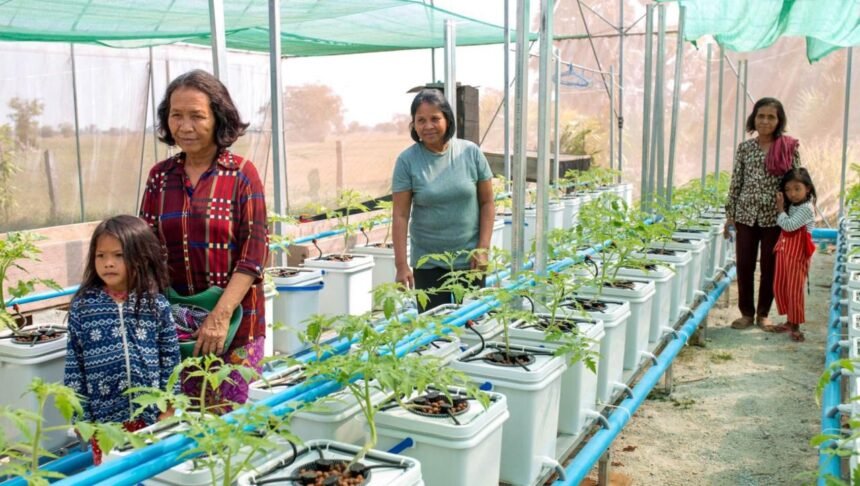
On the outskirts of Siem Reap, far from the postcard temples, a quiet revolution has been taking shape. Not a startup buzzword, but a system built around fish, plants, and water—designed to work with Cambodia. It’s called aquaponics, and for more than a decade, Community First Initiatives has been adapting it to Cambodian soil-less realities.

Contents
  • A system that closes the loop
  • Why Cambodia needed something different
  • Not one project, but many entry points
  • Creation, diffusion, propagation
  • From development work to aquaponics
  • Ready to scale — but missing one thing
  • Skepticism, trust, and small victories
  • A Cambodian solution, with regional echoes

A system that closes the loop

Aquaponics combines two familiar practices: aquaculture (raising fish) with hydroponics (growing plants in water without soil). What makes it different is the way they depend on each other.

Fish produce waste. Bacteria convert that waste into nutrients. Plants absorb those nutrients and clean the water, which flows back to the fish tanks. Nothing is wasted. Nothing is discharged into the environment. The water keeps circulating. The result is a system that uses a fraction of the water required by conventional farming, produces both protein and vegetables, and doesn’t rely on chemical fertilizers or pesticides.

Concretely, the main advantages of aquaponics system are:

- Advertisement -
  • 90% less water than conventional agriculture (water recirculates rather than draining away)
  • Zero synthetic fertilizers—the fish provide all plant nutrition naturally
  • No agricultural runoff—nothing enters the environment
  • Year-round production regardless of seasons when combined with climate control
  • Dual protein + vegetable output from a single system
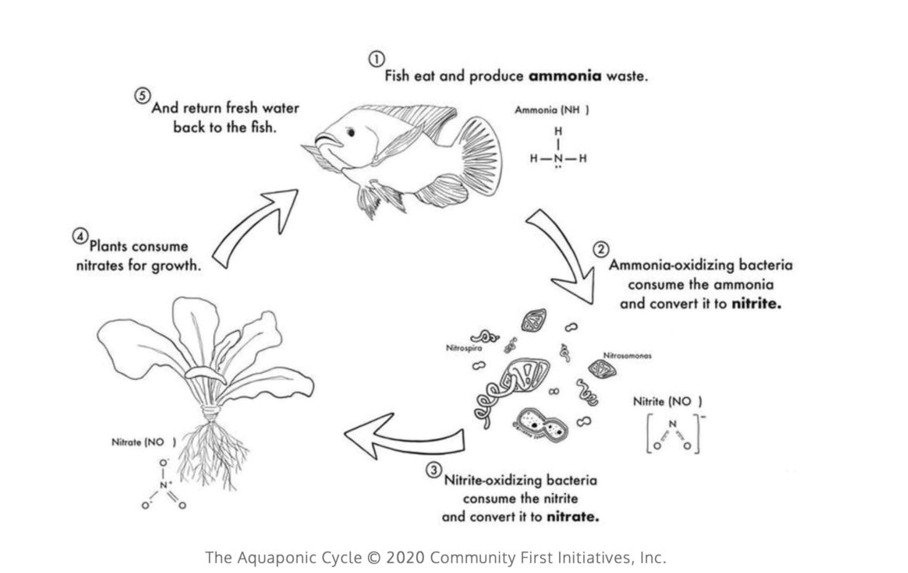
In a country where water access is fragile and inputs are expensive, that matters. Community First follows the FAO’s small-scale aquaponics guidelines, but they’ve spent years adapting the designs to local conditions.

Why Cambodia needed something different

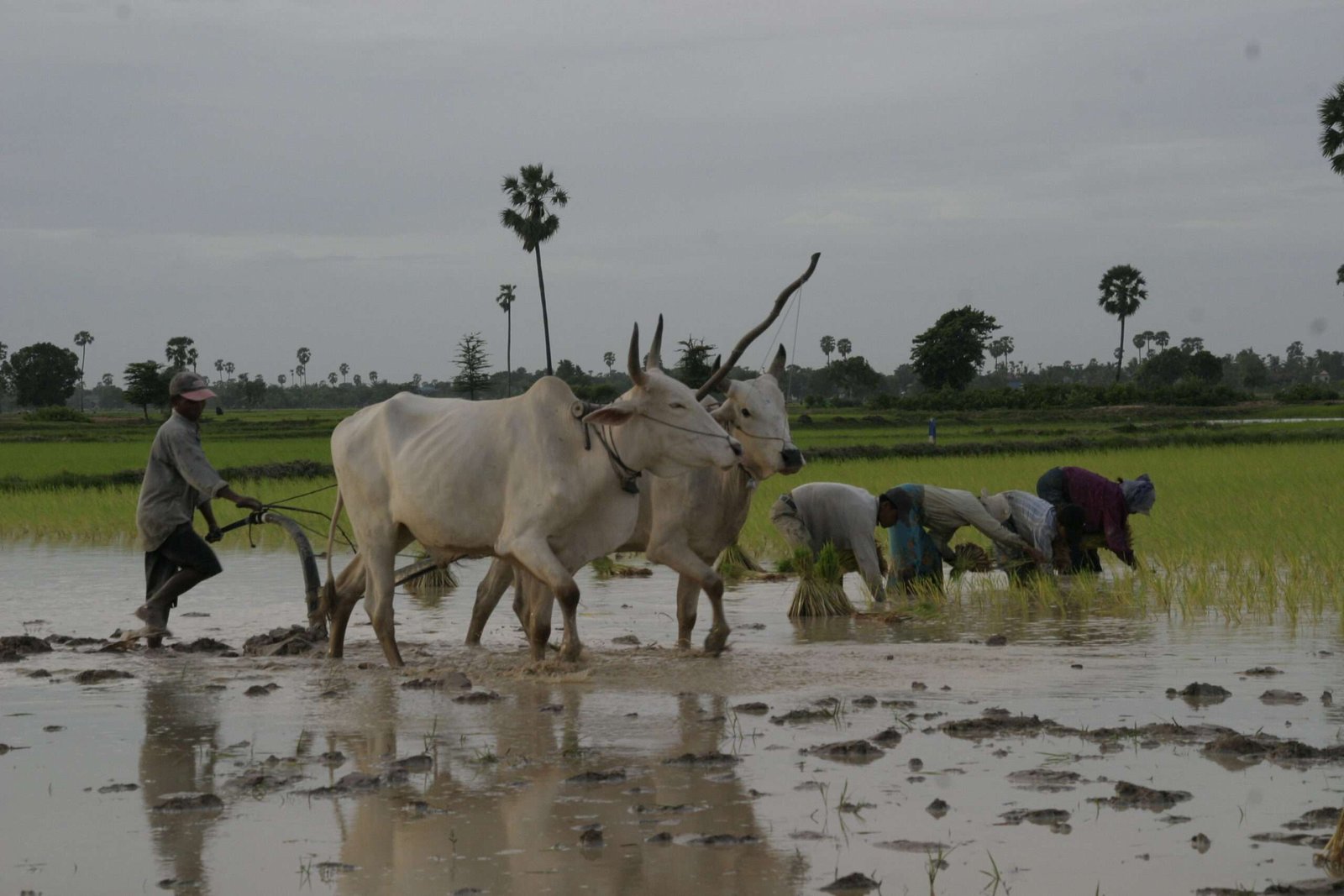
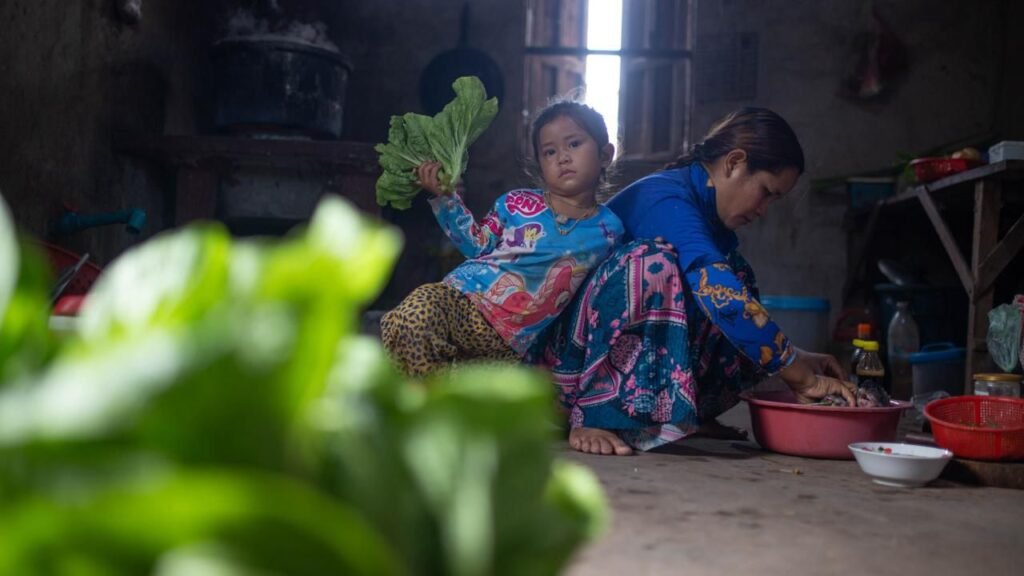
Cambodia’s food challenges aren’t always visible, but they’re deeply structural. Nearly a third of children under five suffer from stunting. Almost half of women experience anemia. In rural areas, families depend heavily on rice monoculture, leaving them exposed to climate shocks and price fluctuations.
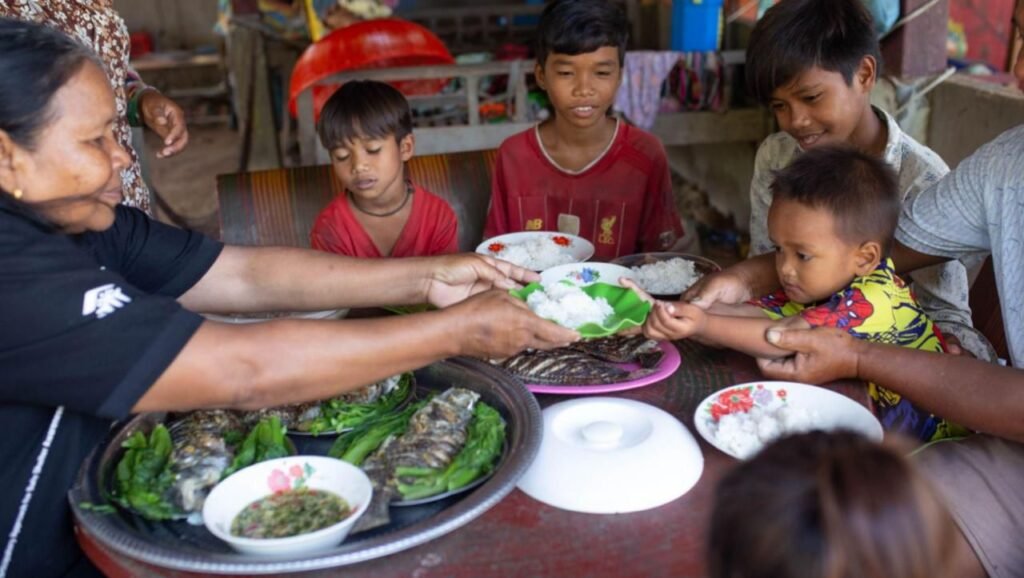
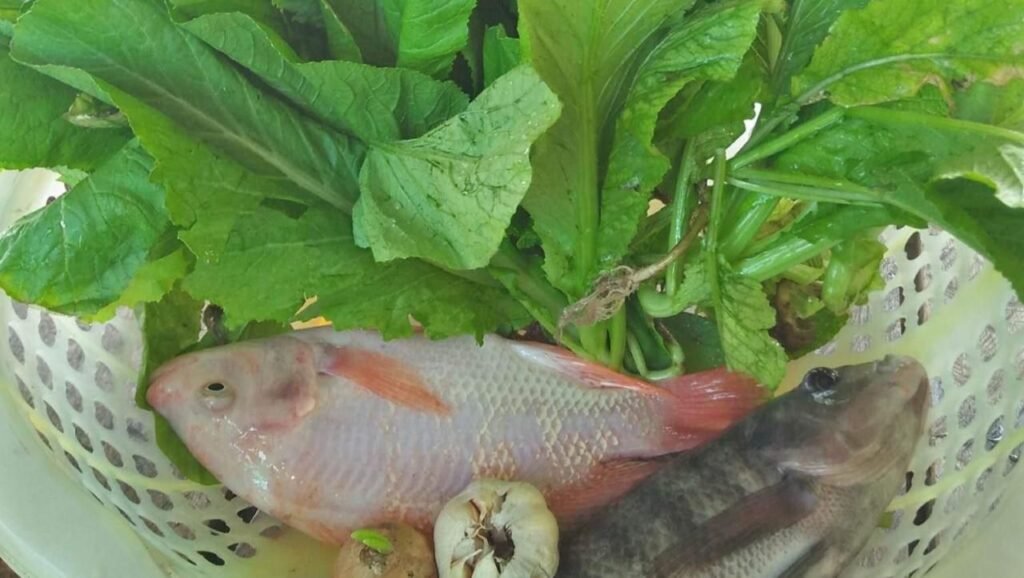
At the same time, fresh vegetables are often imported from neighboring countries. Many urban consumers worry about pesticide residues, yet local alternatives remain limited. Aquaponics produces what Cambodian diets are missing—clean vegetables and fish—using what Cambodia already has: knowledge of fish, family labor, and a strong culture of sharing.

Aquaponics offers a unique advantage by combining resource efficiency, climate resilience, and economic viability in a single system for Cambodia. It uses up to 90% less water than conventional farming, requires no arable land, and operates with low energy needs—making it well suited to Cambodia’s constraints. Because production is off-soil and recirculates water, it is resilient to both droughts and floods and allows for year-round harvesting regardless of monsoon cycles.

Economically, aquaponics produces both fish and vegetables from the same system, enabling continuous harvests and access to higher-value markets seeking pesticide-free produce. Unlike traditional farming or hydroponics, it does not rely on imported fertilizers or chemicals. Instead, it functions as a self-sustaining ecosystem that can be managed by trained families with minimal external inputs, allowing subsistence farmers to transition into stable, market-oriented producers.

Not one project, but many entry points

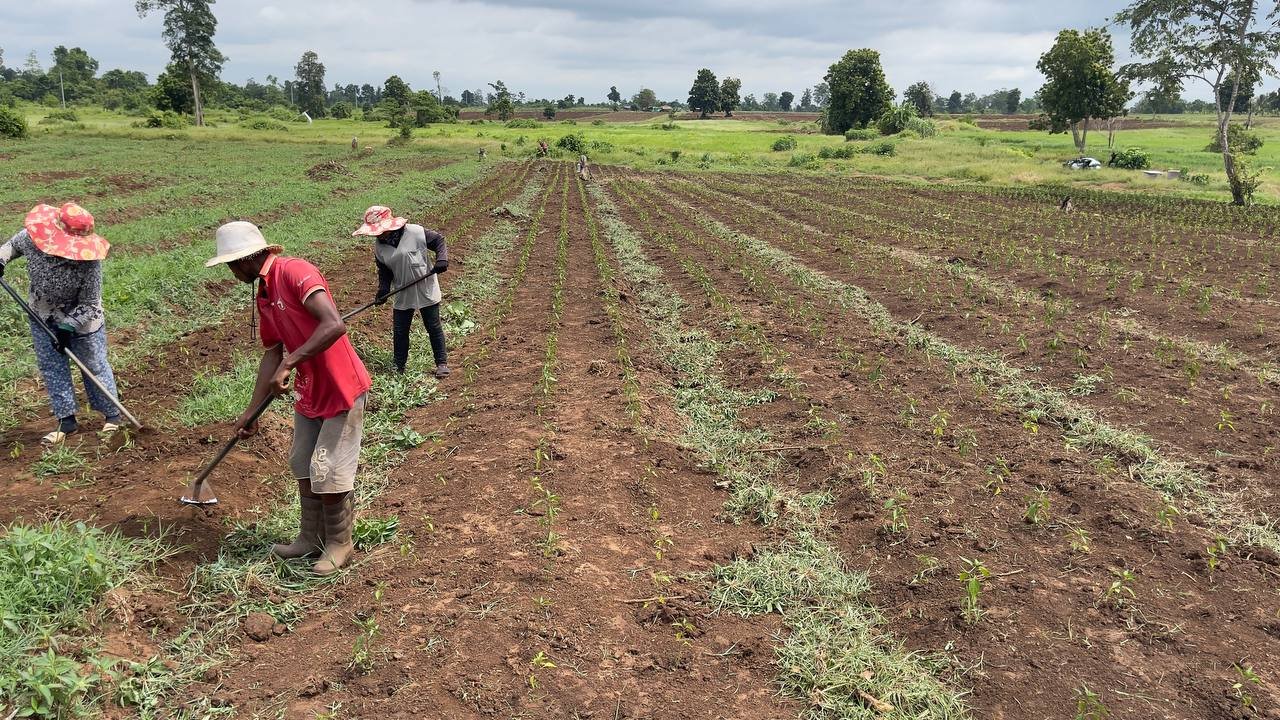
One of the things that makes Community First’s approach unusual is that it isn’t designed for a single type of beneficiary. A rural family might start with a small household system to supplement income and nutrition. A school might use aquaponics to teach students about biology and sustainability. An entrepreneur might invest in a climate-controlled greenhouse to supply restaurants in Siem Reap. Or, you? Indeed, you might use your own aquaponics system at home, to produce your tomatoes or basil in the center of Phnom Penh.

The methodology is the same. Same designs. Same training. Same logic. That consistency is intentional. It’s what allows knowledge to circulate between communities instead of staying locked in pilot projects.

Creation, diffusion, propagation

Community First’s strategic logic borrows from an unexpected source1952 paper by mathematician Alan Turing called “The Chemical Basis of Morphogenesis.” Turing described how complex patterns emerge naturally from simple, uniform conditions—how a homogeneous system, given the right dynamics, differentiates into something structured and alive.
Pierre and his team apply this thinking to social change. Their model has three phases:

Creation happens at the laboratory level—inventing, testing, and refining aquaponic systems in a controlled environment. This is where designs are proven before they reach a single village.

Diffusion occurs through education. The Sen Sok Farm School trains farmers, but also trainers—people who will carry the methodology back to their own communities. Knowledge doesn’t stay centralized; it spreads.

Propagation is what happens when trained farmers teach their neighbors, when systems replicate peer-to-peer without ongoing intervention from Community First. The goal isn’t dependency—it’s disappearance. If the model works, it should eventually run without them.

This is why the methodology stays consistent across scales. A household system and a commercial greenhouse follow the same principles because they’re part of the same diffusion logic. What changes is context, not design.

Reference: Turing, A.M. (1952). “The Chemical Basis of Morphogenesis.” Philosophical Transactions of the Royal Society of London. Series B, Biological Sciences, 237(641)

From development work to aquaponics

Pierre’s path to aquaponics wasn’t planned. When Community First began its work in Cambodia in 2008, the focus was on connecting resourced communities with those facing urgent needs. But in village after village, the same pattern appeared: families working hard, yet unable to move beyond subsistence. Traditional agriculture wasn’t breaking the cycle. Through FAO research and development networks, Pierre and his co-founder, Romain Rak, discovered aquaponics. What caught their attention wasn’t just efficiency—it was cultural fit.

Indeed, fish are central to Khmer cuisine. Women often manage fish sales. Systems could be built with locally available materials. Water could be reused rather than pumped away. Over the next ten years, they refined designs, tested fish species, adjusted plant varieties, and built training programs in Khmer for farmers with little formal education.

Ready to scale — but missing one thing

Today, Community First operates a training farm and school in Sen Sok, Siem Reap Province. Dozens of families already use household systems. Government partnerships are in place. The model works. What’s missing is scale—and credibility in the eyes of banks.
Cambodian financial institutions don’t lend to aquaponic farmers, not because they doubt the idea, but because they lack data. No track record. No verified performance numbers. To change that, Community First is planning its first commercial-scale, climate-controlled aquaponics greenhouse. The goal isn’t just production—it’s to build a solid database.

“Once you can show real numbers, financing becomes possible,” Pierre explains. “Not just for us, but for farmers across the country.”

Skepticism, trust, and small victories

Of course, not everyone is convinced right away. Some farmers have seen development projects come and go. Others worry about cost or risk—especially the idea of losing fish.

Those concerns are valid. That’s why training focuses heavily on water quality, early warning signs, and ongoing support. And why Community First has stayed present in the same communities for years, not months.

What surprised the team most was who took the lead. Women often run the systems. It wasn’t something planned. It just made sense culturally.

A Cambodian solution, with regional echoes

For Pierre, the long-term vision goes beyond Cambodia. Countries like Laos, Myanmar, Vietnam, and Bangladesh face similar constraints—water stress, climate volatility, nutrition gaps.

If it works here, it can work elsewhere.

But first, it has to work visibly, measurably, and sustainably at home. Quietly, in a greenhouse outside Siem Reap, fish and vegetables are already doing their part.

To discover more about aquaponics system of We Are Community First

Also Read: 455-Hectare Special Economic Zone Proposed in Kampong Speu, Cambodia

Share This Article
Facebook Whatsapp Whatsapp LinkedIn Telegram Email Copy Link Print
Previous Article 150 Khmer Bronze Artefacts to be Exhibited Across China in 2026 150 Khmer Bronze Artefacts to be Exhibited Across China in 2026
Next Article Cambodia China trade 2025 China Remains Cambodia’s Top Trading Partner in 2025
Leave a Comment

Leave a Reply Cancel reply

Your email address will not be published. Required fields are marked *

- Advertisement -

You Might Also Like

AgricultureInvest In CambodiaNews

IFAD, the UN’s rural development agency, and the Kingdom of Cambodia deepen partnership for inclusive agricultural growth

By
Pisey Roeurm
AgricultureInvest In Cambodia

Cambodia Agriculture Survey 2021 Reveals Insights into the Country’s Agricultural Sector

By
Surya Narayan
Cambodia GI pepper promotion strategy meeting 2026
AgricultureNews

Strategy Outlined to Strengthen Cambodia’s GI Pepper Sector

By
Sasha Jones
AgricultureNewsSustainability

A $135 million credit arrangement signed to boost agriculture sector.

By
Surya Narayan
© 2026 TBC Media. All Rights Reserved.
  • Home
  • News
  • About Cambodia
    • Provinces of Cambodia
  • Tours
  • Things to Do
    • Adventure
    • Events
    • Festivals
    • Fun & Games
    • Landmarks
    • Markets
    • Museums
    • Parks
    • Shopping
    • Shows
    • Temples
    • Villages
    • Water Fun
    • Wildlife
    • Workshops
    • Zoos & Aquariums
  • Eat & Drink
    • Khmer Cuisine
    • Bars & Pubs
    • Cafés & Bakeries
    • Fine Dining
    • Street Food
  • Natural Attractions
    • Beaches
    • Botanical Sites
    • Caves
    • Cliffs & Rock Formations
    • Coral Reefs
    • Forests
    • Hot Springs
    • Islands
    • Lakes
    • Mountains
    • Parks
    • Rivers
    • Scenic Spots
    • Waterfalls
    • Wetlands
    • Wildlife Areas
  • Services
  • Travel Guide
  • Stays
    • Boutique Stays
    • Eco Lodges
    • Guesthouses
    • Homestays
    • Hotels
    • Resorts
No thanks.
Welcome Back!

Sign in to your account

Username or Email Address
Password

Lost your password?