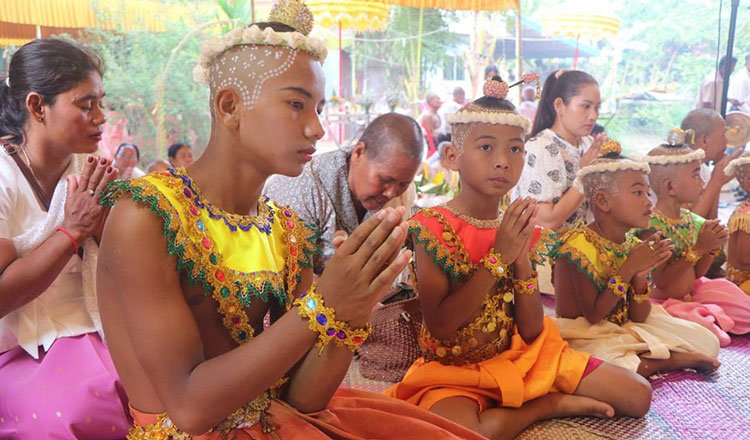
The Kor Chuk ceremony, a traditional Khmer cultural ritual marking the transition from childhood to adulthood, continues to be practiced by communities near the Angkor region in Cambodia. The ceremony was recently organized by a family in Krasang Roluang village, drawing participation from relatives, local residents, and cultural observers.
The event highlighted ongoing community efforts to preserve Khmer traditions that date back generations. Cultural ceremonies like Kor Chuk remain an important part of local identity, particularly in rural communities surrounding Angkor where heritage practices are still actively maintained.
Cultural Meaning of the Kor Chuk Ceremony
The Kor Chuk ceremony is traditionally performed for children before they reach puberty and symbolically marks their progression into adulthood. The ritual involves prayers, symbolic gestures, and family participation as part of Khmer cultural heritage.
Key Cultural Elements
- Ritual blessings performed by elders and monks
- Traditional offerings and ceremonial activities
- Participation of extended family and community members
- Cultural symbolism representing maturity and responsibility
The ceremony reflects long-standing Khmer customs that have been passed down through generations.
Community Participation and Preservation
The recent ceremony held in the Angkor community attracted a notable gathering of villagers and visitors interested in witnessing the traditional ritual. Local families continue organizing these ceremonies despite modernization, reflecting efforts to preserve Khmer cultural heritage.
Community leaders and cultural advocates say such ceremonies help younger generations understand traditional values and maintain a connection with Cambodia’s historical practices.
Community Observations
- Families continue hosting Kor Chuk ceremonies in traditional style
- Villagers gather to observe and support the cultural event
- Cultural education for younger generations remains a priority
- Tourism interest in traditional ceremonies has grown in Angkor areas
Tourism and Local Development Implications
Traditional ceremonies in heritage regions like Angkor may contribute indirectly to tourism and local economic activity.
Potential impacts include
- Cultural tourism growth: Visitors traveling to Angkor heritage sites may also explore local traditions.
- Community-based tourism opportunities: Cultural events can support village-level tourism initiatives.
- Preservation of heritage zones: Cultural traditions reinforce the identity of historic communities.
- Local hospitality development: Increased tourism can encourage guesthouses, small hotels, and tourism infrastructure.
While primarily cultural, such traditions play a role in maintaining the broader tourism ecosystem of the Angkor region
Key Highlights
- Traditional Kor Chuk ceremony held in Krasang Roluang village
- Ritual marks the transition from childhood to adulthood
- Local families continue practicing long-standing Khmer traditions
- Cultural ceremonies attract community participation and visitors
- Heritage practices support tourism and cultural preservation