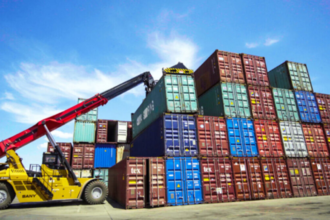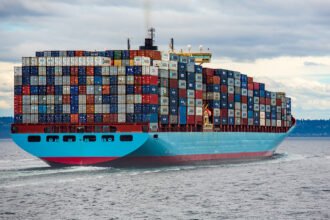
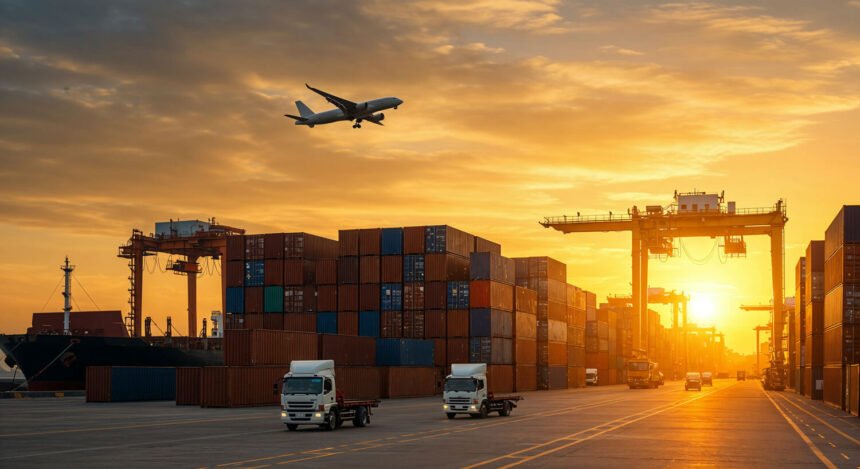
There is a compelling story unfolding in the heart of Southeast Asia — one written not in headlines but in shipping manifests, factory floor expansions, and record harvest tallies. In 2025, Cambodia delivered one of its most impressive trade performances in years, and as 2026 begins, the momentum shows no sign of slowing. Exports surged across every major category: garments hit new highs, rice broke all historical volume records, cashew nuts crossed the billion-dollar milestone, and footwear shot up faster than almost any comparable industry in the region. For a nation of just 17 million people still navigating the challenges of middle-income transition, the numbers are genuinely extraordinary.
- Garments, Footwear, and Travel Goods: The $15.5 Billion Engine
- Rice: A Historic Milestone Crossed
- Cashew Nuts: A New Billion-Dollar Export
- Agricultural Exports Broadly: A 36 Percent Surge
- Rubber: Rising Prices, Growing Plantations
- Trading Partners: America Leads, Asia Accelerates
- The Manufacturing Ecosystem: Beyond Apparel
- Trade Policy: The Architecture Behind the Growth
- Looking into 2026 and Beyond
The first half of 2025 alone saw Cambodia ship $14.29 billion worth of goods to the world — a 16.2 percent jump over the same period in 2024. By the final quarter of the year, export growth had accelerated further, reaching 23.2 percent year-on-year. Total two-way trade with Cambodia’s top 20 partners crossed $30.57 billion in just the first six months of the year, up 17.2 percent. These are not incremental improvements — they are the results of deliberate structural choices made over more than a decade, now paying compound dividends. As Cambodia enters 2026, here is a deep look at the export categories driving this remarkable surge.
Garments, Footwear, and Travel Goods: The $15.5 Billion Engine
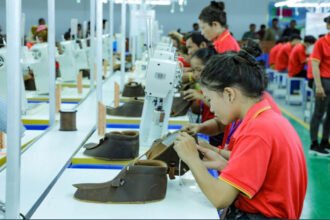
No sector defines Cambodia’s export identity more completely than garments, footwear, and travel goods. In 2025, this industry generated $15.5 billion in export revenues — a 15.7 percent increase over 2024’s already-strong performance, and a figure that cements Cambodia’s place among Asia’s top manufacturing destinations. By October 2025 alone, cumulative earnings from this combined sector had already crossed $13.6 billion, up 20 percent year-on-year — signaling a powerful year-end surge.
The individual sub-sectors told equally encouraging stories. Garments — the backbone of the industry — earned $9.62 billion in the first ten months of 2025, up 20.3 percent year-on-year. Textiles, often overlooked in media coverage, staged one of the most dramatic comebacks, with export revenues surging nearly 38.7 percent to $564 million over the same period, reflecting growing demand for Cambodian-made fabrics in Asian and European supply chains. Footwear emerged as the sector’s fastest-growing pillar: exports grew 24.5 percent for the full year and 30 percent in the January–October window, reaching $1.73 billion. Travel goods and bags contributed $1.7 billion by October, up 5.8 percent.
What is sustaining this growth? Several forces are working in concert. Cambodia’s continued participation in the EU’s Everything But Arms preferential scheme provides significant tariff relief for European buyers. The Regional Comprehensive Economic Partnership (RCEP), which links 15 Asia-Pacific nations representing roughly a third of global GDP, has meaningfully improved supply chain connectivity, with Cambodian exports to the RCEP bloc reaching $6.63 billion in just the first eight months of 2025 — nearly 10 percent above the same period in 2024. Meanwhile, new investment from China, South Korea, and Japan is expanding factory capacity, bringing not just capital but global buyer relationships and managerial expertise. Cambodia’s competitive labor costs — with the 2026 garment minimum wage set at $210 per month — keep the country attractively positioned against regional peers, even as wages gradually rise.
Rice: A Historic Milestone Crossed
For decades, Cambodian rice occupied a cherished but modest place in the country’s export ledger — a cultural cornerstone, but not yet a commercial heavyweight. That changed decisively in 2025. According to a January 2026 report from the Cambodia Rice Federation, Cambodia exported 940,321 tonnes of milled rice in 2025 — a 45 percent increase over 2024’s 651,522 tonnes and a record that exceeds every previous annual total in the country’s history. Revenue from milled rice alone surpassed $600 million, while combined paddy and milled rice exports generated approximately $1.46 billion in just the first eight months of the year.
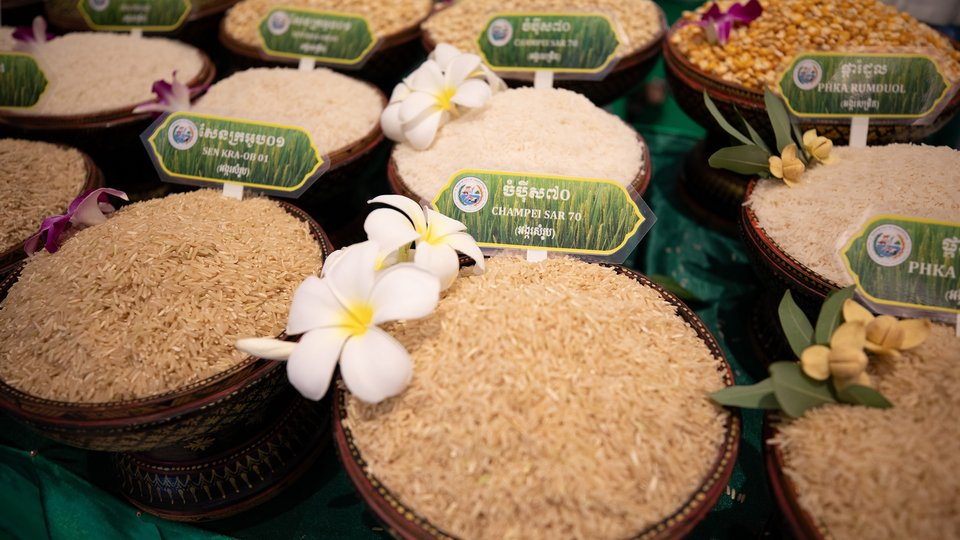
This milestone did not arrive by chance. For years, the Cambodia Rice Federation had set a target of one million tonnes of milled rice exports by 2025 — a goal that once seemed aspirational but now looks almost reachable in retrospect, with final-quarter shipments nearly closing the gap. The Cambodia-China Free Trade Agreement has been transformative here, smoothing market access into one of the world’s largest food-import markets. The new transit transportation agreement with Laos — allowing Cambodian agricultural goods to reach Chinese markets via Laotian routes — opens an additional logistical corridor that could further accelerate rice and agricultural shipments in 2026.
Beyond the volumes, the quality story is improving too. Cambodian jasmine and fragrant rice varieties have won international awards and now command premium prices in European and Asian specialty markets. The government’s deployment of agricultural extension officers nationwide, combined with improved irrigation infrastructure, is lifting yields while reducing smallholder production costs. Rice has always been the soul of Cambodian agriculture; in 2025, it proved it could also be a commercially transformative force.
Cashew Nuts: A New Billion-Dollar Export
One of the most striking chapters in Cambodia’s 2025 trade story is the rise of cashew nuts as a genuinely major export commodity. Cambodia exported more than one million tonnes of raw cashew nuts to international markets in 2025, generating $1.5 billion in revenue — a more than 25 percent increase compared to 2024. Vietnam remains the largest buyer of Cambodian raw cashews, but the government is actively working to diversify these flows, including toward China via new bilateral trade facilitation agreements.
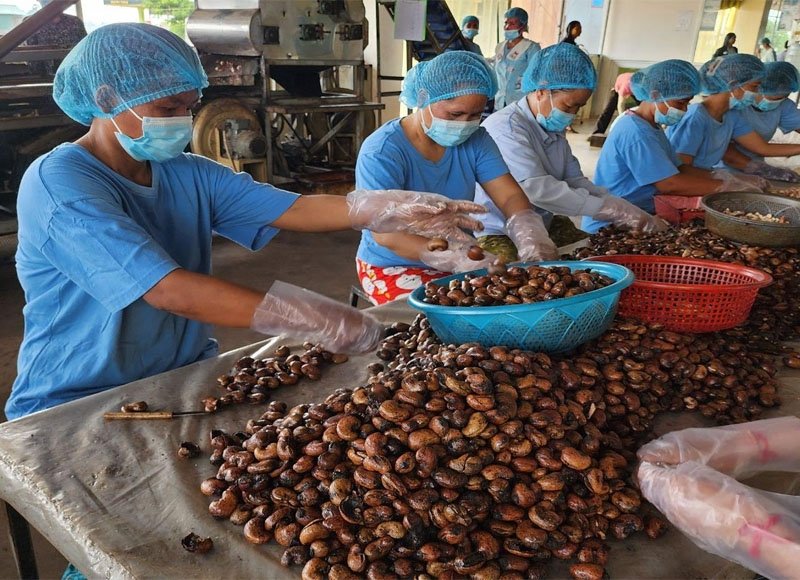
What makes this figure especially significant is the opportunity it signals rather than merely the revenue it delivers. Cambodia currently exports predominantly raw, unprocessed cashew nuts — meaning the value-added processing, roasting, packaging, and branding happen elsewhere, and with it the associated employment and premium pricing. The government and private sector are increasingly alive to this gap: in 2025, international partnerships with Japan and Australia helped local processor MIRARTH Agri Tech scale operations, marking a meaningful step toward capturing more of the value chain domestically. With strategic engagement now underway with major Indian buyers and Chinese investors being encouraged to establish cashew processing facilities inside Cambodia, the path from raw commodity exporter to value-added producer looks more navigable than ever.
Agricultural Exports Broadly: A 36 Percent Surge
Cambodia’s agricultural transformation extends well beyond rice and cashews. In the first eight months of 2025, the country exported approximately 10.4 million tonnes of agricultural products to 84 countries and territories — a 35.64 percent increase in volume compared to the same period in 2024. Revenue from these agricultural shipments reached $3.62 billion in eight months, pointing toward a full-year figure that could approach $5 billion when all commodities are tallied.

The diversity of this agricultural export base is itself a strength. Bananas, mangoes, cassava, corn, pepper, rubber, and fresh vegetables all contribute meaningfully to the total. The General Department of Customs and Excise collected more than $3 billion in customs revenue in 2025, equivalent to nearly 125 percent of the annual budget target — a sign of just how much trade activity flowed through the country’s ports and border crossings. The government’s comprehensive agricultural modernization strategy — deploying hundreds of officials to communes, formalizing export routes, and building quality assurance systems — is bearing fruit in the most literal sense.
Rubber: Rising Prices, Growing Plantations
Cambodia’s rubber sector had a standout year in 2025, posting 15.2 percent growth in Q1 revenue alone, reaching $116 million. Strong international demand for Cambodian latex, combined with a sharp increase in the price of rubber — which reached $1,923 per tonne in March 2025, up 32.7 percent year-on-year — drove earnings to new heights even as expansion in domestic manufacturing began to absorb a portion of local supply.

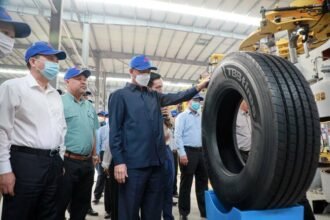
That domestic absorption is itself a positive development. Car tyre exports surged nearly 80 percent in the first five months of 2025, reaching $560.7 million — a dramatic illustration of how Cambodia is beginning to move up the rubber value chain. Chinese-backed tyre factories operating in special economic zones are consuming locally grown rubber and converting it into finished products for global markets, a model that captures more economic value onshore and creates skilled manufacturing jobs in the process.
Trading Partners: America Leads, Asia Accelerates
The United States remains Cambodia’s single most important export destination, and the relationship grew significantly in 2025. By September, Cambodia had already shipped more than $9.2 billion worth of goods to the American market — a record pace reflecting robust US consumer demand for Cambodian-made garments, footwear, and accessories. In the first half of the year, exports to the US reached $5.52 billion, up 25.6 percent year-on-year, making the bilateral trade relationship one of the most dynamic in the Asia-Pacific region.
At the same time, Asia is becoming a more significant and rapidly growing part of Cambodia’s export landscape. Japan has been a particular standout, with trade surging significantly in 2025. Exports to the EU reached $4.22 billion in the January–October period, up 17.3 percent, with strong performances in Spain and Germany. This broadening of the market base reduces Cambodia’s dependence on any single buyer and builds resilience against demand shocks in any one geography.
The Manufacturing Ecosystem: Beyond Apparel
Cambodia’s export story is no longer solely a garment story. The country is making deliberate, incremental progress in diversifying its manufacturing base. Special Economic Zones have been instrumental in this transformation, attracting manufacturers across electronics, automotive parts, and light industry — with the Royal Group Phnom Penh SEZ alone employing over 55,000 workers by end of 2025 and contributing to Cambodia’s merchandise exports surpassing $31 billion for the full year.
Bicycle assembly — concentrated in special economic zones around Svay Rieng province — continues to supply global markets. Tyre manufacturing, anchored by Chinese-backed factories, is expanding rapidly, with locally grown rubber feeding domestic production rather than simply being shipped abroad as raw latex. Electrical components, furniture and wood products, and processed food items are all growing contributor categories. This diversification matters enormously for Cambodia’s long-term economic resilience. A country that exports only garments is vulnerable to the ebb and flow of global fashion cycles, labor cost comparisons, and buyer concentration. A country that exports garments, rice, cashews, rubber products, bicycles, tyres, and furniture simultaneously is a more robust economic proposition — for investors, for trading partners, and for its own citizens.
Trade Policy: The Architecture Behind the Growth
Cambodia’s export success is not accidental. The government has been methodical in building a legal and diplomatic framework designed to attract foreign investment and secure preferential access to major markets. The RCEP gives Cambodia reach into a bloc representing nearly a third of global GDP. Bilateral free trade agreements with China and South Korea reduce tariff barriers on specific product categories. The EU’s EBA scheme, the US Generalized System of Preferences, and similar preference programs in Canada, Japan, Australia, and New Zealand collectively lower the cost of Cambodian goods in markets that would otherwise levy significant duties.
Cambodia’s Ministry of Commerce has also worked to diversify the country’s trading partners, with new bilateral agreements signed in 2025 and 2026 opening fresh market corridors. On August 8, 2025, Cambodia implemented zero-percent tariffs on US agricultural products — a move that should catalyze reciprocal goodwill and new American investment in Cambodian agriculture. The Cambodia-Australia Free Trade Agreement portal launched in 2025, further extending the country’s preferential access map.
Looking into 2026 and Beyond
Cambodia enters 2026 with trade momentum that is genuinely difficult to find elsewhere in Southeast Asia. The export engine is firing across multiple sectors simultaneously, and the trade infrastructure — preferential agreements, special economic zones, logistics corridors, and an expanding free trade agreement network — is better than it has ever been. Early signals from 2026 are already encouraging: bicycle exports surged 68.51 percent in January 2026 to $63.57 million, and GFT exports climbed to $1.4 billion in the same month — pointing to yet another strong year in the making.
The ambition is clear and the numbers back it up: Cambodia is on a trajectory to become a high-middle-income country by 2030. If 2025’s export performance is any guide, that timetable is not only plausible — it may well arrive ahead of schedule. For a kingdom still in the relatively early chapters of its modern economic story, that is perhaps the most encouraging headline of all.