
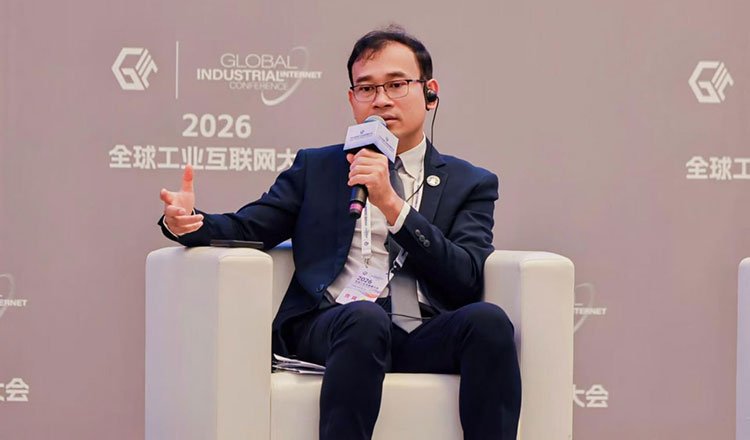
SHENYANG, China — Cambodia is pursuing strategic international partnerships to integrate artificial intelligence (AI) and industrial internet architectures across its manufacturing base, aiming to accelerate economic diversification and transition toward higher-value industrial output.
A high-level Cambodian delegation articulated this policy vision during the Global Industrial Internet Conference held in Shenyang, Liaoning Province, China. Leading the delegation, Undersecretary of State of the Ministry of Industry, Science, Technology & Innovation (MISTI) Hul Seingheng emphasized that modernizing the country’s manufacturing capacity requires immediate adoption of automated workflows and digital production networks.
Establishing Cambodia Industrial AI Alliances for High-Tech Growth
According to a formal statement issued by the Ministry of Industry, Science, Technology & Innovation, Cambodia is actively seeking deeper institutional cooperation with Chinese enterprises and research institutions in applied industrial AI, direct technology transfer, and joint research and development initiatives. The ministry highlighted that moving away from labor-intensive assembly toward smart automation serves as a primary pillar of the nation’s Science, Technology, and Innovation Roadmap 2030.
Addressing international delegates, Seingheng stated that artificial intelligence and industrial internet connectivity are no longer prospective theoretical concepts, but rather functional engines essential for manufacturing competitiveness, resource efficiency, and global supply chain resilience. To accomplish sustainable industrial transformation, Cambodia must actively bridge the gap between academic AI research and shop-floor manufacturing applications through practical public-private cooperation.
The conference provided a dedicated platform for bilateral engagement, enabling Cambodian officials to discuss joint workforce training programs, robotics engineering curricula, and digital infrastructure integration. These cooperative efforts complement ongoing domestic initiatives aimed at building specialized technical skills across emerging sectors, including electronics assembly, automotive manufacturing, and precision agro-processing.
Also Read, Cambodia Digital Trade Growth Targets $1.8 Billion by 2029