Trump, Hun Manet and Anutin: The Architects of a New Southeast Asian Peace
A Landmark for Peace and Stability
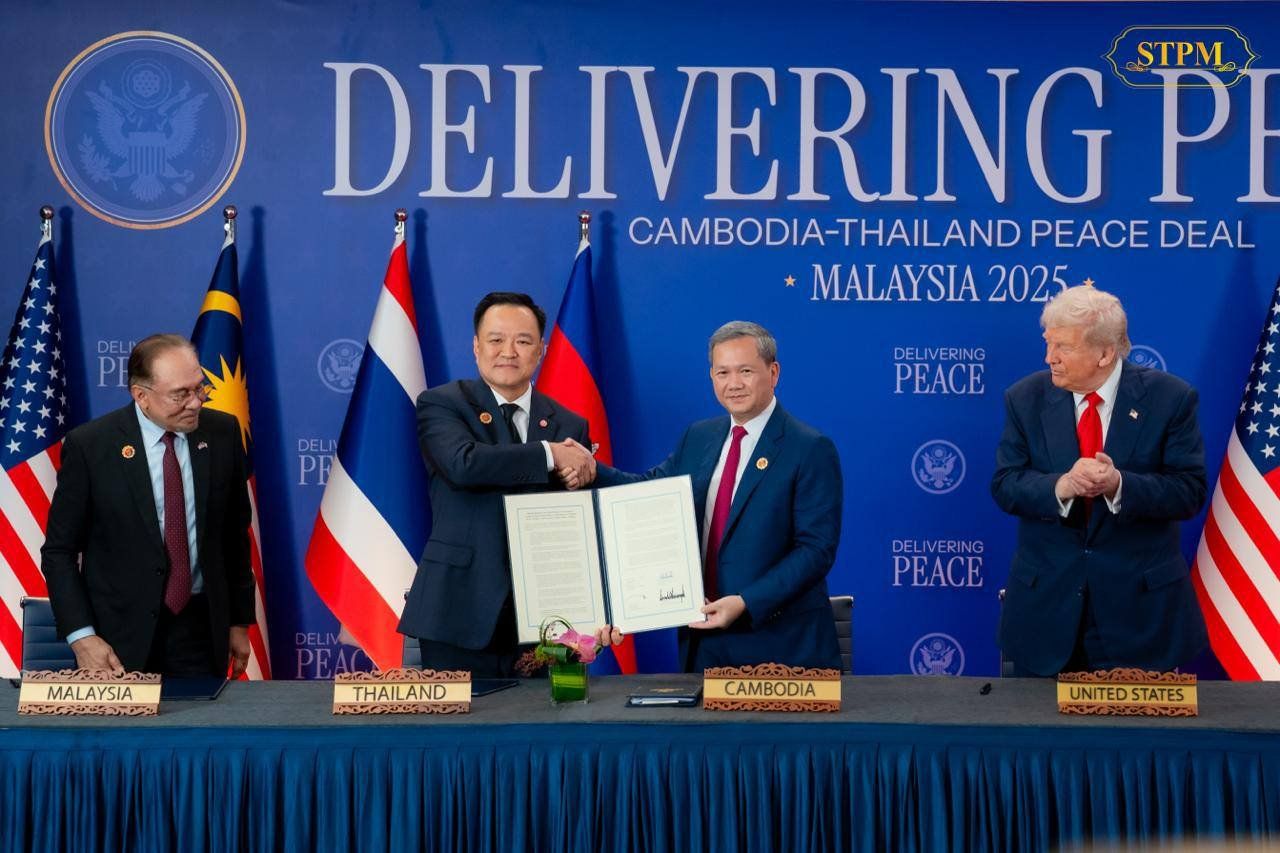
The Kuala Lumpur Peace Accord stands as one of the most consequential milestones in Southeast Asia’s modern history. Signed by Cambodian Prime Minister Hun Manet and Thai Prime Minister Anutin Charnvirakul, under the witness of U.S. President Donald Trump and Malaysian Prime Minister Anwar Ibrahim, it signals the dawn of a new era, one built upon dialogue, respect, and cooperation. The agreement is not merely a diplomatic document; it is a promise to future generations that peace, when guided by integrity and courage, can prevail over decades of tension.
Hun Manet’s Leadership: Calm, Confident, and Committed
Prime Minister Hun Manet’s involvement in this achievement reflects his emerging stature as one of Asia’s most pragmatic and thoughtful leaders. His approach, rooted in patience, precision, and principle, transformed a complex border conflict into an opportunity for peacebuilding. By prioritising negotiation over emotion, Hun Manet demonstrated that Cambodia’s strength lies in its diplomacy and its belief in peaceful coexistence. His assertion that conflicts “must always be resolved through peaceful means” exemplifies the maturity of his leadership and Cambodia’s development as a nation characterised by stability and foresight.
Anutin’s Statesmanship and Thailand’s Pragmatism
Prime Minister Anutin Charnvirakul’s response was equally significant. By choosing reconciliation over retaliation, he showed true statesmanship. His commitment to withdraw heavy weapons, release detained Cambodian soldiers, and rebuild confidence between the two nations reflects Thailand’s profound understanding of regional interdependence. Anutin’s approach not only strengthens Thai–Cambodian relations but also sets a tone of trust and cooperation that will resonate across ASEAN.
Donald Trump’s Bold Diplomacy
At the global level, President Donald Trump’s hands-on diplomacy played a pivotal role. His decision to attend and personally push for the Kuala Lumpur Peace Accord reaffirms his belief in direct engagement and visible results. While his leadership style has often sparked debate, in this case, it proved remarkably effective. Trump’s assertive, outcome-orientated approach infused urgency into the peace process and inspired both sides to finalise the agreement. His declaration that “millions of people are alive today because of this peace treaty” underscored his conviction that decisive action, not endless negotiation, defines true statesmanship.
Anwar Ibrahim’s Guiding Role and ASEAN’s Collective Wisdom
As ASEAN Chair, Malaysian Prime Minister Anwar Ibrahim played a crucial mediating role, ensuring that discussions remained constructive and balanced. His emphasis on ASEAN’s foundational principle of regional peace and prosperity kept the process grounded in shared values rather than external pressure. His ability to bridge differing perspectives reflects ASEAN’s enduring relevance as a platform for peaceful problem-solving.
A Model for Regional Cooperation
The Kuala Lumpur Peace Accord goes beyond a ceasefire. It introduces tangible measures such as the creation of an ASEAN Observer Team, coordinated demining operations, and strengthened border cooperation against transnational crimes. These steps will prevent future conflicts and improve the lives of border communities long affected by uncertainty. The accord strengthens economic confidence, paving the way for new trade corridors, tourism growth, and cross-border investments.
Building the Foundations for a Peaceful ASEAN
This accord reinforces ASEAN’s image as a community of peace and dialogue. In a time when conflicts around the world are escalating, Cambodia and Thailand’s example offers hope. By resolving their differences peacefully with support from global partners, the two nations have set a precedent for constructive diplomacy within the region. The collaboration between leaders from Asia and the United States highlights how global and regional actors can work in harmony when guided by shared purpose.
A Shared Victory for Humanity
Ultimately, this peace accord is not a victory of one nation over another; it is a victory for all. It demonstrates that leadership rooted in empathy and courage can transform divisions into unity. Hun Manet’s diplomatic grace, Anutin’s pragmatism, Trump’s assertiveness, and Anwar’s facilitation together shaped a rare and inspiring moment in modern diplomacy.
The Kuala Lumpur Peace Accord will be remembered as a turning point where Southeast Asia’s leaders chose dialogue over dispute and progress over pride. It reaffirms the timeless truth that peace, once achieved through sincerity and vision, becomes the foundation for lasting growth and regional harmony.