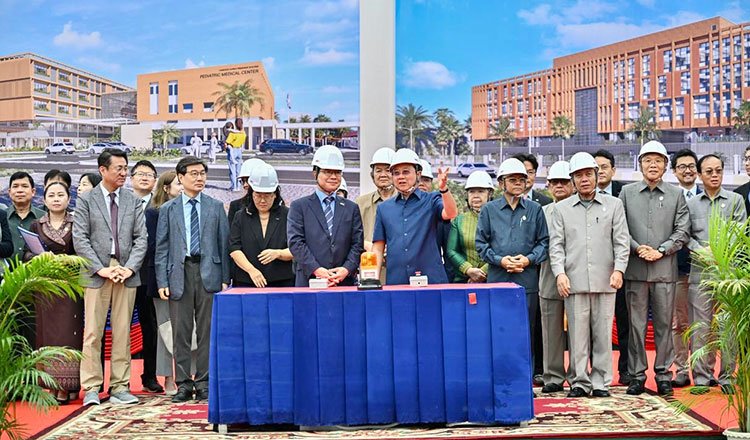
Construction of the Cambodia–Korea Friendship Building, valued at approximately $16.99 million, has officially begun at the National Pediatric Hospital in Phnom Penh. The project represents a collaboration between Cambodia and the Republic of Korea aimed at strengthening healthcare infrastructure and improving pediatric medical services in the country.
The National Pediatric Hospital is a government-run healthcare facility under Cambodia’s Ministry of Health that specializes in pediatric treatment and medical training.
Officials from both countries attended the groundbreaking ceremony, highlighting the project as part of ongoing bilateral cooperation in healthcare development.
New Facility to Enhance Pediatric Medical Services
The Cambodia–Korea Friendship Building will serve as an additional treatment facility within the hospital complex. The new structure is expected to expand capacity for pediatric care and support medical training activities for healthcare professionals.
South Korea has been a long-standing development partner for Cambodia in the healthcare sector, providing support for medical facilities, training programmes, and technology upgrades. Previous collaborations have included the construction of specialized medical buildings and healthcare capacity-building projects.
The new building is expected to help improve access to medical treatment for children and strengthen Cambodia’s public healthcare system.
International Cooperation in Healthcare Infrastructure
Healthcare infrastructure development remains a priority for Cambodia as the country continues to expand its hospital network and improve access to medical services. Partnerships with international development agencies and foreign governments play an important role in supporting such initiatives.
Projects like the Cambodia–Korea Friendship Building highlight growing cooperation between Cambodia and South Korea in sectors including healthcare, education, and technology.
Officials noted that international partnerships can help accelerate the development of medical infrastructure and improve the quality of healthcare services available to citizens.
Real Estate and Infrastructure Impact
Large healthcare infrastructure projects often contribute to urban development and supporting real estate activity in surrounding areas. The expansion of medical facilities can generate demand for staff housing, hospitality services, and commercial establishments near hospital campuses.
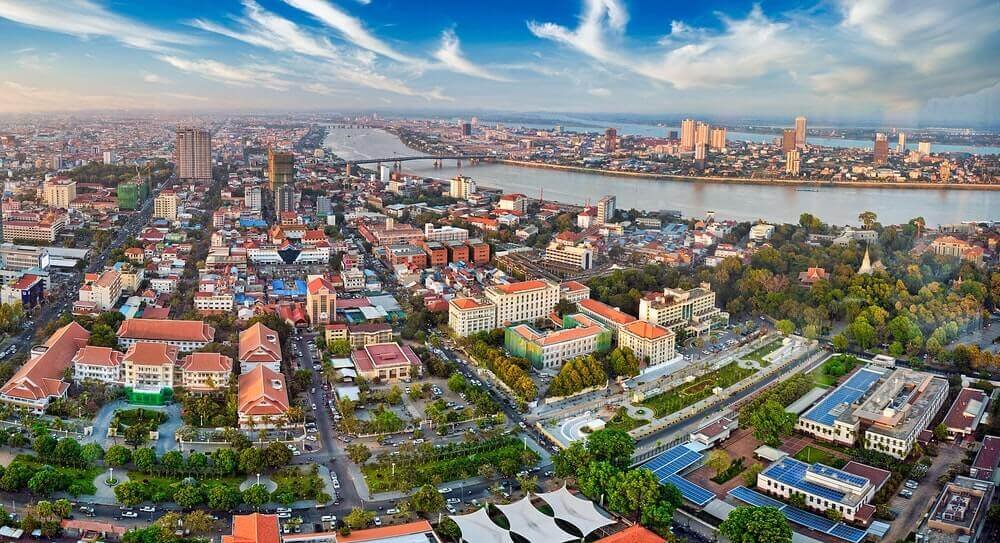
In Phnom Penh, ongoing investment in healthcare, education, and public infrastructure is contributing to the city’s urban expansion and increasing demand for mixed-use developments, healthcare-related facilities, and supporting service infrastructure.
Such developments can influence the growth of nearby residential and commercial real estate markets.
Also Read: Helen Keller International Praises Cambodia’s Nutrition Progress