
PHNOM PENH — Cambodia’s Ministry of Water Resources and Meteorology (MOWRAM), in partnership with the Asian Development Bank (ADB), has launched Phase 1 of the Cambodia Resilient River Basin Masterplan (CRRBM). The initiative establishes a structured framework for water allocation, flood and drought management, climate adaptation, and infrastructure investments across the Tonle Sap River Basin Group.
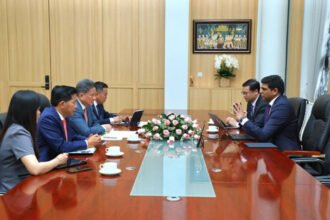
The masterplan was unveiled during an inception workshop in Phnom Penh attended by roughly 160 stakeholders, including government officials, development partners, diplomats, academic researchers, civil society organizations, and private sector representatives.
12-Month Plan for 11 Tributary Sub-Basins
Over the next 12 months, technical teams will carry out hydrology modeling, environmental evaluations, and stakeholder consultations to formulate River Basin Management and Investment Plans across the 11 tributary sub-basins of the Tonle Sap system. Spanning nine provinces, the Tonle Sap River Basin Group is among Cambodia’s most vital ecological and agricultural zones.
This initial phase forms part of a broader national policy that will eventually extend river basin planning across all five of Cambodia’s major river basin systems.
Strategic Significance & Institutional Alignment
Speaking at the workshop, Minister of Water Resources and Meteorology Thor Chetha highlighted that Cambodia’s evolving socioeconomic demands necessitate empirical, data-driven frameworks for water allocation.
“These realities require good planning, sound information, and informed decisions. River basin planning gives us a stronger foundation for planning future investments and managing Cambodia’s water resources sustainably,” stated Thor Chetha.
ADB Country Director for Cambodia Yasmin Siddiqi emphasized that sustainable water resource management is directly tied to Cambodia’s long-term economic goal of attaining upper-middle-income status by 2030 and high-income status by 2050.
Core Focus Areas of the CRRBM Framework:
- Water Allocation Planning: Ensuring equitable access across agricultural, domestic, and industrial sectors.
- Disaster Risk Reduction: Upgrading infrastructure for flood prevention and drought mitigation.
- Investment Readiness: Preparing bankable infrastructure projects to attract international development capital and private investment.
- Capacity Building: Technical training for national and provincial agencies in river basin modelling and resource governance.
Recommendations gathered from the inception workshop will be integrated into the final inception report prior to detailed field studies and provincial consultation rounds across the 11 sub-basins.
Also Read, Amru Rice to Double Preah Vihear Organic Rice Sourcing to $12 Million