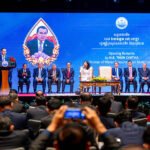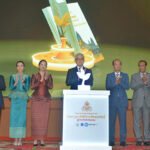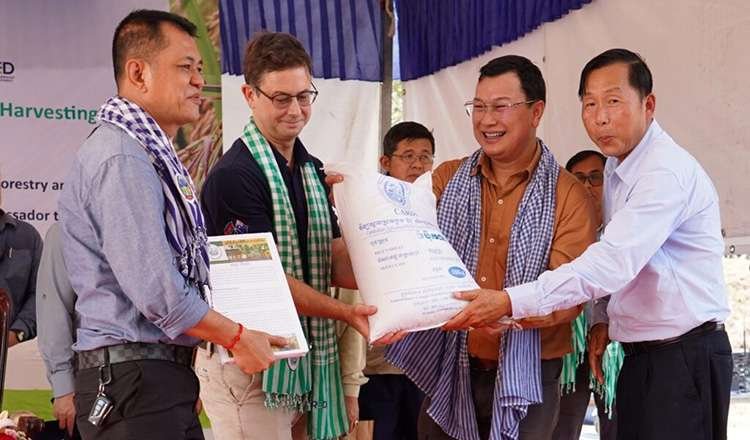
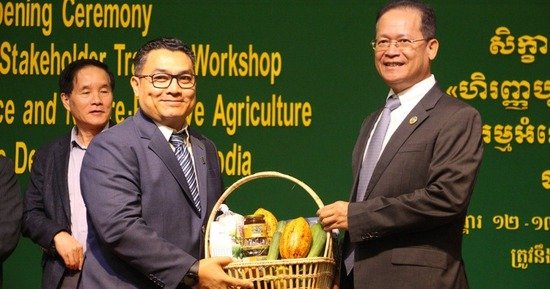
PHNOM PENH — Over 80 leaders and representatives from the Royal Government of Cambodia, commercial banks, agribusinesses, development partners, civil society organizations, and local agricultural communities gathered in Phnom Penh for a two-day workshop focused on scaling up green investment.
Organized by WWF-Cambodia, the Multi-Stakeholder Workshop on Landscape Finance and Nature-Positive Agriculture for Sustainable Development in Cambodia explores mechanisms to mobilize capital for nature-positive farming while aligning broader financial markets with conservation goals.
Unlocking Capital via WWF’s Landscape Finance Approach
The workshop introduces WWF’s Landscape Finance Approach (LFA)—a systematic framework engineered to align public, private, and philanthropic finance to deliver measurable benefits for local communities, ecosystems, and the national economy.
The dual-action strategy centers on two core mechanisms:
- “Financing Green”: Directing capital into nature-positive initiatives, including sustainable farming methods, ecosystem restoration, and sustainable land management.
- “Greening Finance”: Integrating environmental and social governance (ESG) criteria into mainstream financial institutions, ensuring private sector loans and institutional investments avoid ecological harm.
Throughout the interactive sessions, participants are utilizing WWF’s learning platform to identify bankable pathways and translate priority conservation zones—such as the Mekong Floodplains and the Eastern Plains Landscape—into investment-ready pipelines.
Aligning Strategic Policy with “Clean, Green, and Sustainable” Pillars
Delivering key remarks at the opening ceremony, Minister of Environment H.E. Dr. Eang Sophalleth emphasized that nature conservation must be treated as an essential economic investment rather than a cost burden.
“Conserving and restoring nature is not only an environmental responsibility but also an investment in Cambodia’s future prosperity,” said Dr. Eang Sophalleth. “The question is no longer whether we should invest in nature, but how we can mobilize finance at the scale required to support nature-positive production systems and sustainable landscapes.”
The Minister highlighted that these finance models directly support the Ministry’s Circular Strategy on Environment 2023–2028, guided by three core principles: Clean, Green, and Sustainable. The policy aims to bolster climate resilience, expand national forest cover, drive green growth, and propel Cambodia toward carbon neutrality by 2050.
Regional Momentum Behind Nature-Positive Economies
Janes Imanuel Ginting, Country Director of WWF-Cambodia, noted that sustainable finance serves as the ultimate bridge between economic development and environmental stewardship.
“Through Landscape Finance, we can bring together government, financial institutions, businesses, development partners, and communities to invest in landscapes that deliver lasting benefits for people, nature, and sustainable economic growth,” stated Ginting. “Together, we can demonstrate that conservation and development are not competing priorities, but complementary investments in Cambodia’s future.”
Highlighting broader regional dynamics, Chris Howe, Conservation Impact Director of WWF Southeast Asia, pointed out that the Asia-Pacific region is increasingly treating natural capital as a primary economic asset. He added that Cambodia is well-positioned to demonstrate how innovative finance can advance biodiversity conservation, agricultural food security, and rural livelihoods under the national vision of “People, Nature, and Prosperity.”